Some People Live in the Matrix. I Live in a Hadron Collider.

It has been a crummy month.

I have had more balls thrown at my head, more rugs pulled from beneath me, and more Charlie Brown and Lucy football moments in this short space of time than an Amazon warehouse has isles.

One wretched thing after another has befallen where I find myself looking up into the ether and wondering if it would be easier to find the nearest cliff to leap off, or if I should just become a comedian and work out all my trauma on stage like everybody else.

Also, my beautiful, newly installed woodstove has become a deathtrap for bluebirds. Countless feathered friends have been falling down the great length of pipe, fluttering for hours in the dark with no place to get a footing until, exhausted, and like Augustus Gloop, who fell into Willy Wonka’s chocolate pond and got sucked through a body-hugging pipe, the birds find a way to squeeze themselves through tiny crevices and make their way into the glass encased box of the wood stove itself. And there they sit. Panicked. Anxious. In wholly unfamiliar territory. And they have no idea how to escape.
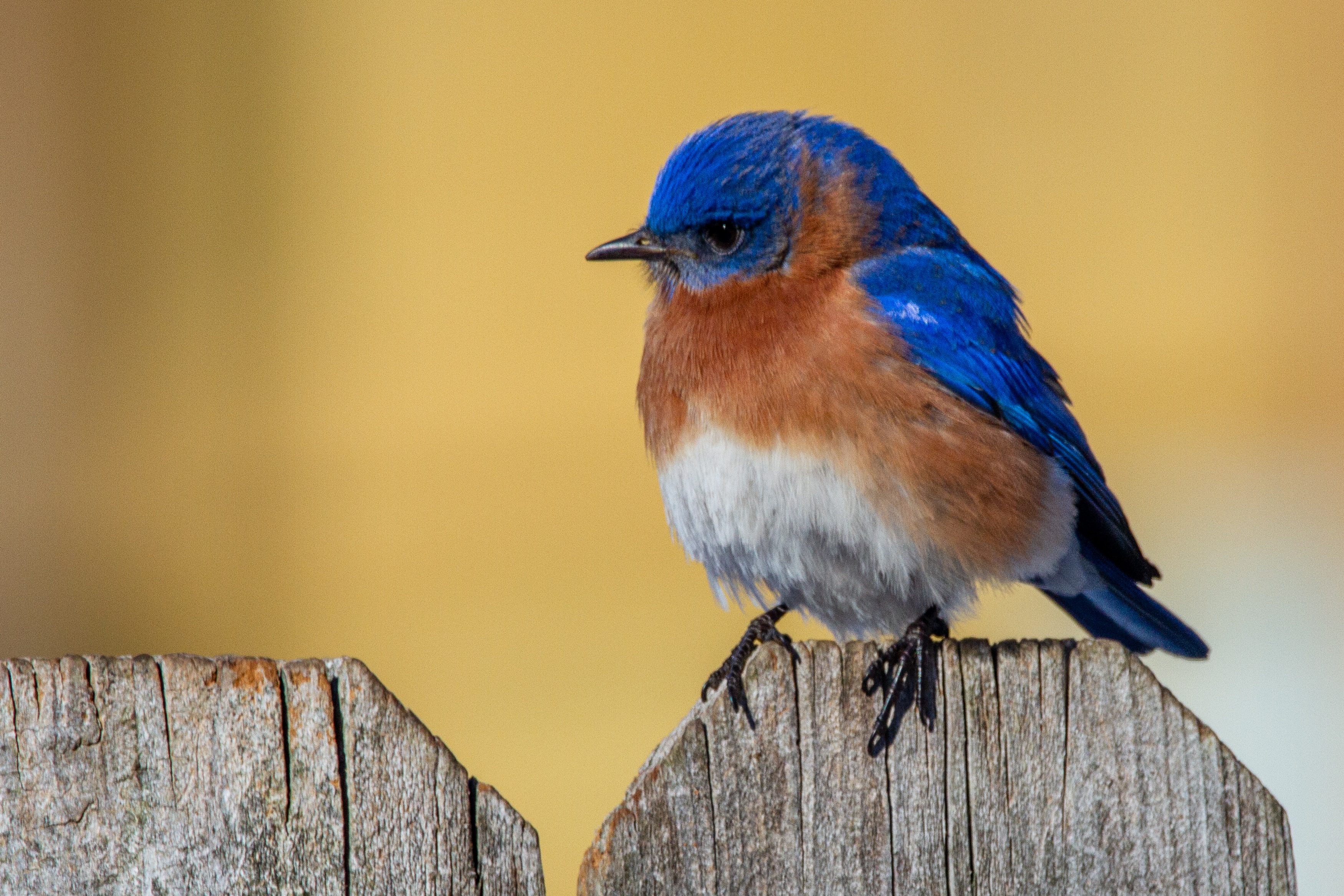
I have called my woodstove company—these feeling, and oh-so-brilliant installers I have written about in the past—who have simply laughed at the number of phone calls they’ve gotten in just one week over this very same issue.

Why is there not some form of wiring around the cap of the chimney? I ask.

Well, cuz that’d be bad for the health of the chimney, they state.

And what of the health of the bluebirds?  I add.

I can hear them tsk. Yer just gonna have to find a way to communicate to them that what they’re doing is stupid.

I sigh.

I count fifteen avian rescues I have made this week alone and reflect on how one of the main contributing factors to my terrible-horrible-very bad-no good month has been the inability to communicate some of the most basic, necessary, and essential needs I required.

If I couldn’t do it for myself, how would I presume to do it for others?

I marvel at the irony that my life’s work sits firmly beneath the umbrella of communications and yet my transmissions are received as garbled, twaddling claptrap. I am a writer, an educator, and an editor. I work with language all day long, and yet I have fallen flat on my face and repeatedly taste the same snoutful of dirt, always lifting my head, blinking around bewilderingly, wondering how the hell I’ve landed here again.

I reach carefully into the woodstove and put my hands around a tiny, terrified bundle of fluff. I feel it whiffling about between my enclosed fingers. I release it through an open window and say after it, Don’t make the same mistake twice. And then, moments later, there is another bird—surely not the same bird—flapping and frantic, coming down the pipe.

I go outside to look at the chimney.

Ye see, the indifferent installer lectures me on the phone, the idiot birds are damn straight positive they should be making a nest in that there tiny space up top. They think it’s the right thing to do.

All month long I had been positive I was doing the right thing too, but just like the bluebirds, I kept falling down the pipe.

What was it that made both the birds and me fail to see the futility of our actions and the physical and mental harm we were putting ourselves through?

Was it trusting our instinct? Allowing a bypass of brains to follow a simple responsive reflex? Was it relentless and unquestioning doggedness?

Maybe we were all testing Einstein’s famous quote describing insanity as “doing the same thing over and over and expecting different results.” But lots of smart people do that. And they do that for their jobs. Because this is how the world actually works. Physicists smash the very same particles together repeatedly—trillions of times over—in a precisely repeated fashion, and guess what? The results are not the same. They are vastly different. Physicists are not insane.

I am not insane.

My bluebirds are not insane.

Perhaps, we all live in a giant collider, where in the world of quantum physics—the land where the bluebirds, the physicists, the particles, and I apparently live—we are playing under the rules that chaotic randomness and wild variability are the norm.

Maybe in this landscape, there is a chance that I will express a string of words that will deliver the exact meaning they are intended to present. Maybe in this realm, the bluebirds will discover that nestbuilding in a springtime chimney is a brilliant decision under certain realities.

In some scientific circles, the argument is not one defending the accusation of insanity, rather the complaint of not having full access to reality.

Suddenly, I am wrenched back to a very shrill state of consciousness where I see my cat, who I SWEAR I’d locked in another room, come dashing across my feet, a squeaking tweetstorm of flapping feathers in her mouth. A chase ensues up the stairs, under the bed, and into a corner, where I finally snatch the poor songbird from the literal jaws of death.

I soothe the tiny creature and take it outside where, waiting for it to catch its breath, I whisper, I’m sorry. For both of us. But this certainly sheds light on one bit of controversial science. Obviously, we did not prove Schrödinger’s alive or dead cat question, but I do feel we’ve cracked the back of existing parallel universes, as I swear that animal is still locked away in my office. So, there’s hope for us yet.

Which is when the bird turns to look me in the eye and say, They call ME crazy, but you’re the one holding out for a Netflix comedy special.

~Shelley

For the time being, the blog is closed to comments, but if you enjoyed it, maybe pass it on to someone else. Email it, Facebook it, or print it out and make new wallpaper for the bathroom. If it moves you, show it some love and share. Cheers!

Don’t forget to check out what’s cookin’ in the Scullery and what we all gossiped about down in the pub. Or check out last month’s post and catch up.

Hatching Happiness through Husbandry

When I was a kid, the word stress had a few specific meanings:

  • “Please stress the notes in your right hand, as there you’ll find the melody.” (I played the piano.)
  • “Hey! Get off the tire swing, dummy. Dad said it can’t hold two people cuz it’ll stress the branch and make it snap!” (I played with my brother.)
  • “I cannot stress enough how you must never eat any mushroom on the forest floor that looks like it is cherry flavored.” (I played being a Pioneer Princess when going for woodland walks with an elderly neighbor.)

As an adult, the word stress emits a different tone. It effectively and uncomfortably punctuates the feelings of anxiety, burden, anguish, and fatigue.

The CDC stresses the importance of social distancing and face masks for the safety of you and your neighbor.

The long-ignored stresses of systemic racism are experiencing a resurgence of interest and commitment from more than just those who experience it.

The constraints of quarantine have placed an abundance of stress upon the economy where many manufacturers may never find recovery. The toilet paper industry, however, is finding their lack of stress is primarily experienced by grocery shore shelves meant to hold their product.

The fact remains, we are inundated with strain and tension, and must find new ways to counteract the effects of them.

It reminds me of a story I once heard when attending a synagogue service long ago. The rabbi—an elderly man who missed his calling on the stage—delivered his sermon with this dramatic narrative.


Once upon a time, there lived a Jewish man—miserable in his existence and driven to alter it. He traveled to his village rabbi, and once seated face to face, began to unload the cause of his unhappiness.

“You wouldn’t believe the tumult, Rabbi. My wife, she heckles me all day long. My daughters bicker between themselves. I cannot find a moment’s peace. I need your advice. What should I do?”

The rabbi nodded sagely, and looking him straight in the eye, said, “Do you have a cow?”

“Yes,” said the miserable man.

“Then go home. Bring that cow into your house and come back to see me in the morning.”

The miserable man was confused, but did not resist, and carried out the rabbi’s advice. The next morning, the miserable man returned to the rabbi, looking woeful and confused.

“Rabbi, I think there must be some mistake. I took your advice, brought the cow into the house, and had the worst night ever. My wife still heckled, my daughters still bickered, and now as well, the cow has made a mess all over the floor and the whole house stinks. I’m very unhappy. What do I do?”

The rabbi nodded sagely, looked him straight in the eye, and said, “It’s as I thought. Do you have chickens?”

“‘Yes,” said the miserable man.

“Then go home. Bring those chickens into your house with the cow and come back to see me in the morning.”

The miserable man, again confused, carried out the rabbi’s advice. The next morning, he returned to the rabbi, dismal and depressed.

“Rabbi, again, I feel there must be an error, as I took your advice with the chickens, and last night was even worse than I could have imagined. My wife with her heckling, my daughters—such bickering, the cow and her mess, and the chickens—well, the chickens clucked and crowed all night. There are feathers everywhere, and I have been pecked more times than I’ve had hot dinners. I’m terribly unhappy. What do I do?”

The rabbi placed his hand upon the miserable man’s clasped grip. “Do you have any sheep?”

The man nodded, hope filling his face.

“Bring the sheep in with the cow and the chickens and see me in the morning.”

The following morning, the man returned, beleaguered, exhausted, and bleak. “Rabbi, the heckling, bickering, cow’s mess, and chicken clucking had the added awfulness of a night filled with unending bleating. No one can sleep, there is no room, and the place is in shambles!”

The rabbi walked the miserable man to the door, his arm around his shoulder. “There is one last thing you must do. Have you any pigs?”

The miserable man reeled back, his faith in the rabbi’s wisdom beginning to wane on his face. But he did as was advised and returned again the next day.

The man slumped into a chair across from the rabbi, put his head on the table, and announced his defeat. “It was worse than worse. More horrid than anyone could imagine, Rabbi. The heckling, bickering, cow’s mess, clucking, and bleating was joined by a ruckus so unbelievable. The pigs ran amuck of everything—toppling furniture, eating our food, bringing in flies. I cannot stand it anymore. I give up.”

The rabbi put his hands on the miserable man’s shoulders and said, “Go home. Remove all the animals from your house and give it a good cleaning. Come to me tomorrow.”

The following morning, the miserable man appeared at the rabbi’s door looking … happy.

“I don’t know what you did, Rabbi, but I feel wonderful! My wife is so pleased with our house free of animals. My daughters smiled gayly at breakfast. And I slept peacefully, at last. I cannot thank you enough.”

The rabbi walked the contented man to the door and smiled broadly as he said, “There is nothing so simple as to live through misfortune to illuminate one’s blessings. The real point is to not lose sight of them from the beginning.”


And I think it’s easy to state unequivocally, that life at the moment feels like we’re living within chaos. But, as has been asserted by the greatest of philosophers, from within crises we experience fog, upheaval, turmoil, and finally clarity.

The stresses we put on systems are often purposeful and meant to reveal where we should place our greatest attention and energy.

I think with dedication, sacrifice, and perseverance, we will increase that which is right at our fingertips and has been the entire time … peace.

~Shelley

For the time being, the blog is closed to comments, but if you enjoyed it, maybe pass it on to someone else. Email it, Facebook it, or print it out and make new wallpaper for the bathroom. If it moves you, show it some love and share. Cheers!

Don’t forget to check out what’s cookin’ in the Scullery and what we all gossiped about down in the pub. Or check out last month’s post and catch up.