How Not to Make a Name for Yourself

I grew up in a family where no one was called by their real name. Unless you were in trouble, in which case your first name was crisply pronounced and your middle name was thrown in for good measure. And, of course, if you were found responsible for some irreparable damage your last name was tacked on, but you usually couldn’t hear it above the steely sounds of a long kitchen knife being sharpened.

No, instead of our real names, we were all given nicknames.

And I think this might have been fun if the names were those that described some of our perceived awesomeness. But none of them did.

I actually liked the name my folks assigned to me—my real one that is. But rare was the day when someone just called me Shelley rather than Shelley Belly. Or worse, Shelbert Bellus. Or even Shelbert Bellus the Third.
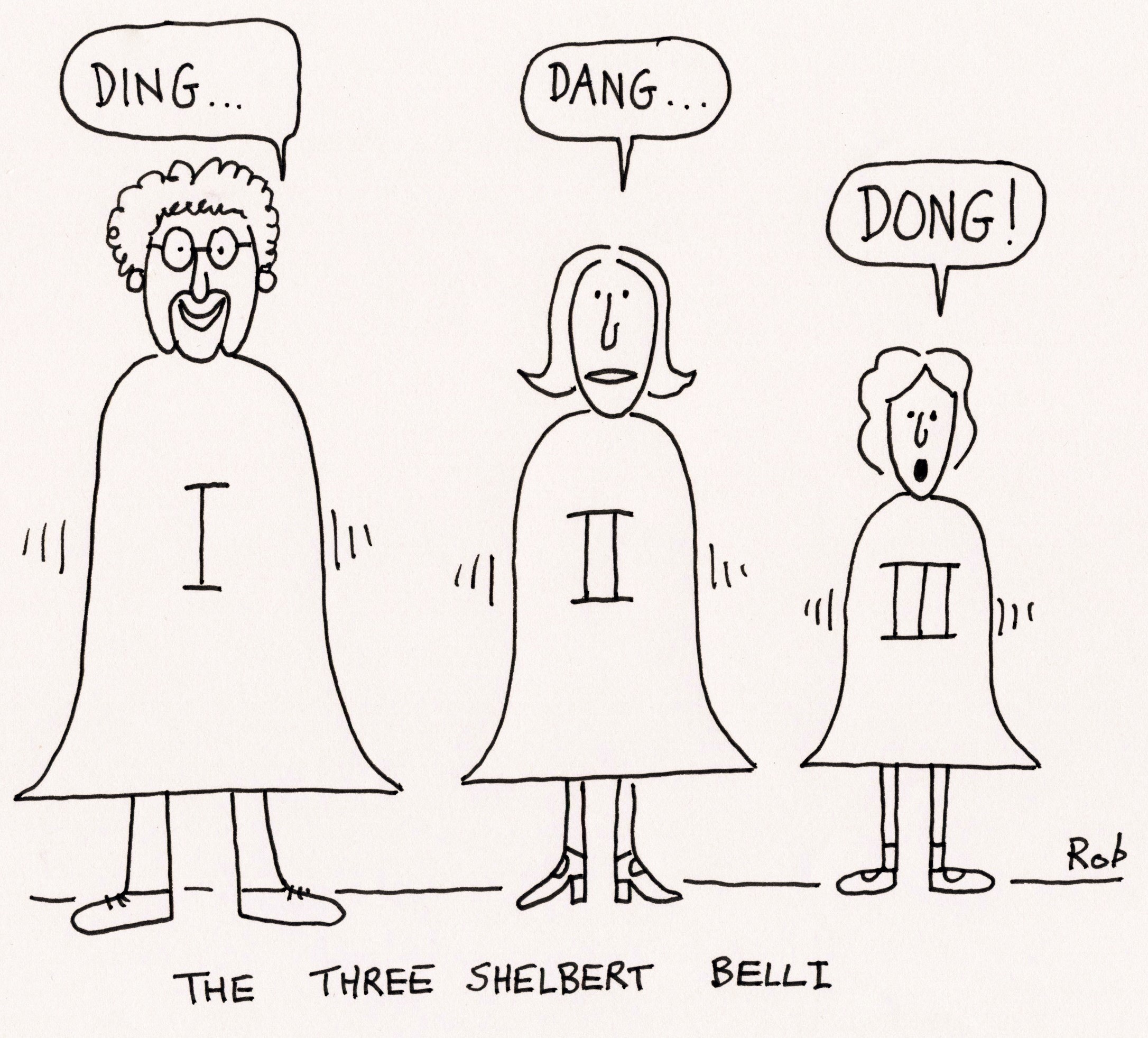
210615bellis

I remained befuddled as a child as to why anyone would make the mistake of naming someone something so dreadful the first time around, and then repeat it for two further generations.

Even the cat and the dog could not opt out in my childhood home. The cat was called Die Spitten de Scratchin’

210615diespittin

and the dog Die Arfen Barker.

210615diearfen

It must be explained that these are names my dad labeled the animals whilst we, his kids, were all studying German in school, and he felt like participating in our nightly lessons so he’d not be left out.

I love the study of names—am truly fascinated by it—which is somewhat unusual in the fact that I can never remember anybody’s. I have tried all types of games and mnemonics, including word association, drilling in that one thing that is most likely to allow the person’s name to spring back into my head from the mere thought of that crucial clue. But I often forget ‘the crucial clue,’ or when seeing this person’s face again I’m at a total loss as the only thing that comes to mind is the word spatula or the phrase just like the disease.
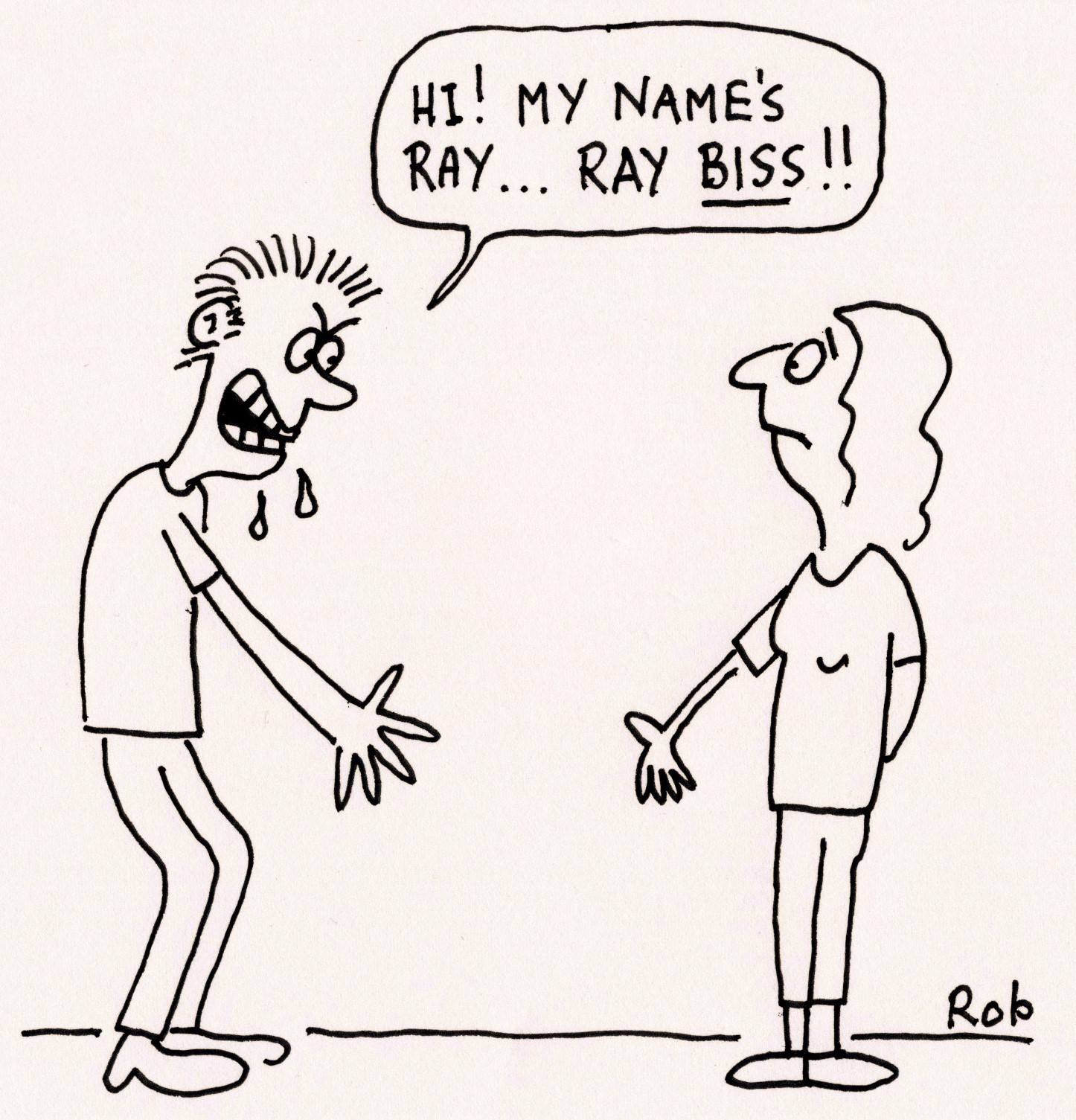
210615raybiss

Not terribly helpful. And in many cases, offensive if I make the wrong guess.

As a writer of fiction, I am given the opportunity to name as many people as I want to invent. It is one of the most joyful parts of writing stories next to cashing in the abundant checks that nearly freeflow from your publisher’s bank account to your mailbox.

Or so I’m told.

I noticed recently while working on two of my books, that both my main characters take issue with their names. Here’s an excerpt from one:

Sophie—it is so not the right name for me. And it does nothing to inspire the coolness of my clan—or breed—or whatever you want to call my people. It should have been something like Zaharasta or Valentina. Something that took a couple of years to learn how to spell.

And an excerpt from the other:

My name is Opal, but I don’t spell it that way. It now looks like this: OPL. I kicked out the A. I figure if Mom wants me to lose weight, maybe she’d perk up if at least my name shrunk by twenty-five percent.

210615akick

See what I mean?

To be frank, I’m pretty sure I spent more time deliberating over the names of all the characters in my books than I did deciding on those of my children.

210615tobefrank


But seeing as I didn’t get into novel writing until just after having my second child, it might not hold as much weight.

OR … it might indicate some latent unhappiness with my impetuous and perfunctory labeling of the two human beings I birthed.

See? This whole author thing might only be a physical manifestation of a deep, rueful regret I’ve ignored and carried around for years and have been unconsciously wrestling with until I feel I’ve sorted out the perfect name for both my kids.

I wonder how they’re going to react when in a year or two I approach them with an amended birth certificate and the announcement that I have legally changed their names to that which I find more befitting of who they truly are?

(Note to self: check with therapist to see if there exists any disorder that points toward birth name buyer’s remorse.)

Currently, I’m struggling with the title for one of my finished books. Nothing feels right. Nothing sounds right. And I think we all know how critical one’s novel title is, right? It’s the first thing you see, the first thing you read. It has to hit you right between the eyes with this come hither look.
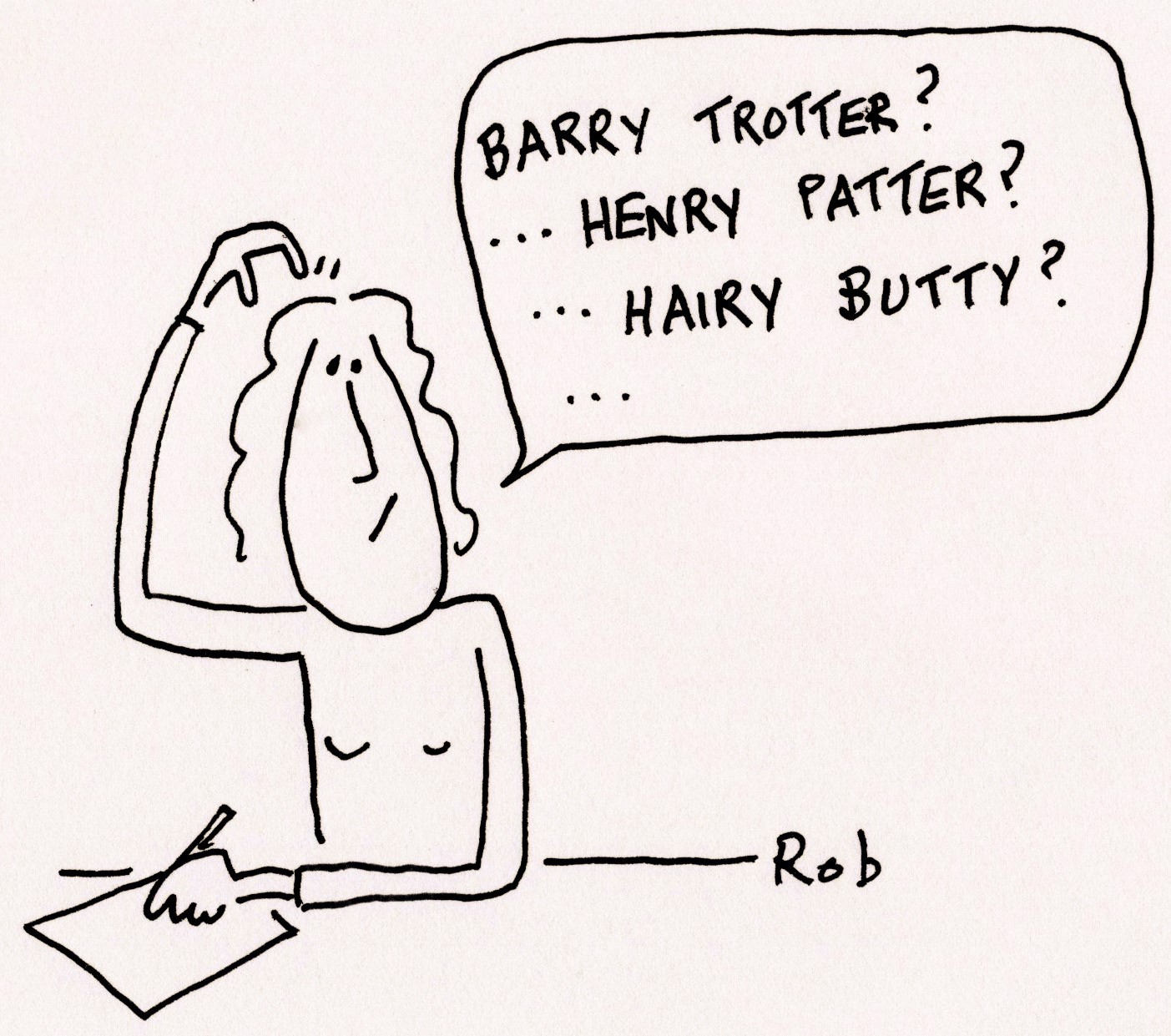
210615potter

I emailed my agent a list of potentials from a thick notebook I’ve been carrying around and filling up. She wrote back and intimated I might have just killed a small tree for nothing—only in much nicer English.

I’m rethinking the whole title thing though. I’m thinking of pitching the publisher an idea that maybe instead of a title, we just go with a scent. I write about food and whisky and history. Why not make the books give off an aroma of chocolate and scotch and mothballs?

It might be the newest thing in publishing.

Or I may receive a curt reply back from my editor asking me to stop sending him emails and to just find a damn title we’re all happy with.

So seeing how my name is beginning to accrue more than my fair share of black marks against it, I’d best get back to work. Or soon my name is mud.

~Jane Doe
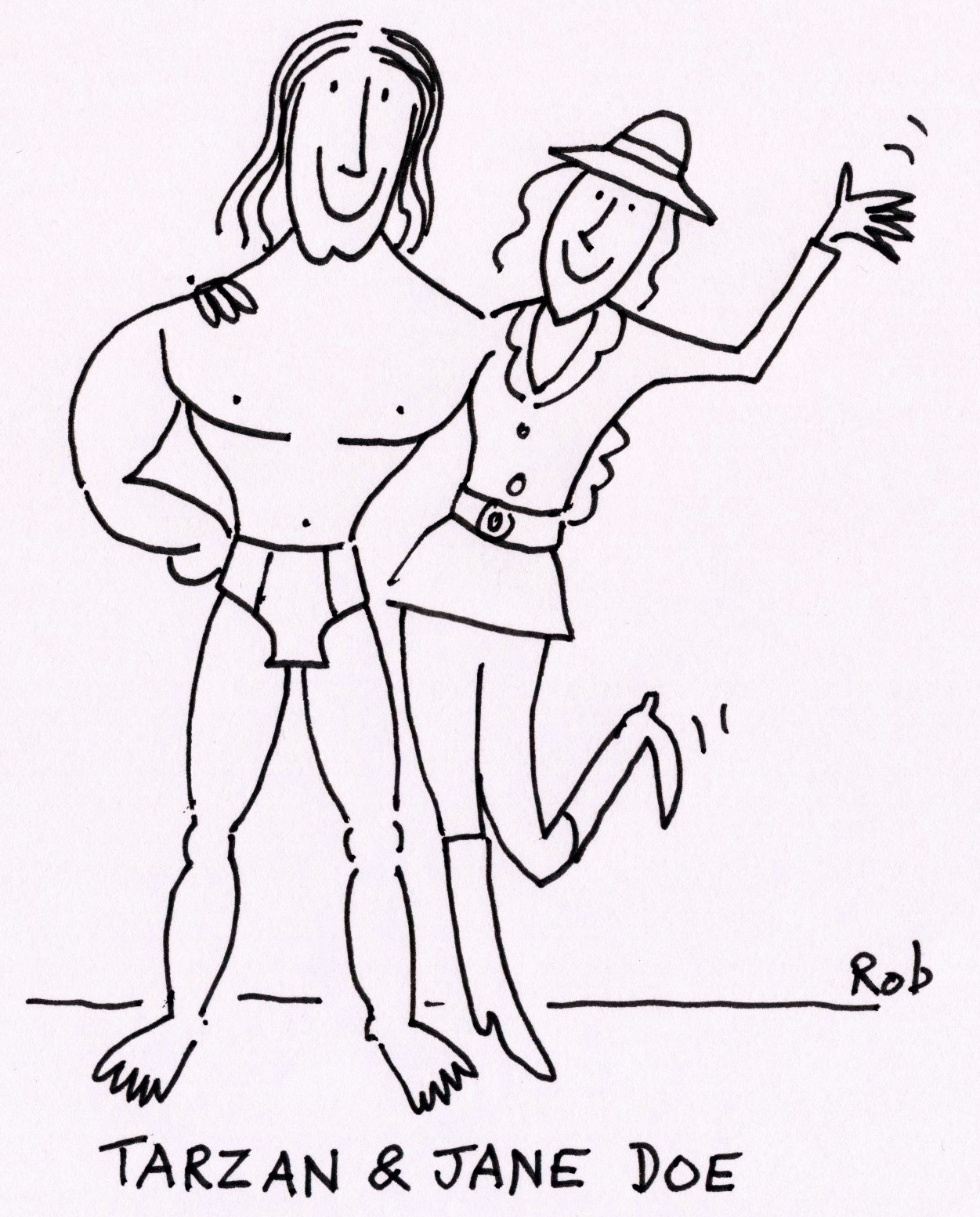
210615janedoe


*ROBIN GOTT’s NEW POST* (click)

Don’t forget to check out what we’re cookin’ in the Scullery and what we all talked about down in the pub. Plus, you can see more of Robin Gott‘s humor–all from the only pen carved from a human funny bone.
Why I Wrote DEAR OPL – Part 2

*Just a heads up to anyone new joining in–this is not my typical blog post. This is part 2 of 3 for a speech I’m preparing and posting here to get valuable feedback from my community. If you’re interested in joining in (and I so hope you are), and you’ve not had a chance to read part 1, you might want to take a minute and get up to speed. I look forward to hearing what all of you have to say. It’s been wonderfully worthy thus far!


So let’s talk about the foul new four letter word that’s getting everyone’s knickers in a twist. FOOD.

200615OPL_03 (800x550)

  1. Our diets have drastically changed form.

So much of what we used to eat was effortlessly easy to identify by using just one word to define it. For instance: apples, squash, lentils, pecans. Now the western diet needs a box to hold it in and a label to identify it with.

And a chemist to explain it all.

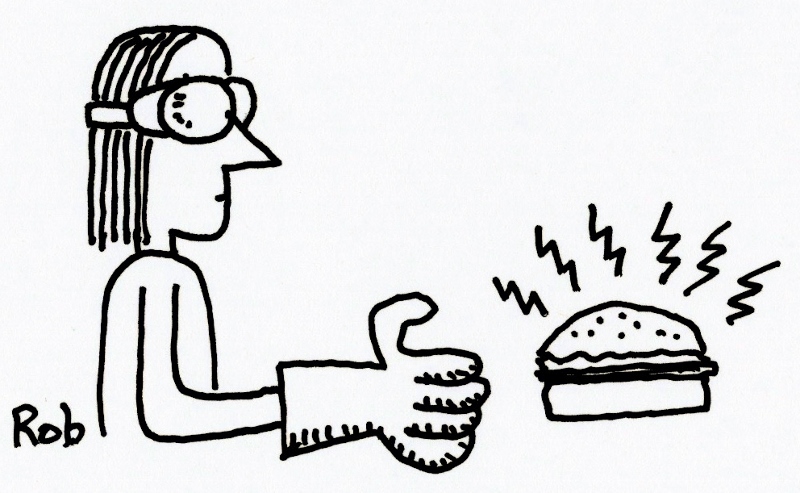
More and more of our food is processed with ingredients that most seventh graders aren’t allowed to handle without plastic gloves, eye goggles, and their science teacher in attendance.

200615OPL_04 (800x493)

It happened right beneath our noses. As a kid, I remember the hour and a half of effort I’d spend making brownies—with the flour, the sugar, the butter and eggs, the melting of chocolate and the teaspoons of vanilla and salt and baking powder.

And almost overnight it changed. It’s now a box, an egg, and a splash of water from the faucet. It’s not so much food anymore as it is a magic trick no one really wants to pull back the curtain on and spoil. Not that spoiling is a concern any longer as science has discovered a way to make a fast food hamburger last longer than most marriages.

Reading nutrition labels dredges up memories of your earliest years in grammar school sounding out new words, and also proves to be a test of one’s grasp of the periodic table of elements. Plus, the regulations for what our government is allowing into our food and defining as food live in a murky swamp and are up for interpretation by the manufacturer.

That old line stating That which does not kill us makes us stronger, should be revised to read:

That which does not kill us—because the studies are ongoing and are being run by folks who have a vested interest in their financial outcome—does not kill us …yet.

Our food of today is no longer the food it was fifty years ago. A carrot is no longer a carrot. Chicken is no longer chicken. A hunk of fabulous chocolate cake is still the sugar bomb it was no matter how long ago it was made, but that’s sort of a given and doesn’t serve my argument. And my point is that things have changed in the food growing world.

Our soils are depleted. Our animals are fed unnatural food meant to supersize them toward growth and not health. We’ve introduced pesticides into our diets that have altered our endocrine function. We’ve stripped off minerals and vitamins from processed foods and have replaced them with chemicals meant to give them a shelf life rivaling the length of time it would take you to read off the numerical value of pi.

Some of the ingredients added into our foods today are ones not meant to contribute to our health or the food’s supermarket shelf endurance, but rather the perceived value of the manufacturer’s product.

We’re talking weight.

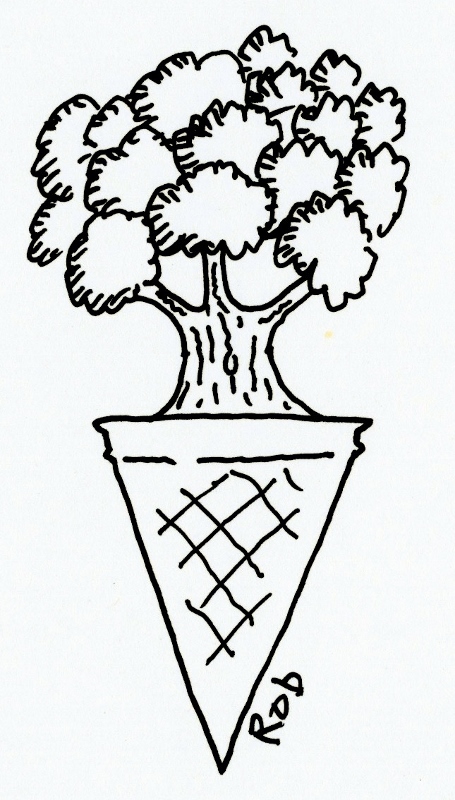
And just as WEIGHT is the hefty issue we’re struggling with here globally, putting additives into food that give it extra bulk and substance is a widespread technique used across the food industry. Cellulose, an indigestible fiber made from wood pulp, is a common item you’ll find in most processed foods. Supermarket bread, bags of shredded cheese, barbecue sauce and ice cream.

Yep, ice cream too.

Have yourself a Blue Bell country day. (Embrace nature. Hug a tree. Better yet, eat one.)

Carvel Ice Cream. It’s what happy tastes like. (And trees.)

200615OPL05 (455x800)

I could go on snarkily updating ice cream slogans, but the point I’d like to highlight is that cellulose has no nutritional value and our government food regulators have no policies regarding its use in manufacturing. Thus far scientists have determined that eating it in small quantities is what they’ve labeled as GRAS – Generally Regarded As Safe. And even if this remains to be so, it still points to the unhealthy practice of eating food that is deficient of the valuable nutrients we want and need for ourselves and our children.

Not surprisingly, there are plenty of other things food makers are slipping into the ingredient lists of their products these days:

Binders and extenders—nonmeat products used to create bulk and texture.

Coloring agents Blue #1 and #2, Yellow #5 and #6, and Red #40—a rainbow of creativity if your goal is to eat the Nickelodeon television channel.

Azodicarbonamide, or ADA—a funky little compound that keeps your bread spongy and your yoga mat squishy.

And don’t forget growth hormones—feedlot operators’ kitschy little answer to America’s question, “Where’s the beef?”

There is a solid handful of folks who are vocal and persuasive when illuminating the presence of these additives in hundreds of food items today. They draw attention from the press and the population occasionally takes note. Sometimes manufacturers stand up and defend their choices and sometimes they pull the worrisome ingredient from their recipe and replace it with something else. Oftentimes food scientists will jump in, provide a little data and the fire dies down—that is until a few more rats die, enough signatures on a petition are accumulated, or an organization’s lobbying funds dry up.

If you look behind the grand kerfuffle made about alarming ingredients, you’ll see the main message is simply that food manufacturers are putting unnecessary chemicals and compounds into our grub and there are alternatives.

Next let’s talk about the research, the studies, and the dry and brittle data. It’s WHAT WE KNOW.

  1. Architects are growing worried that they are building houses with an expensive and worthless room.

Kitchens are full of cobwebs. For many school-aged children, breakfast is skipped or breakfast and lunch are eaten at school. Dinner is handed over through the driver’s side window. And the new dinner plate is a cardboard box or bucket. Millions of kids are looking at a fork and a knife with the same confused look on their face when handed a pen or a pencil.

200615OPL_06 (704x800)

Food education used to come from the home. Our grandmothers painstakingly took the time to write down the recipes that were crafted and perfected by the generations before them. Houses had gardens, produce markets were plentiful and dinner was a scheduled event that you showed up for rain or shine.

We learned how to shuck corn, peel potatoes and pinch a pie crust. You watched the bread rise, carved a chicken and got your hands slapped away if you tried to steal a cookie that was still cooling on a half sheet.

Now I’m not suggesting everyone return to churning butter and dig themselves a root cellar, but I find it unsettling that way too many children do not realize that chickens actually have bones.

Food is the most marvelous thing in the way that it’s often attached to the meaningful events in our lives. Birthdays. Holidays. Dates. Parties.  And we count on it for all the meals that are nothing more than something that satisfies an urge or are simply a scheduled time of day activity. An appreciated break from our busy lives. Breakfast, lunch and dinner.

Growing up, food was incredibly important to my family for many different reasons. I came from a clan of six and although I can’t recall ever going hungry because we didn’t have enough to eat, there were a few times when funds were quite tight and I chose to go hungry because of what was on offer.

To stretch a dollar and a pound of ground beef, my mom would creatively find all sorts of fillers—tofu was one and soy protein was another. She was quite ahead of her time. Powdered milk was cheap and showed up repeatedly—and I don’t care how you disguise it, it had about as much tastebud appeal as liquid cardboard.

As my family ancestry was Polish, my folks oftentimes introduced us to unusual foods that in my opinion would likely have had the offspring of scavenging beasts raise an eyebrow when encouraged to eat it by their parents. Blood seemed to be an ingredient in way too many things for your average nine-year-old’s comfort. I began thinking I should truthfully detail my family’s heritage as part Polish, part vampiric.

Of course, growing up where I did in the Midwest, many folks were hunters, and one evening a platter of what my folks labeled “tiny chicken” showed up on the kitchen table. It did not take me and my siblings long to figure out why my mom was no longer complaining about the unruly squirrel population taking over her summer garden.

And lastly, my mother’s favorite extender of any meal—cream of mushroom soup. Detesting mushrooms was a hobby of mine, and finding these spores in my food became an obsession. After highlighting my childhood foodscape, it’s not so surprising to see how I began to grow incredibly suspicious of all my food. I wanted to know the answer to a very important question:

What’s in it?

~~~~~~~

*I hope you’ll come back next week for part 3. And I hope you may consider offering your thoughts thus far.

Cheers everyone!

~Shelley

Don’t forget to check out what we’re cookin’ in the Scullery and what we all talked about down in the pub. Plus, you can see more of Robin Gott‘s humor–all from the only pen carved from a human funny bone.
Why I Wrote DEAR OPL

Who Writes a Prologue to a Blog Post? … Umm, Me.

A heads up to this beautiful community I have come to know and embrace. The next three posts are not ‘blog posts’—they are a polished rough draft of a speech.

I’m crowdsourcing and asking for your valuable input.

The speech isn’t about the book I’ve written for children, it’s about the messages within the book that I’m trying to highlight by spreading awareness. Years ago, these topics grabbed me by the shoulders, shook me until my teeth rattled and demanded I do something about them.

The book is a vehicle to address these topics with children. The speech is my outreach campaign to engage parents, educators, and activists who care about how food politics are aggressively influencing our health.

So, I’m asking you to read and comment. Help me make an impact. Tell me what works for you, what doesn’t, what you’d like to see more of, or what you feel detracts. Your opinions matter to me.

This is not a plea to purchase my book. This is an appeal to help me make a difference. If this isn’t your shtick, I promise your names will still be rattled off in my nightly prayers of Please let these folks win some lottery in life. The point is to take advantage of eager, willing voices and collective brain power.

Your thoughts mean a great deal to me. I want to carry them with me as I carry this message to others.

And now … Why I Wrote DEAR OPL.

~~~~~~~~~~~~~~~~~~~~~~~~~~~

I’m usually not one for eavesdropping—okay, who am I kidding? I’m a writer. I’m always listening in on conversations all around me. It’s a fountain-like source of creativity I regularly tap into. And it’s addictive. But it’s part of my job.

On this particular occasion—while I was working—I just happened to overhear a conversation that made me cringe. We were in Australia, and my then seven-year-old son was chatting with an Australian lad who was just a little bit older than him. The boy asked my son where he was from. I heard my son answer, “America.” The other boy’s response was, “Oh. Where the fat people live.”

200615OPL_01 (800x658)

I sat back and thought about that unflattering national slogan. It did not have a sexy ring to it.

I thought about a few other places that had slogans to capture the essence and beauty of what they had to offer.

Egypt: Where it all began.

Bahli: The islands of gods.

Disneyland: The happiest place on Earth.

And now …

America: Where the fat people live.

The more I thought about it, the more a few other slogans repeatedly popped into my head. Like this one:

McDonald’s: I’m lovin’ it.

It gave me a lot to chew on—excuse the pun—but it really had me thinking about how big ideas could be distilled down to a few simple words. And sometimes those words could leave a bad taste in your mouth.

But I like slogans. I am all about slogans—or catchphrases or mottos—whatever you want to call them. I surround myself with them because throughout my whole life I’ve found them to be effective.

In fact, here’s an example of just how powerful one became:

As I was growing up, studying classical music was a precise and strictly defined practice. There were rules and not much wiggle room for interpretation of any of them.

I remember as a teenager sitting at the piano with a friend of mine who had not studied classical, but was rather raised playing jazz and improv. We were very different musicians. One afternoon we tried to find a song that both of us could play together on the piano. It ended up being something I could read off sheet music and he improvised alongside.

When we’d finished the piece, he turned to me and said, “Okay, now don’t do it regular.” I didn’t know any other way but regular, and when I found out that’s what I was, I aimed to change it.

In fact, that became the slogan with which I raised my children. My children weren’t particularly thrilled with my ‘swim against the current’ motherly advice as it made them stick out in ways that would make most kids’ toes curl. Their complaining fell on deaf ears and was usually followed with that old parental pearl of It’ll build you some character!

When years ago I heard the highly acclaimed entrepreneur, Seth Godin, say, “Ordinary is boring,” I nearly leaped out of my skin. I wanted to rush to my children and point out that I wasn’t crazy, I wasn’t trying to ruin their fun, I was simply trying to enrich their lives.

That phrase of Just Don’t Do It Regular became a theme song I was determined to sing when coaching my kids through countless situations as if I were some first draft version of Maria Von Trapp or a slightly more colorfully dressed adaptation of Mary Poppins. The last thing I wanted for them was a ‘go with the flow’ predictable experience. I wanted them to counteract the narrative of their generation. If they had something to say to the world, it would take words noteworthy and uncommon in order to be heard above the fray.

And people pay attention to noteworthy and uncommon. After that trip to Australia, it seemed like I repeatedly stumbled upon the same message directed at a growing swath of our planet’s population.

We are in trouble, people. We have a big fat problem on our hands … and hips and thighs and bellies.

I couldn’t ignore the message.

After slogging through a forest full of research articles and data authored and collected by the World Health Organization, the Center for Disease Control and a compilation of all of Dave Letterman’s Top Ten lists, I realized that some of my sources were—although meticulously detailed and scientific—extremely dry and nearly impossible to swallow.

It’s as if the WHO and CDC embraced both Seth and McDonald’s mottos and made an unlikely lovechild tagline for themselves: We’re boring, and lovin’ it.

My guess is that neither of the big research and data collection agencies thought their articles could use any spicing up—with something like a massive neon lit memo—in order to hail the attention of the folks who were most desperately in need of reading it.

Extracting the main point message was easy though:

A shocking number of people are eating themselves to an early death. In particular, children.

I spent a lot of time looking around and asking the silent question, Does everyone know this? And then I spent a lot of time thinking it really shouldn’t be a silent question. And lastly I spent a lot of time trying to figure out how I could take the message about our world’s growing epidemic of obesity and spread the word in a way that wouldn’t make people fall asleep with their eyes open.

To reach children, I wrote a book.

But for all of you, I’ve broken the message into three bite-sized portions of important information that I’ve gathered from myriad experts—aka folks far more clever than me—whom I’ve hunted down from all corners of this great round ball we live on. Those three points—the meat and marrow of this talk—are thus:

  1. WHAT WE EAT
  2. WHAT WE KNOW
  3. WHAT WE NEED TO DO

200615OPL_02 (800x546)


*I hope you’ll come back next week for part 2 of 3. And I hope you may consider offering your thoughts thus far.

Cheers everyone!

~Shelley

Don’t forget to check out what we’re cookin’ in the Scullery and what we all talked about down in the pub. Plus, you can see more of Robin Gott‘s humor–all from the only pen carved from a human funny bone.
A Peek at What’s Coming Down the Pike

And here we are, folks. A peek into DEAR OPL–a project of mine that began probably around the same time ancient Babylonian astronomers were first discovering some of our solar system’s inner planets.

You’ll see the synopsis, the first chapter, and the first press reviews by Kirkus.

I hope you’ll enjoy.

~ShelleyDearOpl---FacebookBanner (800x296)

SYNOPSIS

There is a sinkhole deep inside thirteen-year-old Opl Oppenheimer, and for two years she’s plugged the leak with a wad of junk food. But a hole from heartbreak is tricky. And anyone who’s experienced eighth-grade science frog dissection knows a heart can’t be repaired by a bubblegum band-aid. Worse still, overweight Opl now faces diabetes and must swallow the bitter news that sugar is the problem and not the solution to filling the empty space her dad’s presence used to occupy. Even the school’s galling version of celebrity chef Alfie Adam’s Meal Madness is turning Opl’s self-prescribed soothing syrups into miserable medicine. Mock meat and healthy colon slogans plague the lunchroom walls, encouraging change. But Opl can’t see the value of changing her whole life to save her future since it’s the past she wants to retrieve.

Opl identifies a scapegoat for her growing burdens and rallies an internet attack on Alfie Adam. The plan backfires, threatening the success of her mom’s bookstore, the loss of her best friendship and an international lawsuit. To win back her friend, Opl is forced to pledge allegiance to her arch enemy–the health-crazed chef, but in doing so realizes that, just like kimchi, festering problems, if handled correctly, can produce something a whole community can savor.

 ~~~~~~~~~~~~~~~~~~~~~~~~~~~~~~~~~~~~~~~~

092314_DearOpl_HiRes (533x800)092314_DearOpl_HiRes (533x800)092314_DearOpl_HiRes (533x800)092314_DearOpl_HiRes (533x800)092314_DearOpl_HiRes (533x800)092314_DearOpl_HiRes (533x800)092314_DearOpl_HiRes (533x800)092314_DearOpl_HiRes (533x800)092314_DearOpl_HiRes (533x800)092314_DearOpl_HiRes (533x800)

~~~~~~~~~~~~~~~~~~~~~~~~~~~~~~~~~~~~~~~~

DEAR OPL

by Shelley Sackier

Chapter One

The dark enveloped me, squishing my lungs. Like the engulfing bear hug you get from an uncle who’s built like a lumberjack. But this black was so tarry and thick, it made me feel as if I were breathing syrup and forced my heart to thud in my chest. I blinked again and again, and squinted hard, hoping something—anything— would come into focus. I wanted to sprint for my bed, to hide beneath my quilt, where nothing but fuzzy warmth and an old licorice stick are allowed. But I needed this. I couldn’t leave because I had to get rid of the awful ache that poked at my sleep. If I fed it, like a lion at the zoo, it would circle and grow quiet. Sometimes.

Even though I wasn’t supposed to.

My hands fluttered in front of me, like a couple of blind butterflies. They bumped against a pointed edge. I jerked back, thinking I’d been bit, but I took a breath and crept forward until I touched it once more. I traced my skittish fingers along its form until I felt certain the thing wouldn’t strike at me with sharpened fangs and light up with red demonic eyes. It was a box of cereal. And it had to be Froot Loops because the pantry was a bundle of lip-smacking scents like tangy lemon, zingy orange, electric lime, and mouth-watering cherry. This meant Ollie had left the bag open and steam would shoot out of Mom’s ears because it’ll have gone stale by morning. I sighed with relief because as far as I knew, no one has ever been seriously injured by sugary, ring-shaped cereal. Then, again, maybe my younger brother would be the first.

I pushed the box aside and moved my hands higher up. I knocked another smaller carton to the floor, where it bounced off my sock-covered foot. I squatted, sweeping my hands across the floorboards until I found it. Bringing the package to my nose, I sniffed its edges. It smelled like Thanksgiving—well, not the last one, but the twelve others before that. It smelled of cinnamon and apples. It smelled of happiness.

I opened the box and felt inside, my fingers searching for more of the memory. They picked up a tiny pouch. A tea bag. It made the sound of Mom’s old flower seed envelopes, the ones she held up each spring and shook like tiny maracas. “April showers bring May flowers! Let’s go plant some future sunshine.”

That didn’t happen this spring. Or the one before it.

I fumbled about until I found an empty spot I could push the tea bags into and then let my fingers wander farther across the shelf. They collided into something crinkly. Bingo!

I pressed my hands around the package. It had the right sound—like crunching plastic—when I squeezed it. I pulled it to my nose. Yes, definitely the right smell. And not one I could attach to any other thing. It was powdery sweet. Buttery. Not quite chocolate but deep, like cocoa. It mixed with scents of sugared vanilla—a cream so luscious, it ran slickly against your tongue. This was not just a food; it was a feeling. I wanted those Oreos so badly my mouth started watering like a mini sprinkler.

I felt around for the opening, the plastic pullback tab that granted you access right to the very heart of the package and the cure-all cookies. Tonight’s remedy. But something was wrong. The pull tab was missing. I groped the front and back, skimming its sides, trying to catch the sticky edge like you do when your Scotch tape has come off the metal ridge and sealed itself back onto the roll. It wasn’t there. I couldn’t find it.

Something brushed against my cheek and I reeled back in fright, bumping into the rickety pantry steps behind me. My fingers slapped at my face, but found only my hair falling out of its messy ponytail. With a racing heartbeat, I ventured a hand along the wall, searching for the light switch. Then I pulled back. I’d better not turn on the pantry bulb, because the glow would creep down the hall and shine like a headlight through Mom’s open bedroom door. She was a super light sleeper. She could leap out of bed at the sound of a cricket passing gas on the back porch.

But I needed those cookies.

A flashlight! That’s the answer. I bent down to hunt the lower shelf beneath the microwave. In my mind I could see four of them on the ledge, lined up like eager soldiers: sentries of the dark. But I bumped into one and they tumbled like dominos. I held my breath, trying to absorb the clunking sounds. I made that lungful stay put and listened, wishing I had a third ear. At the relief of no footsteps rushing into the kitchen, I grasped one of the tipsy warriors against the dark, flipped its switch, and looked at the package in my other hand. I held the Oreos all right, but they’d been double packaged, slipped inside a Ziploc bag along with a folded piece of stationery.

I sat down on the old wine crate Mom used as a step, forgetting about how badly it creaked, and unzipped the plastic bag. I pulled out the note and tilted the beam toward the words. It said:
Dear Opal,
Please don’t eat these. Remember your diet.
I love you,
Mom

092314_DearOpl_HiRes (533x800)

To Pre-order DEAR OPL (Published August 4, 2015)

Amazon

Barnes & Noble

Books a Million

Indie Bound

Indigo

iTunes

KIRKUS REVIEW

In the two years since her father’s death from cancer, Opal’s life has gone awry.

Grief and her family’s altered dynamics have contributed to Opal’s struggles with food and weight. She is increasingly at odds with her mother, who is overwhelmed and distracted. When her mother encourages Opal to start a blog as a way to document her food intake, Opal decides to use it to express her thoughts instead. Soon, Opal’s sharp, humorous observations as “Opl” garner interest as people respond to her commentary. Sackier captures Opal’s emotional turmoil as she grieves for her father and resists her mother’s campaign to persuade her to diet. When a savage blog entry directed at a popular chef earns Opal criticism from her best friend, remorse—along with an alarming health diagnosis from Opal’s doctor—compels Opal to reconsider the chef’s healthful-food philosophy. Sackier conveys a message about healthy habits without lecturing. Opal’s adventures in cooking and yoga—with occasionally comical results—alter her perspective, and her changing attitudes reflect her personal and emotional transformation. As Opal endeavors to better understand who she is, she gains a greater awareness of others’ life circumstances as well. When a chance encounter leads to Opal’s acquaintance with Rudy, a regular visitor to the local soup kitchen, Opal devises a kindhearted plan to help him.

By the story’s conclusion, readers will be happy they traveled with Opal on her journey to self-acceptance. (Fiction. 10-14)

*ROBIN GOTT’S NEW POST* (click)

Don’t forget to check out what we’re cookin’ in the Scullery and what we all talked about down in the pub. Plus, you can see more of Robin Gott‘s humor–all from the only pen carved from a human funny bone.

See No Evil, Hear No Evil, Text No Evil

Here’s a scary fact:

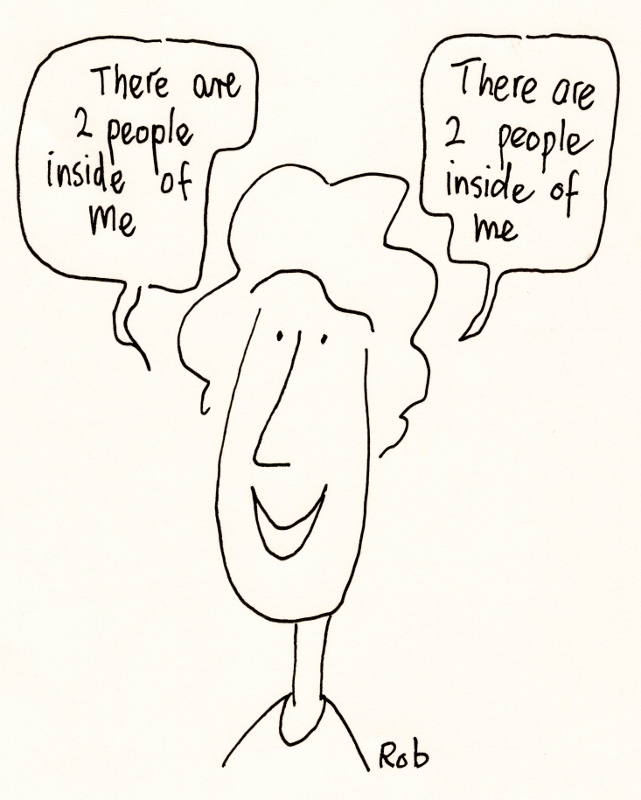
There are two people inside of me.

170515voices (641x800)

Okay, wait. That sounded much more alarming than I wanted it to. Let’s try that again.

I hear two voices.

Nope. That doesn’t really work either.

And this has nothing to do with the whole author thing where we train ourselves to get inside a character’s head and write from their perspective, which, when you really think about it could be considered a bit invasive and creepy.

170515head (573x800)

What I’m actually talking about are the conversations behind conversations. The things that come out of one’s mouth when in dialogue with another versus the things that get whispered, grumbled or screamed inside your head and nobody but the real you is there to hear.

We all do it, so there’s no need to fear I need a few week’s rest in the nearest laughing academy—although a softly padded rubber room and a nurse with a needle full of snoozing juice could be considered a worthy vacation at this point in time. I may reevaluate the idea.

It’s just that lately I’ve become more aware of how loud that inner voice is growing.

Maybe it’s the fact that I have teenagers and realize that no matter how hard I try, putting parental lessons in my best Disney Princess Voice is no longer a viable tactic, but my Nurse Ratched routine isn’t gonna fly either.

170515ratched (800x626)

Or it might be that I’m preparing a series of presentations to schoolchildren about food and have this desperate desire to get on my hands and knees, grab them by the shoulders and shout that “Scientists have discovered rats will work eight times harder to get sugar than they will to get cocaine!” Except this will have me escorted out classrooms and libraries faster than a gun fight in a phone booth.

The art of communication is tricky.

I think we all probably remember that well-drilled-in childhood lesson stating If you don’t have anything nice to say, maybe you’re not cut out for social media—or something like that. But I’m realizing that of late I’m growing quite desperate to allow my inner ‘best if kept caged’ thoughts to escape and run rampant.

Many of these urges happen when I’m texting. There’s the response I actually text, and then the response I actually say while typing out the text. Oftentimes they’re contradictory, or one is passable for the National Security Agency’s eyes and the other is my “air text” which is the message my fingers were itching to type.

And I’m getting pretty good at spotting the air texts written by other folks as well. Especially those of my kids. A typical conversation might go something like this:

Hey Mom?

Hi, Bud. What’s up? (read: Why are you texting me in the middle of the school day? You’d better not be in trouble. Is there a police officer standing next to you?)

I’m not feeling good. (read: I’m sick of school.)

And? (read: Ask the office for an Advil and head back to math, Mister.)

I think I need to come home. (read: I’m so not ready for the chemistry quiz.)

Sorry to hear that. (read: Suck it up, buddy.)

170515hydra (616x800)

I just need to get into bed. (read: I really want to watch the next five episodes of Archer.)

Are you sure you can’t stick it out? (read: If you think you’re skipping out on the rest of the afternoon to binge watch Netflix you’re about to be sorely surprised.)

No. Please call the office and get me excused. (read: Show some mercy here, Mom. I CAN’T TAKE THAT QUIZ!)

Fine. (read: Did you hear how loud my sigh was? It was deafening on my end.)

I have to stop and get gas on my way home. (read: I need snacks while I binge watch Archer.)

You’d better have a raging fever and be tossing your cookies once you open the front door. (read: There actually wasn’t any finger itching air text here. I sometimes actually write what I mean.)

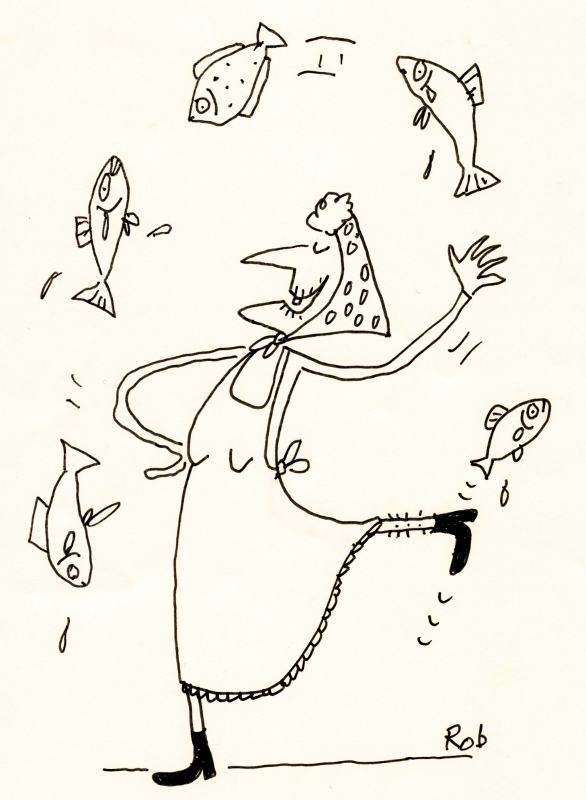
I think it may be more challenging to squish a troublesome inner voice if you’re naturally a snarky individual, or determined not to be judged by the size of your brain but rather the size of a brain you’re convinced you deserve, or if you’re nearly certain there’s an 18th century sharp-tongued fisherman’s wife controlling your vocal chords—all of which are true, and do not make the task an easy one.

170515fishwife (586x800)

On the flipside, these growing urges to speak my mind may stem from a healthy diet of female empowerment slam poetry Youtube videos or maybe just an extra large serving of Beyonce lyrics—it doesn’t matter. The point is, the older I become, the more ankle I want to show.

Or perhaps it’s simply a matter of deciphering what are the most important messages I need to get across and what’s the most precise manner in which to do so.

Maybe those extra voices in my head fighting to be heard aren’t all brash and uncouth. Maybe it’s not tact I’m fighting for, but truth I’m fighting against. Maybe with each successive year I’m realizing the unbridled freedom of truly saying what I mean.

Or it could be that I forgot to take my meds this morning.

Time will tell I suppose. It will surely reveal if any of these musings are worthy and will likely determine where my next vacation will be.

~Shelley (or Sybil)

*ROBIN GOTT’S NEWEST POST!* (click)

Don’t forget to check out what we’re cookin’ in the Scullery and what we all talked about down in the pub. Plus, you can see more of Robin Gott‘s humor–all from the only pen carved from a human funny bone.