Coffee–it’s just not my cup of tea.

Zen_tea_240113 (800x566)

Tea.

Three tiny letters, but thousands of years of warmth. Tea has slaked the thirst in throats that reside on all patches of livable dust and dirt across the earth. It is universal, it is unifying, it is uniformly taking over the entire pantry.

This happens every winter. And no one seems particularly fussed. Least of all me.

I find when I’ve come home from the grocery store and have another box or bag to add to the stash, I just give a good grunt of effort to sweep an arm across another shelf to make room for the new arrivals. This section was the ‘Medicine Cabinet.’ Chances are I will not have use for that large ledge full of pain relievers, fever reducers, nose uncloggers and chest dehackers.

I have tea.

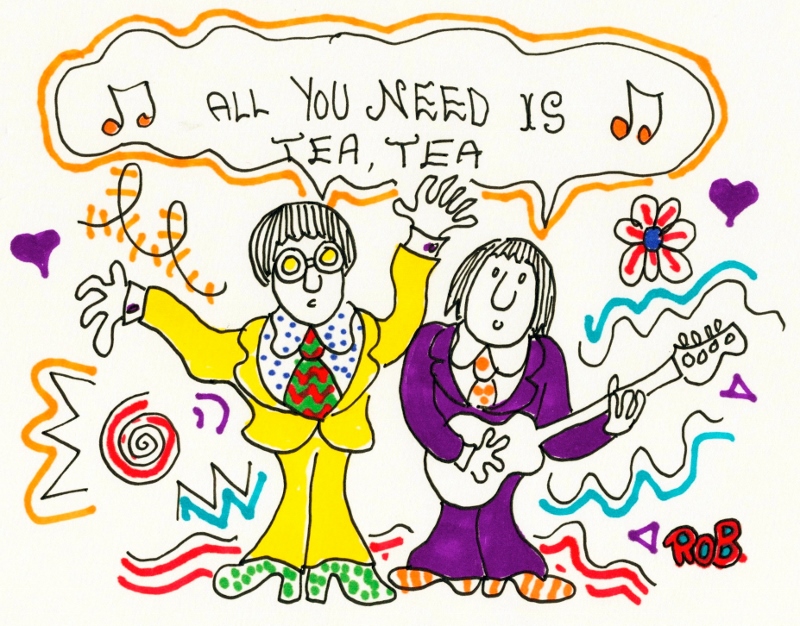
And tea is all you need.
160214Beateales (800x626)

Sorta.

I have herbal teas, and black teas, red teas and white, green teas and oolong and snoozy teas for night.

Whether loose or bagged, blended or bloomable,  I am fairly certain I have little bits of leaves that fall into every single category.

And I love them all.

Okay, that’s not exactly true.

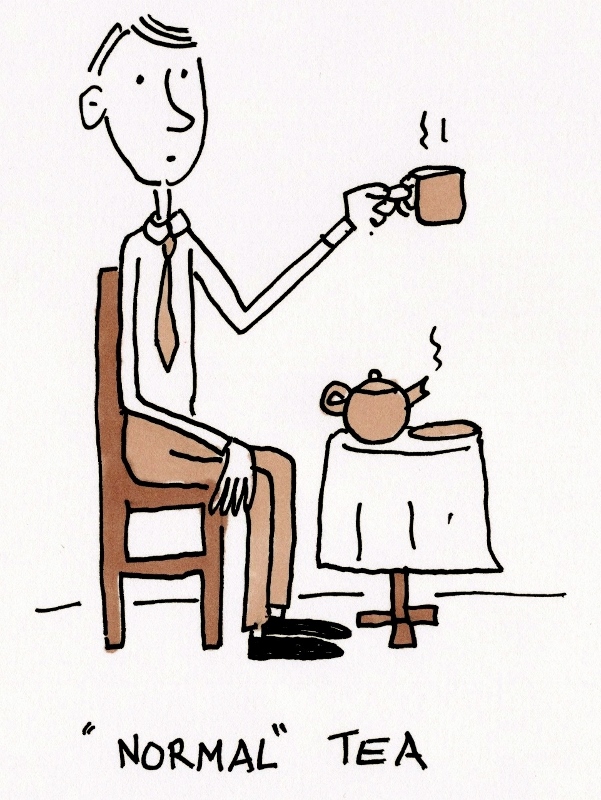
There are a mass of containers all at the back of the pantry’s multi-leveled shelving where tea goes to die. And if you happened to have read about my penchant for hanging on to everything until it becomes either unrecognizable or toxic, you’ll understand why I cannot give up the foul tasting “Be Normal” tea (you’ll figure it out … and if you can’t, think ‘anti-blockage’) or the one that will give me a healthy prostate.
160214Normalitea (601x800)

Why? Because I figure there will come a time—probably during the apocalypse—where I am going to find myself desperate for anything to untwist the gut pretzel I carry around with me caused by eating nothing more than a repetitive diet of unripe bananas and large hunks of hard cheese. And because during that same apocalypse, I will come across a wandering elderly man whose only wish is to be able to pee for a full ten seconds.

I will grant him that ability.

With my tea.

(Okay, sometimes you just have to let me run with all that stuff. I’m a writer with an overactive imagination and no sense of realism. Which is why I specialize in fiction.)

But the fact is, if I have an ailment, or a mood swing, a hankering or a bout, there exists a plethora of answers awaiting their turn to play nursemaid to my needs.

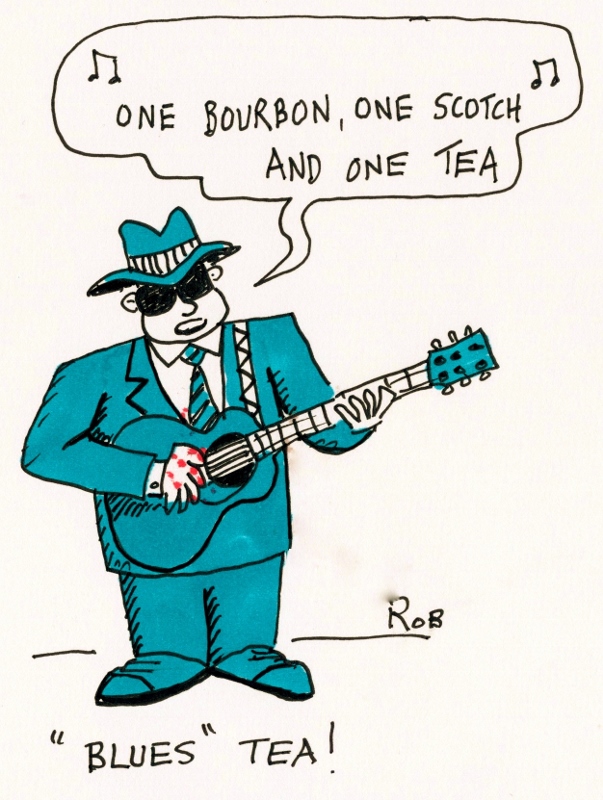
There are teas to wake me up, and those to help me sleep. I have sachets full of leaves that will soothe sore muscles, calm convulsive coughs, alleviate my blues and brighten my brain.
160214Bluestea (603x800)

You’ll find blends in my stockpile that can abolish your appetite, quiet frayed nerves and generate glowing skin. Dig deeper and you’ll discover concoctions to jump-start your joints, some to detox your liver and one that will help tone your uterus. Because God knows, that is the number one exercise busy women admit to skipping most at the end of a long day, and thank goodness someone found a simple solution to put in place of that monotonous but monumentally important workout.

Apart from the digestive, purifying, and organ-based well-being brews, I have a multi-level area that houses my stockpile of seasonal teas: blossoms for spring, zingers for summer, and earthy, toasty, nutty infusions all meant to conjure up warmth, bolstering your spirits through the dark and broody days of winter.

160214Zinger (800x645)

I cannot imagine a day when before I place fingers to keyboard or hand upon mouse, I have not found my favorite mug, picked out the lucky contender for my cup and placed it at my elbow. Once the slips of steam, escaping in tiny tendrils, have dissipated, it is time. The first sip begins the journey of a thousand cups – and the journey of a thousand trips to the loo.

If I could go back in time, nearly five thousand years ago, I’d hug the Emperor of China and say thank you for drinking that bowl of boiled water—you know the one where you found a few wind-blown leaves floating around inside? And you drank it anyway because you were one of those kinds of people who refused to waste the earth’s precious resources—or maybe it was because you’d had a long day of dispensing laws and punishing usurpers and couldn’t be bothered to get up and boil some fresh water.

It doesn’t matter.

You discovered paradise. And paradise tastes heavenly, so thank you.

And thank you for being part of the chain of discoveries that allowed some clever clod to create a tea that would exercise my uterus for me.

The world owes you a giant hug. And believe it or not, I’ve got a tea that can do that too.

~Shelley

Don’t forget to check out what we’re cookin’ in the Scullery and what we all talked about down in the pub. Plus, you can see more of Robin Gott‘s humor–all from the only pen carved from a human funny bone.

Related articles

The Grand Poobah of Parties

I read a lot of historical fiction.

On purpose.

I like historical fiction and I write historical fiction, but the way to become a decent writer of the genre, and for others to become fervent followers of your writing in that genre, is to immerse yourself in the times as much as possible.

Alas, time travel isn’t feasible, although having toured the physics department in the United Kingdom’s Birmingham University last year (read about the unfathomable physics), I’m pretty sure it will be soon. So, until those clever clods figure it out, I’m left with reading. And reading leads to imagery. And imagery leads to sensation. And sensation leads to … well it doesn’t matter, but if we were Amish, this whole thing could lead to dancing and you know that’s one come hither look closer to hell than anyone’s comfortable having in their living room.

Call me a mutineer if you must (and likely only if you’re Amish), but I find that apart from joining a traveling band of reenactors, the only way to thoroughly taste the joie de vive of the past is to immerse yourself within the time period’s literature.

Or to make a pot of joie de vive, which I’m pretty sure includes a lot of entrails and a few copper francs.

One holiday not entirely gone and buried from memory, but not widely celebrated anymore, and one I think would be enormously fun to resurrect from the graveyard, is Twelfth Night.

060114twelfthknight (632x800)

Taking place the night of January 5th, it heralds the beginning of the Epiphany and the end of the gluttonous Twelve Days of Christmas. Back in Tudor times, I’m guessing a dozen days wasn’t nearly enough, as Twelfth Night signified it was time to pack up and head home following all the debauchery that began waaay back on All Hallows Eve.

Yeah, these people knew how to party.

And “part-aay” was the name of the game. And the game was lead by the Lord of Misrule. Misrule as in total anarchy. But before we get to the more well-known versions, let’s take a quick tour of how things were done in a few other lands.

Yes, there’s a religious component to Twelfth Night, as some folks used to celebrate it in remembrance of the Three Kings’ arrival to the birthplace of Christ. It might have simply been a round of “Hallelujah” chorus because the three fellahs were wandering about in the desert for an unduly long period of time and refused to ask for directions. Wise men, eh?

060114gps (800x520)

In Austria, there was a boatload of smoking that took place during the twelve days of Christmas, all poetically named … Smoke Nights. Apparently, Austria had a rather large problem with unwelcomed evil spirits hanging about the country, but soon discovered that the simple combination of great clouds of choking incense and a good solid drenching of holy water took care of the pesky so n’ sos for another three hundred fifty-some days.

Clever.

060114austrian (698x800)

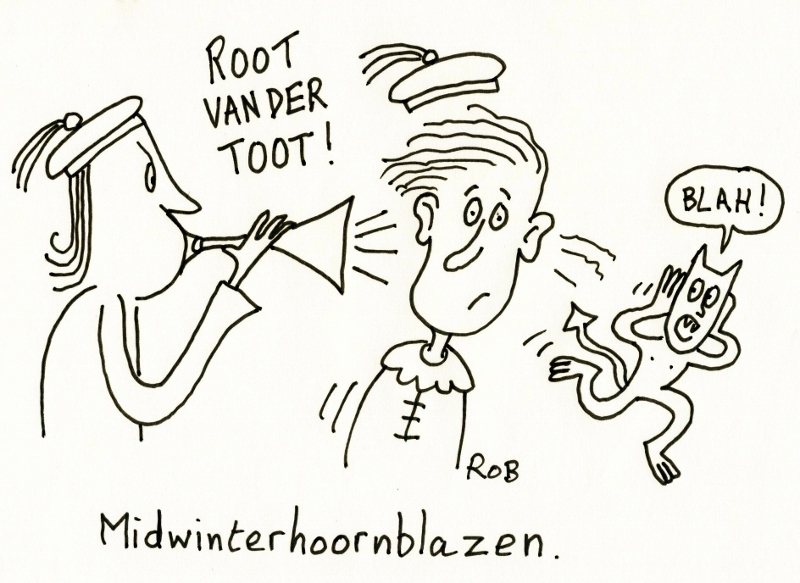
In the Netherlands, Twelfth Night officials allow folks to drive away all their unwelcome demonic shades by blowing out their eardrums with a festive little activity they call midwinterhoornblazen. Of course, there is the common misconception among foreigners who catch a glimpse of the Netherlandian wraiths that the reason they are sporting ear muffs is that they are chilly. In fact, they are simply bracing for the upcoming festival.

Clever.

060114hoornblazen (800x583)

In medieval times, the Norse (and now the English) would dedicate the evening to Apple Wassailing. Traditionally sent out into the apple orchards, a group of men would locate the oldest tree, encircle it, tie bread and toast to its branches and pour the last of their evening’s alcoholic winter punch over its roots. I’m going to guess they may have relieved themselves over the roots of the tree to boot, but likely it was just an earlier version of the evening’s punch. This, surprise surprise, was done in order to scare away any ghosts and goblins and encourage a bountiful surplus next season.

Questionable.

The thing we glean from looking at these past celebrations is that Europe was plagued with malignant spirits.

Later on, Twelfth Night improved a little in that folks went from driving out the dead to nearly joining them as they drank themselves perilously close to the edge of their lives. There are a plethora of opinions as to the correct form of celebrations, but I’ll give you the general gist.

A cake was cooked.

A reversal of fortune followed.

Lewd behavior ensued.

The Church found out.

Everyone grabbed their coats and went home swearing next year no one was going to invite The Church.

Still today, there are communities that make a grand go at keeping the traditions alive, but in my opinion, there’s clearly a lot of work to be done to convince the rest of the world that the holidays are not quite over.

So back to the books I go, immersing myself in the times of yore. But one thing remains certain: I read about the past to plan a better future.

I hope yours will be brilliant. Happy New Year!

~Shelley

Don’t forget to check out what we’re cookin’ in the Scullery (here) and what we all talked about down in the pub (here). And to see more of Robin Gott‘s humor–all from the only pen carved from a human funny bone–click here.

O Tannenbaum!

Tis the season to eat, drink, be merry and … murder trees???

081213wanted (660x800)

Ugh, it nearly pains me to write that—especially since I merrily participate—but I figure, if you’re going to be one of the crowd, at least you should be an educated member of said crowd.

So … for all of you celebrating the holidays with some sort of festively decked out tree this year, I shall provide you with a little bit of trivia to entertain your fellow lumberjacks, tinsel strewers and gold star toppers. Pay attention, memorize and amaze.

You’re welcome.

Holiday Tree Trivia Twaddle

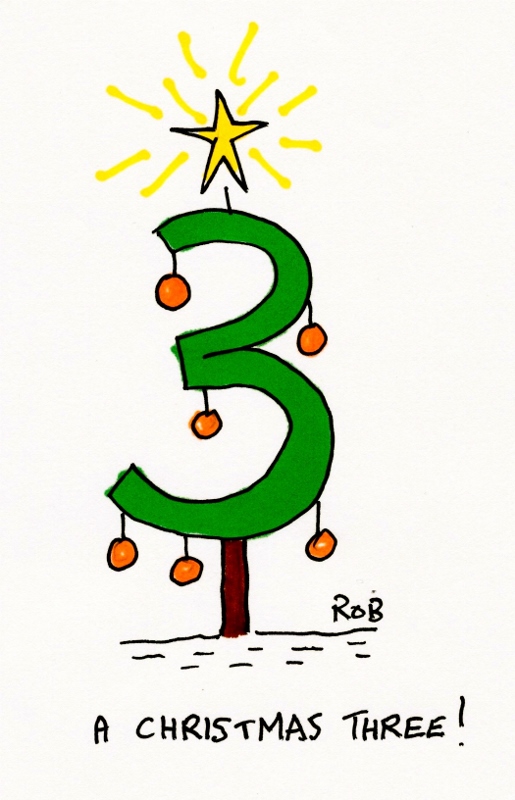
  • Christmas trees remove dust and pollen from the air. This year I’m training mine to use the vacuum cleaner so it can remove dirt from the carpet.
  • Christmas trees take an average of 7-10 years to mature. Christmas trees would make wonderful children.
  • To be more specific: It takes 7-10 years of fighting heavy rain, wind, hail and drought to grow a mature tree. It takes 18-20 years of fighting heavy rants, whining, howling and delinquency to grow a mature child. (numbers will vary)

081213xmas3 (515x800)

  • Since 1966, the National Christmas Tree Association has annually given a Christmas tree to the President and first family. The National Christmas Tree Association is still waiting for a thank you note.
  • Recycled trees have been used to make sand and soil erosion barriers and been placed in ponds for fish shelter. I simply preserve mine by brining it in pickle juice at the end of the holiday season, and then bring it out again come December 1st. I serve a lot of corned beef on rye for dinner during the month so no one is suspicious of the stench.
  • The best selling trees are Scotch pine, Douglas fir, Noble fir, Fraser fir, Virginia pine, Balsam fir and white pine. At one point there was a national push toward the Giant Sequoia because Americans never like to be outdone, but the wait time for them didn’t quite match up to our appetite for instant gratification.

081213pines (530x800)

  • 100,000 people are employed in the Christmas tree industry. For about 4 weeks. The remaining 48 weeks of the year they’re just tree stump grinders.
  • In 1900, large stores started to erect big illuminated Christmas trees. In 2013, all stores erected big illuminated Christmas trees, kept them erected all year long, but took a break by switching them off for the month of April.
  • 98 percent of all Christmas trees are grown on farms. The other 2 percent wouldn’t know one end of a cow from the other.

081213cowbum (800x528)

  • Christmas trees are grown in all 50 states including Hawaii and Alaska. Christmas trees are sold only in Alabama and Oklahoma. Everywhere else sells “Holiday” trees.
  • Tinsel was once banned by the government because it contained lead. Now it’s made of plastic. And it has to be said, landfills have never looked so festive.
  • The use of evergreen trees to celebrate the winter season occurred before the birth of Christ. After the birth of Christ, we learned to start celebrating the winter season by putting away any sparklers and fireworks leftover from the 4th of July.
  • In 1856 Franklin Pierce, the 14th President of the United States, was the first President to place a Christmas tree in the White House. He was then promptly shouted at by staff for tracking in mud and pine pitch.

081213muddyboots (800x628)

  • You should never burn your Christmas tree in your fireplace because it can contribute to creosote buildup. You should only ever burn your Christmas tree in somebody else’s fireplace.
  • President Coolidge started the National Christmas Tree Lighting Ceremony on the White House lawn in 1923. Taxpayers nearly ended the ritual after being presented with the White House electricity bill come January.
  • From 1948 to 1951, President Truman spent Christmas at his home in Independence, Missouri, and lit the National Community Christmas Tree by remote control. I’m guessing that President Truman was a bit of a Grinch.
  • Nineteenth century Americans cut their holiday trees in nearby forests. Twenty-first century Americans have somebody else cut their holiday trees in forests not even remotely close to where they live.
  • In the first week, a tree in your home will consume as much as a quart of water per day. After that, the tree will have located your liquor cabinet and will consume as much as a fifth of scotch until New Year’s.

081213scotchpine (573x800)

  • Helicopters help to lift harvested Christmas trees from farms. But this is strictly for the wealthy, whereas most folks simply drive their tree home strapped to the roof of their car.
  • An acre of Christmas trees provides for the daily oxygen requirements of 18 people. Sadly, 3 people use up that oxygen within about 60 seconds when visiting one of the many trendy Oxygen bars around the world. *gasp*
  • Real Christmas trees are involved in less than one-tenth of one percent of residential fires and only when ignited by some external ignition sources. This came to pass after many years of officials believing the sworn oath statements of homeowners who promised they did not pass out drunk beneath the tree with a lit cigarette dangling from their hands and that trees in their neighborhood have a tendency to self combust.

So, all this goofy fun aside, I wanted to insert a sentence or two about taking care of this beloved planet we all share and enjoy (read occasionally abuse). I’ve come to believe that if we are capable of making this earth just a teensy bit better for our having been here, then we should feel pretty good about ourselves when we draw our last breath. Recognizing that even this blog has its own carbon footprint (the Internet and related technology industries produce over 830 million tons of CO2 in greenhouse gases each year, and is projected to double by 2020), I feel it necessary to take responsibility for my work’s contribution to that figure.

I have instructed my blog to plant a tree to offset its negative impact on our environment. There was a bit of a tussle between the two of us as to who should do the actual digging, but in the end we agreed to flip a coin. Mercifully, the great folks at the Arbor Day Foundation have paired up with Green Gestures—a large-scale reforestation initiative in the US (by bloggers, for bloggers)—and will, on behalf of your blog, plant a tree FOR YOU.

My blog and I have decided to name it CLYDE.

081213bonnie&clyde (770x800)

I’m incredibly grateful to the folks at both institutions for all their efforts, and encourage the rest of the blogosphere to participate and spread the word.

Write a post. Plant a tree. Breathe a little easier.

~Shelley

Don’t forget to check out what we’re cookin’ in the Scullery (here) and what we all talked about down in the pub (here). And to see more of Robin Gott‘s humor–all from the only pen carved from a human funny bone–click here.

One for the books

I love my library. And … I hate my library.

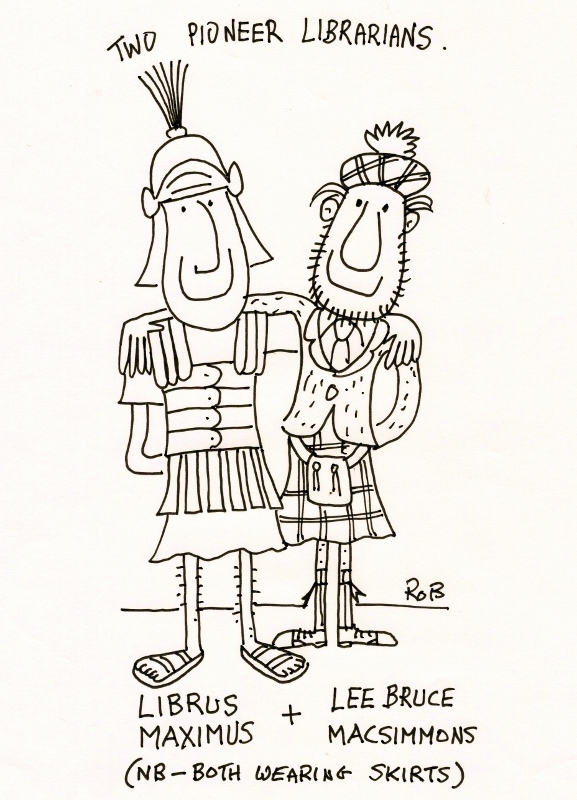
First of all, I think being offered the privilege of reading one’s way through a building full of books is a fabulous idea. Apparently, we have the Romans to thank for that. History tells us that they made scrolls available to patrons of “the baths.” As a footnote, I will not credit the Romans with the ability to laminate, but guess access to these scrolls was available after a very stern, hefty, Hellenic woman with a pinched expression and even pinchier sandals first examined your mitts and noted that you had towel dried off enough to handle the goods.

201013Thebes (735x800)

The public libraries as we know them today might need a nod of appreciation toward the great British Empire. Noted among the upper class, the Working Joes—after absorbing the brunt of the mid 19th century’s fun festival of war, insurrection, bankruptcy and scarcity—were apparently bringing down the country’s weighty, highbrowed reputation, mostly attributed to the cachet of good breeding. A rise in IQ was exactly what the aristocracy wanted country needed.

The drive toward establishing public libraries—state run and taxpayer funded—was a growing movement. Matthew Battles, a senior researcher with metaLAB at Harvard, states that:

“It was in these years of class conflict and economic terror that the public library movement swept through Britain, as the nation’s progressive elite recognized that the light of cultural and intellectual energy was lacking in the lives of commoners.”

Time to hit the books, gents.

201013librarians (577x800)

I’m guessing the famous Scotsman, Andrew Carnegie, grew convinced that draping himself in the colors of silver, gold and green was unflattering, and gave away barrelfuls of anything with those pigments to communities agreeable to a few ground rules and a hope for informational ease of access. 3000 libraries later, I think the world owes him a giant thank you card. Feel free to sign it down below in the comments section. I’ll forward it on to him later.

Today, if we are to include all types of libraries (school, special, academic, government, public, etc.) we’d find the world is lucky enough to house shelf after shelf of books in roughly one million constructed centers. This number is an estimate from the OCLC (Online Computer Library Center), a group of folks who love to count as much as they love to read.

As a kid, it was a Saturday ritual that after piano lessons, the next stop was the public library. It wasn’t for me, but rather a stop off for my dad so he could get his weekly hit from his dealer librarian. Yeah, he had it bad. There were times when he was lost in the stacks for so long that I started ripping out and chewing on the pictures in cookbooks merely for sustenance. And as long as the book wasn’t a new addition to the shelves, it usually had some splatter of the previous patron’s dinner mottled across a few of the recipe pages.

201013cookbook (800x670)

Once I moved on to college and beyond, every town I found myself employed in for longer than a matinee showing and a midnight review also found me slumped against the door of the nearest local library, waiting for the doors to open first thing the next morning. Memorizing the new string of numbers on my library card was the single most important thing to do. Then I could find an apartment.

As a parent of two children—when they were children—I attempted to make visits to the neighborhood library closely mimic an experience of meeting God at the Magic Kingdom, only without all the genuflecting and endless snaking lines thrown in. When I discovered the limit on checking out books was 75 items per patron, I think I pointed toward the back wall and said, “We’ll take that section.”

What I enjoyed most from this period of time in my life was coming upstairs to do that last sweeping check of children and the switching off of bedside lamps where I would undoubtedly find a mound of discarded books at the foot of each bed, spilling onto the floor. More often than not, one was splayed across their chests, the plot interrupted by drowsy eyes and impatient dreams.

201013reader (800x518)

Today, I’m rarely in charge of checking out books for anyone other than myself, but even so, my visits tally to three times a week. I walk in with an armload of books:

One is nearly read, and I finish the last 13 pages while waiting in line, continually gesturing folks to step in front of me.

Four are due today, but I’m only one half/two thirds/six pages into the stories and will need to check with the circulation desk to see if there’s any way I can please, pretty please, I’ll get on my knees check them out again as long as there is no hold on them currently.

And three are nonfiction and much needed for research pertaining to my books, my blog, my mental health and child rearing. Always, childrearing.

I carry a hefty bag of coins which I have labeled contrition cash, or penitence pennies, and hand the librarian the loot, along with a sheepish apology for my sins against the system.

201013contrition (541x800)

It’s why I hate the library. Their generosity has made me a green-eyed glutton, a piggish patron, a barbaric bibliomaniac. I subscribe to all their email lists.

Fiction Best Sellers!

Staff Picks!

Books Approved by Oprah, Obama and Oh My God You Just Have To Read These!

There is so much guilt I suffer because of my library. But it’s really writers who are at fault. On the whole, we’ve got way too many stories, way too many messages, way too many words.

But I shall read on.

And I hope you will too.

~Shelley

Don’t forget to check out what we’re cookin’ in the Scullery (here) and what we all talked about down in the pub (here). And to see more of Robin Gott‘s humor–all from the only pen carved from a human funny bone–click here.

Thomas Jefferson is full of beans.

Old chocolate is amazing.

And I don’t mean old as in you found last Halloween’s leftover bag of miniature Snickers bars, and after removing both the fake and the real cobwebs, you classified it as … edible-ish.

061013lechoc (630x800)

I mean old chocolate as in 250 year-old chocolate.

Okay, maybe I mean a 250 year-old recipe for chocolate, but I’m hoping that might be implied.

Regardless, I recently had a chance to taste this luscious libation when I last visited one of my fathers’ homes. Forefathers that is.

Although not technically related, I do feel a special kinship with Thomas Jefferson in that he and I share a lot of commonality:

Thomas Jefferson was the first United States Secretary of State. I was the first United States Secretary of Stately Housekeeping in the ramshackle kindling fort my brother and I made when we were kids. Both Jefferson and I argued endlessly with the Secretary of the Treasury over fiscal responsibility and where we would spend our combined allowance—I mean finances.

Thomas Jefferson was a leader in enlightenment. He brought about awareness and understanding to millions on a plethora of subjects. I am a leader in de-lightenment. I bring about awareness and understanding to my children on the cost of keeping a room lit with no one in it to enlighten. (Hold your groans, it only gets worse from here.)

We shared a great love of books, both played the violin, and astonishingly enough, it appears we employed the same hairdresser for much of our adult lives.

061013hair (800x500)

But it’s the love of Colonial chocolate that brought me closest to Jefferson on my last visit to his shiny little shanty. The architecture of Monticello could not compete with the spindly legged table set up in his yard that was used to demonstrate a ‘made from scratch nectar’ enjoyed by our late president and many lucky citizens of the 18th century.

The event was the Heritage Harvest Festival. Coined as America’s First Foodie, Mr. Jefferson invited friends and family to one of his annual backyard BBQs. He’s good like that, allowing folks to trample through his garden and kids to climb his trees. I bet if he were alive today, he’d have been right out there on the West Lawn with the rest of us, eating a pulled pork sandwich and washing it down with a local brew.

061013plane (764x800)

Or he might have been standing behind me as I attempted for the third time that day to pass myself off as a curious newcomer to the demonstration of ‘How the colonials made their chocolate drink.’ Free samples in miniature Dixie cups were handed out after you watched someone explain the roasting of cocoa beans, the process of de-shelling the beans by hand and the grueling work of grinding the cocoa nibs via mortar and pestle.

Yes, arduous work.

Thank you for the sample.

Delicious.

(Wait for 30 minutes behind a tree)

Get back in line.

There were a million things to learn about at this historical heritage happening. We were encouraged to Celebrate the harvest and the legacy of revolutionary gardener Thomas Jefferson who championed vegetable cuisine, plant experimentation and sustainable agriculture.

061013Leekstein (800x653)

And to Taste a bounty of heirloom fruits and vegetables and learn about organic gardening and seed-saving during this fun, affordable, family-friendly festival.

But I’ve had bushels full of fabulous fruit and veg this summer already, and was plum up to my earballs in articles and lectures on sustainable farming and gardening.

I WANTED THAT CHOCOLATE.

Okay, yes, every day I make sure to eat a fistful of mahogany magnificence, but this is not the point. The point is that what I usually have in my fist did not measure up to what I saw casually proffered to passersby via cherub-faced young ladies. What they held out on their trays should have been deemed illegal. It was addictive, enslaving—I was hooked.

It was cocoa bean crack.

061013chocolate (614x800)

At one point in 1785, Thomas Jefferson penned that chocolate would surpass American love for coffee and tea—just like it had happened in Spain. Clever, clever Spaniards. I’m guessing over there, little kids had set up chocolate stalls and kicked the idea of lemonade stands to the curb.

Even Benjamin Franklin understood the importance of this ambrosia. Somehow, between his good looks and charm, he arranged six pounds of chocolate to accompany every officer, termed “a special supply” for those who marched alongside General Braddock’s Army during the French and Indian war. I’m guessing most Americans today would be asking for a refill after a week and a half tops.

Back up top at Monticello, I finally succumbed to guilt and temptation and forked out the twenty some dollars for the small tin of the American Heritage Historic Chocolate drink. It will sit on my desk for months as I gaze longingly at it, but I will repeatedly tell myself it should be saved for something monumental like a presidential election, or something worthy like passing a test, or a kidney stone.

Likely, next September will roll around and I will receive another invitation to visit the grandpappy of our population. I will rootle around on my desk searching for my tickets and come across the tin, having been buried beneath overdue Netflix movies, bills and yes, last year’s Halloween candy.

061013bills (800x645)

I will head to the hill for some history (okay, we all know I’m just going for the chocolate) and try to soothe the guilt that bubbles up admonishing me for wasting money on something I didn’t even consume.

But then I will remind myself that the chocolate is 250 years old already, so what’s one more year. In fact, I’m totally with Mark Twain on the subject: Age is an issue of mind over matter. If you don’t mind, it doesn’t matter.

~Shelley

Don’t forget to check out what we’re cookin’ in the Scullery (here) and what we all talked about down in the pub (here). And to see more of Robin Gott‘s humor–all from the only pen carved from a human funny bone–click here.