My Garden’s Grassroots Plan to Poison Me

I grew up in Wisconsin in a family that gardened.

Correction—I grew up in Wisconsin, birthed by a woman who is a gardener but who did not have as many hours in the day to tend to the gardens she created and, therefore, I was compelled to garden like the rest of my siblings.

It’s not that we were gardeners; we were the labor force of the head gardener.

Her gardens were beautiful. Flowers with spectacular colors and scents, shrubs that displayed more varieties of green than Sherwin Williams could ever creatively conceive on their swatches, grasses that were feathered, plumed, tufted, and willowy, and young saplings planted for following generations to enjoy. Truly beautiful.

And I hated them.

But then there was the vegetable garden.

It had all the bog-standard roots, tubers, vines, and greens. It had berries and herbs, beans and sprouts. It had a seasonal design. It had function. It served purpose and gave back more than you put in. Anything ornamental was likely a fluke of Mother Nature who had leftover bedazzling supplies from the other “just for show” pretentious gardens. Everything was strictly edible.

And I loved it.

It’s not that I couldn’t appreciate my mother’s other gardens, it’s just that I like functional art. I take no issue with fruits and vegetables who display flowers at first, but once they move out of that stage, they produce secondary gifts that serve more than the purpose of simply being eye candy.

Because their task is to be stomach candy.

My mother has also been proclaiming the same statement for years: Just wait, one day the gardening bug will catch up with you too.

The gardening bug has never caught me, but it has done plenty of other things. It has bitten me, wacked me, stung me, and left me with skin diseases that are akin to that of a biblically impressive, untreated leper.

I get it. I am not meant to be gardening. In reality, I think the whole physical kingdom of the outdoors is threatening me with warning shots off the bow the moment I step foot into the open air.

Three weeks ago, I ventured outside to tame just one small area around a tree—one small area within one small garden surrounded by myriad other gardens my mother had meticulously, painstakingly, exhaustively established over the nearly two decades when she lived in the house I now occupy and must tend to.

I was armed to the teeth, as I always am, when finally overwhelmed by the guilt of not tending to her Eden properly. I was covered in tick repellent, sun repellent, and enough fashion repellent clothing to deter any misguided compliments should another human make eye contact.

Alas, surely nefarious nymphs were afoot and saw me as their springtime fling, for shortly following the grueling three hours of bending, digging, pulling, and yanking then gathering, dragging, piling, and swearing, I stripped off my clothes and dashed to the shower to pummel sore muscles and purge myself of sweat.

The first thing I saw in the mirror was a bullseye mark on my elbow, and as I leaned in, as anyone with eyes north of forty will do, I squinted and scowled to identify the interloper. A deer tick, of course. And apparently one who defied years of scientific research and the chemical laboratories in which they discovered how to thwart the appetites of blood sucking creatures.

My luck. But not surprising. I dug him out with freshly cleaned nails and likely took a patch of much needed elbow padding flesh with him just to be safe.

The next morning, I woke up with a bump and then two, and then ran out the house to work with the quick “must have gotten a spider bite on my arm during the night” type of assessment.

It was only while I was knee deep in a field of barley—well waist high actually—and listening to a professor of small grains lecturing about just how difficult it is to deal with covered smut, downy mildew, and net blotch that a farmer standing next to me kicked my toe and said quietly, “Whoooeee! Looks like you just had a tussel with some sumac—just like a dog rollin’ in a big ol’ cowpie patty. What happened?”

He was looking at my arms.

I looked down at my arms.

Oh, dear god, these were not arms. Surely, they were in truth barley stalks with covered smut, downy mildew or net blotch, right? Had I caught the blights the professor was talking about? I glanced up to the sky.

What have I done to piss off whomever is in control here? I muttered.

I drove home and tried not to notice the new symptom of itch.

How did this happen? How was I now breaking out in blistering bumps of poison ivy?

The next morning it was not just my arms, but my trunk and eyelid, and earlobe, and the bridge of my nose that sported the hot pink pustules. It was hideous. And unbelievable. And unbearable.

I called my dermatologist.

You must have had a gap in your clothing. Urushoil likely got between your gloves and your shirt, then you sweated, then that sweat carried the oil all over, and of course you tried to wipe off your face. You’re an idiot.

This is how my dermatologist speaks to me. She knows my luck with anything epidermally- related. Every year I’m forced to pay for skin scrapings and disparaging rebukes. In fact, even my insurance company knows my ill-fortune with greenery and sunshine, and they have announced they will no longer support my relationship with the outdoors. They’ve given me an ankle bracelet that sets off an alarm when I’m within two feet of a window.

I have managed though, and I’ve come across a motherlode of hazmat suits leftover from the pandemic’s PPE phase of fashion, so I’ll likely invest in one of them befor my next gardening venture.

But I seriously must truly reconsider any “next gardening venture,” as if there’s one thing I’m tired of being categorized as, it’s someone who makes rash decisions.

~Shelley

For the time being, the blog is closed to comments, but if you enjoyed it, maybe pass it on to someone else. Email it, Facebook it, or print it out and make new wallpaper for the bathroom. If it moves you, show it some love and share. Cheers!

Don’t forget to check out what’s cookin’ in the Scullery and what we all gossiped about down in the pub. Or check out last month’s post and catch up.

If I Truly Loved You, I’d Treat You Like Dirt

One of the best, most desired gifts I received this year during the holidays was a box to hold garbage.

I know, you’re all wondering if I’ve accidentally held my head in the oven too long whilst last cleaning it or, if finally, all those heavily scented, potentially carcinogenic candles from Bath and Body Works that I sniff on an hourly basis to keep me meditatively peaceful have created some cognitive disorder, but I assure, neither have occurred.

That said, my new container truly has me skipping about with a euphoric outlook because Rumpelstiltskin—my big new bucket—turns garbage into gold.

That’s right you clever clogs, I finally got a compost bin.

For the last two months I have been studying everything for its C/N ratio. It’s a beautiful formula for anyone growing closer to ditching their tax ID and social security number to live off the grid, or serial killers studying John Wayne Gacy and making mental notes as to how to improve on his form.

Decomposition can be deadly, but also beautiful. Therefore, for true success, one must know any material’s carbon to nitrogen proportions.

I promise this is not a lesson in organic chemistry, but who doesn’t love the idea of your old food making your new food?

Apparently, most people coming to my house.

Yes, I know, a good chunk of folks visiting my little log lodge leave less than stellar reviews when they begin to realize that a stay with me means you’ll likely be too cold or too hot, there’s a fair to middling chance you may get a teeny touch of dysentery because comestible manufacturer’s expiration dates on packages in the fridge are bogus, and you’ll need to memorize a list of things that go into a) the recycling bin, b) the compost bin, and c) the landfill bin.

The latter is highly discouraged and comes with a free set of annoying questions wondering if we might find another use for that object and an array of facial expressions that clearly cast doubt on whether you’ve truly watched any documentary of Greta Thunberg like you promised you did.

No judgement. She’s not for everyone.

But it’s plain to see I’ve now upped my game in the kitchen. A massive stock pot sits on the counter and is the receptacle to all things that will fortify my soil, enrich my diet, and likely cure cancer. The timeline is somewhat futuristic with each addition, but I’m in it for the long haul.

Basically, I have a new job. I now tell people that I am a terra firma farmer. A sod shaman. A ground grower. An anthrosol alchemist. Maybe the last one goes a bit over the edge, but you get my point. I’m harvesting dirt.

Into the stock pot go greens and browns. Everything from vegetable peels to coffee grounds are tossed in with delight. Egg shells, fruit, tea bags and olive pits. Pumpkins, tofu, peanut shells, and potato eyes. Old paper napkins? In they go. Q-tips and chopsticks? Join your friends. Pencil shavings and Ugg boot fluffage? Step right up and dive right in. Once that pot is chock-a-block full, they’re dumped into that beautiful new spinnable bin outside.

These are just your Joe-Average bits and bobs that fall under the category of acceptable, but Google appears to understand that nearly every day I start a fresh search with my standard question of “Can I put (insert questionable item) into my compost bin?”

So along with the above, I’m tossing in lint and dust bunnies, old match sticks and house plants (RIP, I swear I tried), holey wool socks and burlap sacks. I’m drawing the line at nail clippings. Just can’t do it.

Of course, there’s all the outdoor additions—the leaves, the grass, the weeds, and twigs. Pine cones, and bird’s nests (once they’re done with them), sawdust, and straw. I am finding it all. Picking it up, shoving it in, and swirling it about.

I’m sure my family thinks I’m losing a few more marbles because it then appears that I’m having a conversation with my compost pile, but obviously, they have no idea that I’ve popped in a handful of hardworking worms and are simply offering a few words of encouragement. It’s not like I’m talking to the bacteria or fungi, as that would be ridiculous.

We all know that fungal intelligence is geared more toward spatial recognition and memory, so I just leave them Post-it notes as reminders of where they are and what to do. Duh.

And now I churn, I peek, I poke, and wait.

I check temperatures, humidities, pH balances, and take weekly requests for movie night.

If I find a worm on the ground, I give him a noble Roman name and introduce him to the giant Saturnalia party where all his soon to be friends are closely gathered in the vomitorium.

This huge metropolis is teeming with life and death and decay–microbes, mites, nematodes, and invertebrates.

I encourage gluttony, as they are only doing their job.

I nurture meaningless affairs because reproduction is critical.

I tell heroic stories of their ancestors—those who have cleaned up polluted spill sites and made communities safe to live in again, or of those who went into medicine and actually became medicine.

I inspire futuristic dreams of outrageous proportions. Fungi? You are capable of becoming buildings and replacing concrete. Bacteria? You can become biofuels or gobble up greenhouse gases. Worms? A growing number of people find that it is equally as important to save one of you as it is to save a panda.

I tell my new friends who are feasting on these precious scraps the same thing: You is kind, you is smart, you is important.

I’m hoping they will remain as down to earth as I know them all to be. I am rooting for them because I know them all now. I be-leaf in them, and I feel like we are soil-mates.

Okay, maybe, just maybe, I have held my head in the oven too long.

But even if everyone around is begging me to stop with the wordplay and move away from the compost, I will only agree to drop the puns because I’m keeping my ground.

Happy dirt season!

~Shelley

For the time being, the blog is closed to comments, but if you enjoyed it, maybe pass it on to someone else. Email it, Facebook it, or print it out and make new wallpaper for the bathroom. If it moves you, show it some love and share. Cheers!

Don’t forget to check out what’s cookin’ in the Scullery and what we all gossiped about down in the pub. Or check out last month’s post and catch up.

This Too Shall Pass–Maybe Like a Kidney Stone

The moral of this story is that you should stop eating, and teeth are really just expensive chunks of enamel with an agenda of pure evil.

Or possibly it’s Go slowly.

Wait—no, it’s Research.

I don’t know. Maybe you can figure it out by the end. That all withstanding:

I love food.

Except when food doesn’t love me.

And except when food becomes a sharp and wicked thing that tries to eradicate pleasure, induces pain, and entertains eliminating the ability to draw breath altogether.

Every sip and each forkful begs the question Good? Bad? Russian Roulette?

I think my words are not hugely off the mark to a lot of people reading this essay, as most of us are likely aware of the relationship we have with sustenance. There are foods we are told to eat, many we’re warned to avoid, and some we’re scammed into giving over treasure troves of cold hard cash to with the promise that it is the answer to all that ails us and may even turn back time.

We scratch our heads in wonder at it all because the ground is always shifting. The data today is irrelevant tomorrow. The expert right now proves to be a charlatan in a week when we discover they’re funded by someone with a vested interest, or only attended half of medical school. The truth is ever evolving, and that evolutionary rotation is enough to make our heads spin and our stomachs swirl with nausea – which of course, requires some sort of comestible balm to repair it.

Recently, I made the switch from mostly vegetarian, to mostly vegan.

I did so for a variety of reasons; namely, I have a somewhat overzealous attraction (read addiction) to cheese (I believe this to be a spurious genetic mutation from being Wisconsin born), and because I want to eat less food that once had a face (or came from a source with a face). It’s complicated. And I think making that decision is a complex one for most people, as there is likely more than one reason to make these changes.

But the shift should not have gone as it did. The upgrade became problematic because of my all or nothing approach to life, and that “I can do it” attitude had me fall flat on my face and then kicked me in the butt to boot—er, maybe back (you’ll find out why in a sec).

As my life’s motto is CHANGE EQUALS DEATH, if I must make change, I do it swiftly, and wholly, and try to convince myself that I’ve always been in the boiling water—that there was no “dip in a toe and turn it up a notch bit by bit” type of scenario available. All or nothing.

Since I was in the middle of my second big bout with our planet’s plague, and couldn’t taste or smell a thing, I figured this was the perfect time to make that leap, as while food could not bring comfort, at least it might participate in restoring health.

I upped the ante on just how much kale and spinach, carrots and tofu I could muscle down my gullet. My meals were full of lentils and seeds, and broccoli and beans. Absent were all my friends from the dairy world—the melty, nutty, stinky cheeses, the shocking tang of sour cream, the soothing balm of silky gelatos. Bye-bye eggs. So long scrambles. Adieu my coddled, crepey, deviled friends.

I replaced them with versions that promised texture, that advertised congruence—we’re so alike you’ll never know! the packages of almond cheese or coconut yogurt, or cashew cream swore.

How would I know? I chewed, I swallowed, I sighed at the loss of sensory pleasure.

And the little pleasure I did possess was further lessoned because of the dastardly drilling from a wretched root canal. Make that TWO root canals. Masticate on one side, and don’t forget your meds!

Had I glanced across the landscape to view the turbulent churning clouds amassing, I may have given pause to question my participation in the rotation of said clusters.

Also, it would have been nice if someone told me about oxalate toxicity.

A weird little disorder I might not have ever uttered before had I continued on my merry veg and very lovely cheese routine, but apparently, I was untutored in the careful maneuvering many vegans must put into practice in order to retain renal health.

Mainly, make sure you have balance.

Many fruits and vegetables, nuts, and whole grains have high levels of oxalate acid within them—a naturally occurring compound within plants that use it to help protect themselves against predators—insects, grazing animals, and come to find out, vehement vegans. I think of it as seedling self-defense.

Humans are quite capable of eliminating the body of oxalates they ingest from their food, but these compounds are, in my mind, a little bit like having your errant 22-year-old son move back home and set up an apartment above your garage.

They contribute nothing, and they bleed you dry of essential elements.

They need something that will take them by the hand and lead them far away from that which houses your goods and assets—away from your bones, blood, muscles, and major necessary organs. They need a girlfriend. Let’s just call that girlfriend Calcium.

Calcium sees that your functionless freeloader is about to offer you the unreturnable gift of kidney stones. Not a particularly valuable set of gems, but I understand they’re still considered “collectibles.”

Sadly, I did not correctly appraise Calcium’s true value until it was too late, and she simply and casually gave me a shrug of, “He’s your problem now.”

Also, to ditch my allegory, it appears I set up my kidneys for a big one-two punch by utilizing the jumbo-sized container of Advil (as directed by my endodontist) to fist fight all the root canal carnage. It’s like I welcomed a battle with the bucket I was kicking. That offal feels awful if you pump it full of products that prove poisonous.

I just didn’t know.

Hours on the bathroom floor curled up in the fetal position, a costly trip to the clinic, a round of nausea-inducing antibiotics, and countless sympathetic conversations with nutritionists and vegan friends later I gleaned two things:

It might be time to donate to the National Kidney Foundation—maybe tip the karmic scale of good deeds in my favor.

And I do a piss-poor job of cleaning my bathroom floor—no pun intended.

Ultimately, kale and I have decided to go into therapy.

~Shelley

For the time being, the blog is closed to comments, but if you enjoyed it, maybe pass it on to someone else. Email it, Facebook it, or print it out and make new wallpaper for the bathroom. If it moves you, show it some love and share. Cheers!

Don’t forget to check out what’s cookin’ in the Scullery and what we all gossiped about down in the pub. Or check out last month’s post and catch up

Arugula–Nothing to Laugh About

There are no fun facts about arugula. Period.

I’ve scoured the internet, intending to illuminate and entertain, but after having read everybody else’s idea of ‘fun,’ I have come to the conclusion that these folks need to get out more often.

For example: “Hey! We’re going to the dentist!”

“You are? You lucky ducks. Instagram the hell out of that for us, ok?”

This is not fun.

I need FUN facts about arugula in order to encourage others to buy it, plant it, grow it, eat it. It’s really difficult to sway folks–who are used to seeing their food handed to them through their car windows–to start eating something they think needs to be eradicated with a drenching douse of Round Up.

Yes, you can tell people about its history, the fact that it was around before the Romans conquered Rome, but so has dirt, and people aren’t tossing that into their tuna casseroles for dinner.

You can remind them that arugula is one of the only herbs that has made some interesting presidential headlines … oh, wait, no, there’s another one.

Or how about I announce that arugula was once considered by many and used by scores as an aphrodisiac? Except for the fact that anything put next to flickering candlelight by default becomes an aphrodisiac. So it doesn’t count.

Since I could not come up with anything uproariously entertaining about the plant, I will divulge the few personal ‘fun’ facts I have encountered.

Beham, (Hans) Sebald (1500-1550): Hercules sla...

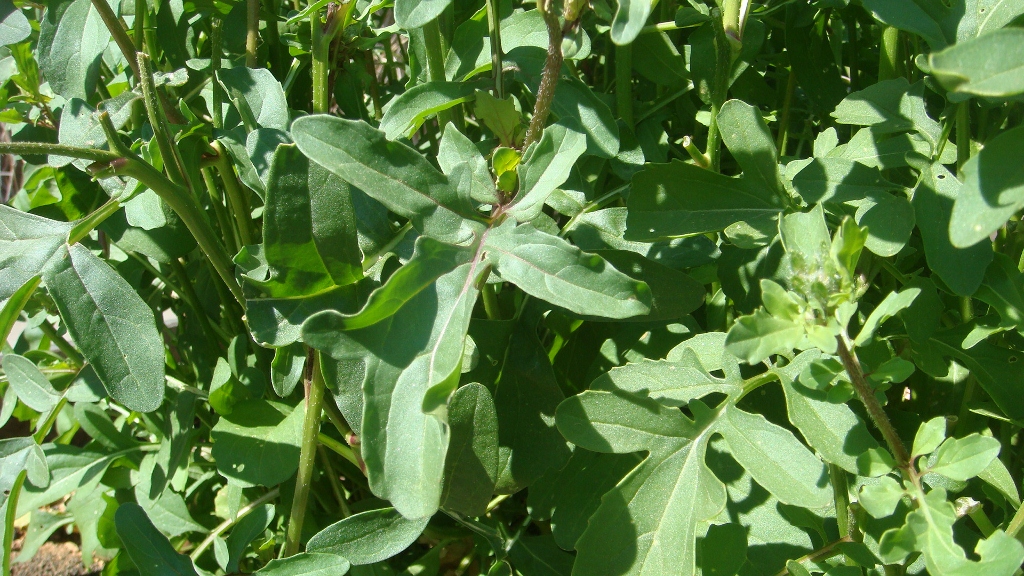
  1. I don’t remember planting it. It just showed up in my garden one day, and we’ve been eating it as a science experiment ever since. No one seems to have been affected negatively.
  2. I cannot kill it. It’s like a Hydra. Seriously.
  3. I am competing in a one woman competition to see who can come up with the hottest, spiciest arugula leaf by leaving some of the plants to grow old, woody and leggy. Thus far, I am winning in that one of my plants may qualify as eligible firewood come fall.
  4. If you take one of the leaves and squish it between your fingers and then bring it to your nose while inhaling deeply, you will be reminded of the smell of … arugula. It’s amazing.
  5. Arugula leaves make wonderful bookmarks.
  6. I am trying to popularize my newest dance move called The Arugula. It intermingles nicely with The Funky Chicken and The Mashed Potato. This is best accompanied by Mozart’s only foxtrot.
  7. There are very few etchings and even fewer bronze carvings of the arugula plant.
  8. No one has ever recorded a song about arugula that has made it to the top of the charts.
  9. No one has ever recorded a song about arugula.
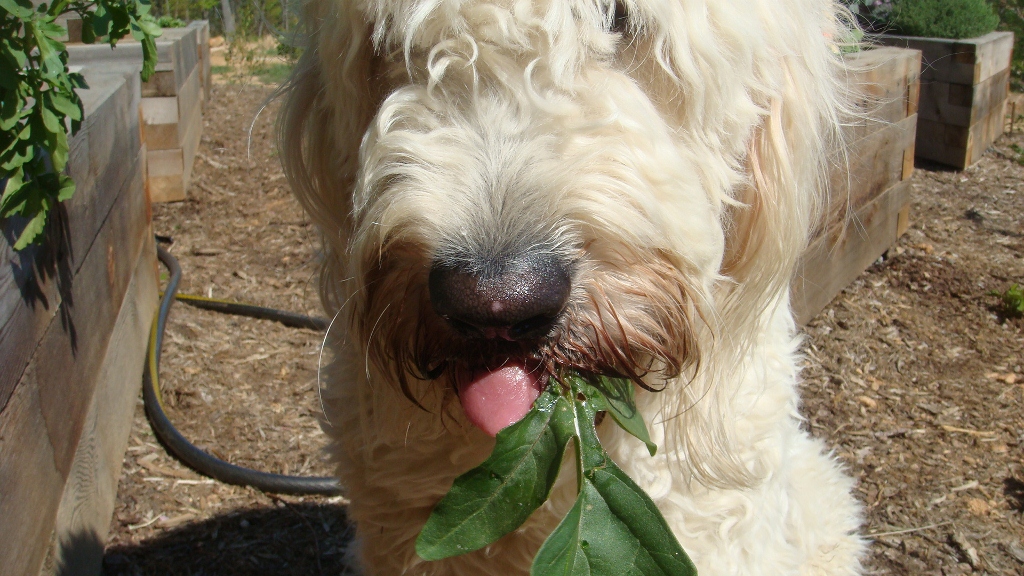
  10. Haggis, our resident hound, is addicted to it. He eats more of it than I do, and I’m writing this article … with his help.

Okay, so I hope this little pitch will have you all digging a small hole and tossing out a few seeds or snatching up a bunch at your local market. Or, if you find yourself in the neighborhood, come on up and I’ll load the backseat of your car with some of mine.

Once you get home, here are a few ideas of what to do with your booty—er, bounty.

Arugula and Bacon quiche

Corn Macaroni with Asparagus, Fava Beans and Arugula Pesto

Penne with Turkey, Arugula, and Sun-Dried-Tomato Vinaigrette

Roasted acorn squash and gorgonzola pizza topped with arugula

Roasted Beet and Blood Orange Salad with Spicy Greens Recipe

Meatless Monday: Roasted Beet and Arugula Sandwich with Green Olive Tapenade

The Best Lentil Salad, Ever

Searching for the Best Arugula Pesto Recipe, Making Arugula Pesto Cream Cheese Spread, and Discovering Arugula Pesto Pizza

Now Go Forth and Arugulate!

~Shelley

PS If you’re searching for seeds (from arugula to zucchini and everything in between), I’m recommending a company that not only has a worthy mission creed but a wonderful moral code. Give The Mauro Seed Company a looksee.

Their motto? Grow One, Give One. I’m impressed. Maybe you will be too.


Lastly, for the time being, our blog is closed to comments, but if you enjoyed it, maybe pass it on to someone else. Email it, Facebook it, or print it out and make new wallpaper for the bathroom. If it moves you, show it some love and share. Cheers!

Don’t forget to check out what we’re cookin’ in the Scullery and what we all talked about down in the pub. Plus, you can see more of Robin Gott‘s humor–all from the only pen carved from a human funny bone.

Big Words, Clean Teeth & Jell-O for Brains: a Lovely Recipe for Life

Sue Archer: Editor, blogger, and master of not only English but nearly every science fiction and fantasy language to boot. Linguistic skills more impressive than the blinking and confusing cockpit lights of the Starship Enterprise. Have you need of a first-class editor to guide your manuscript to lofty heights of high-class quality? Sue’s your gal. Hungering for a few golden writing tips to sharpen your blog, your essays, your work-related writing skills? Look no further.

Peruse Sue’s new editorial site and her blog site too—and I do mean peruse in the truest sense of the term. DIG DEEP. There is pure gold in them there words.

And if you feel like putting your feet up for a spell, see her fine interviewing skills down below. It was a pleasure and an honor to work with this lovely, talented lady.

A woman with cosmic talent, and universal appeal.

~~~~~~~~~~~~~~~

Conversation Corner with Shelley Sackier

Today I am holding a special edition of Conversation Corner with children’s author and humour blogger Shelley Sackier on her blog Peak Perspective. You don’t want to miss my first ever illustrated interview! Please come visit and read about our conversation on using large words, writing for children, how to be funny, and the advantages of having Jell-O for brains.


When I first read your About page, back when I was lucky enough to have discovered your blog, I was immediately struck by two things: your wonderful sense of humour and your mastery of large words. I’d like to know who I can thank for this. Who were your influences? And how did you land upon your clear calling as a humour writer?

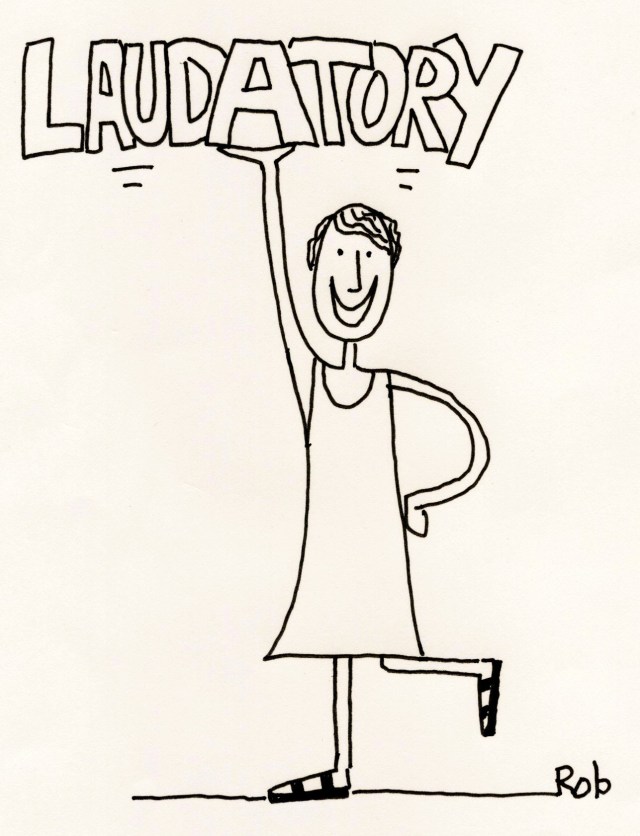
Well, firstly, Sue, a prodigious “thank you” for the laudatory commendation.
290815laudatory

Yuck. That sounded awful. And pretentious. And so not me. Except for the part in quotes. I am grateful to have the opportunity to speak with you, as I’ve learned a great deal from reading your essays and articles. But however it was you came to find me, I really should send the contact person a batch of cookies as a show of affection with my bountiful thanks.

And as far as where you can send your thank you card? My hero, Peter Mark Roget—British physician, natural theologian and lexicographer. I think I read somewhere that he liked line dancing as well.

290815line

He wrote a little bestseller back in 1805, which unfortunately for his followers and admiring fan base was not widely published until 1852. But still, it now exists in all its glory. When I discovered there was a book To Facilitate the Expression of Ideas and Assist in Literary Composition I nearly had a small rapturous fit of delight. I was hooked. His thesaurus is my daily drug. Every morning I swallow my Omega 3s, glucosamine, and a page of Roget’s work.

Sadly, you may find that Peter is slow with his correspondence. I’m still waiting to hear back from him on a small addition I was hoping he might include in the next release, but you know busy authors, right?

And then there’s my dad. He was really funny whilst I was growing up. He’s still really funny. And much quicker with his exchange of letters.

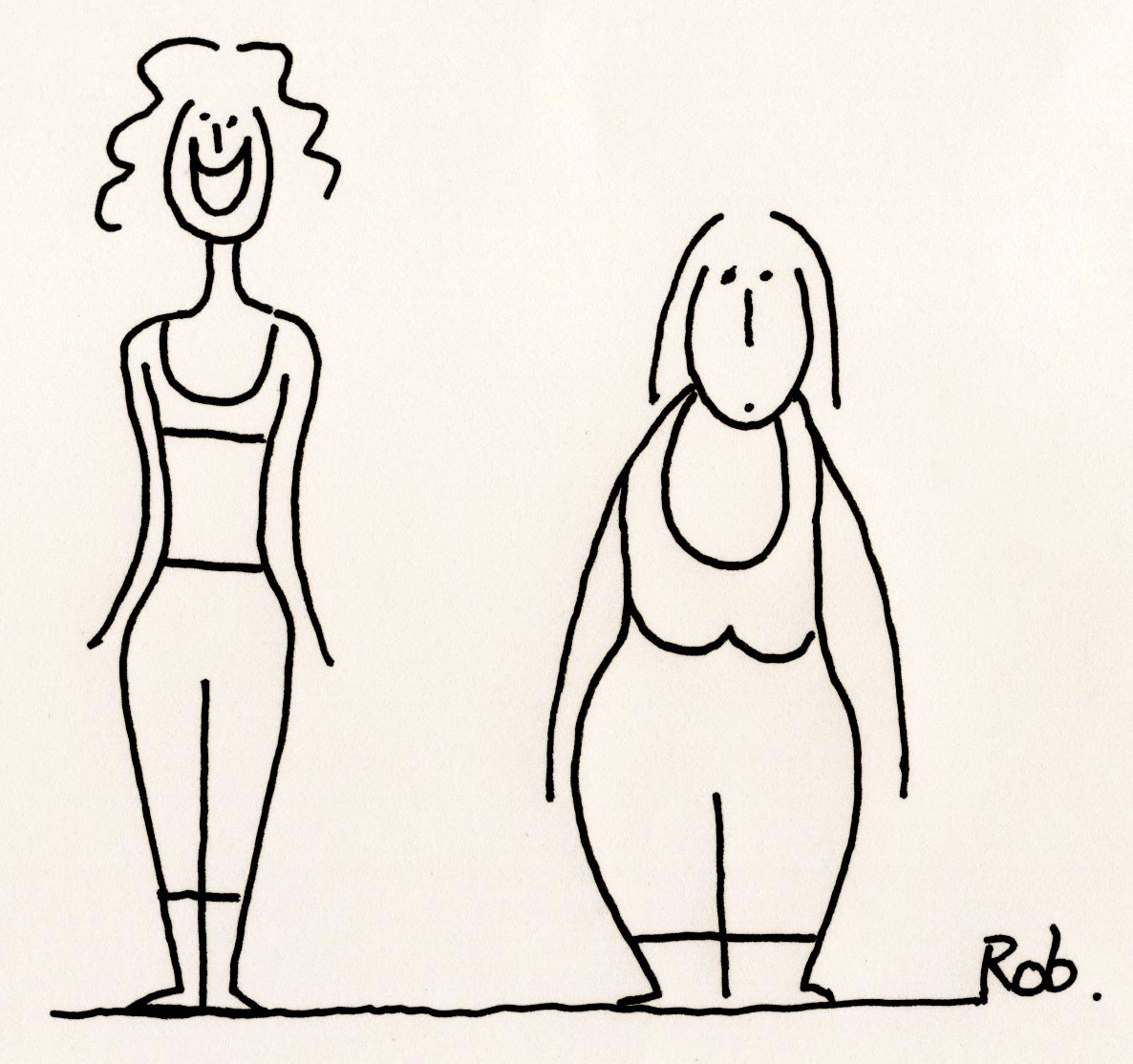
The classification of a humor writer was something I just morphed into—like how incredibly fit and attractive people slowly mutate into pudgy, sagging, middle-aged folks who are exhausted, underpaid and overworked. It creeps up on you.

290815shapes

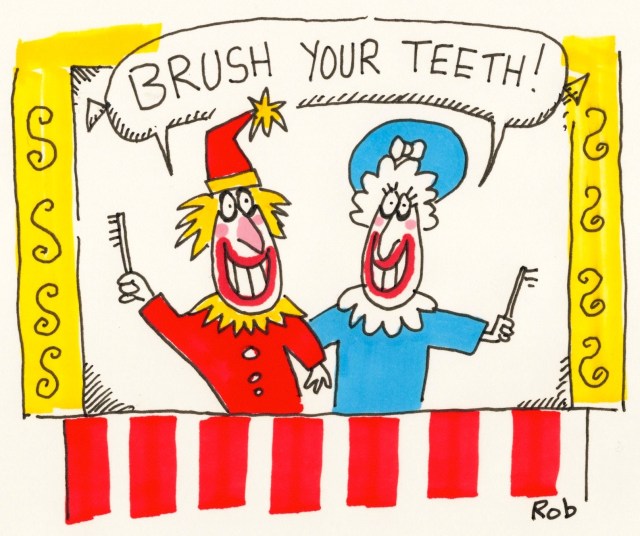
And also, making my children laugh was a good way to surreptitiously see their teeth and discover whether or not they’d brushed before bedtime.

Humor and hygiene go together like Punch and Judy. Well, that might not be a fitting example as they had a fairly contentious relationship. I think you get my point though.
290815pandj

I definitely get your point. I have found humour goes a long way in persuading kidlets to do all those “good for you” things. Also hugs. And maybe a stern look here or there. Did you find your experiences with persuading your children influenced how you wrote Dear Opl, which has its own “good for you” message about food?

I’m a firm believer in ‘time’ as the best teacher. I’ve always regarded the space between my children’s ears as a swampy, murky mess that was not going to fully settle into its final state until somewhere around the age of 25. It’s like Jell-O. I’ve got to keep tossing in as many parental pearls as I can right now with the hopes that later they’ll be viewed as worthy by the owner.

290815bigwords

That said, my mom drove home the message to me that all those bits of brilliance—the ones that immediately create the teenage phenomena of eyeball rolling, exaggerated sighing and door slamming—will be eureka moments that my children will have on their own and claim 100% ownership to. They will never—and I repeat the word never—remember that you were the one to give them the awesome info.

The best way to keep yourself sane in those moments of unacknowledged revelation is to simply chuckle at how well you worded it the first time around. Although a small part of me wants to leap up on the kitchen table, point a finger at their super smug dispositions and scream, “You’re totally plagiarizing my words from back in 2002 when you were 7!”

I’m guessing it would not go down as a bonding moment for any of us.

But yes, my “Dear Opl” messages are simply a spiffed up version of my “at home” message. And, as becomes clear in the book, not all of those messages are well-received or hit the mark, so I’m sure you can deduce the level of success I’ve had with my offspring.

Thankfully, neither one of them is close to 25 as of yet. I’ve got a ways to go before the Jell-O sets.

All power to you tossing in those pearls of wisdom, Shelley! I’ve certainly enjoyed the thoughts and observations that you’ve posted through your blog. 🙂  Could you share a little more about the message in your book, and how this message is expressed through the story?

One of the most important messages I wanted the book to convey was that there are no magic pills. Life is full of problems and we all have to handle them.

Pushing them away, ignoring them, or pretending they don’t exist creates an unruly monster that ends up taking over. The world is full of advice—both good and bad—but the filter system for determining which is which lies only within ourselves. People have stopped listening to the wisdom of their bodies and minds. It’s there. Buried beneath a boatload of advertising and social pressures to conform, but still there.

The book’s main character, Opl, does a lot of avoiding, rejecting and misguided judging. She’s in an emotionally fragile place as a result of the death of her father and living in a space that no one has been able to help her move through. So she muscles her way around on her own and continues down a path of unhealthy choices because they’re filled with instant gratification. The problem is solved and soothed for now. Kids struggle with looking more than 30 seconds in front of them, and this isn’t due to a lack of intelligence, it’s because of brain development. They don’t have all the tools yet and our job as parents and educators is to hand them those tools and explain the manual. At this point, a lot of it looks like it’s written in Klingon.

The grownups who care for Opl finally clue in to what’s happening and begin to nudge her into a place of growth—the inner kind, which is where she struggled with a deficit. Her grandfather helps her discover real food. Her yoga teacher illuminates Opl’s inner insight. And Rudy, an injured Iraqi vet who works at the food pantry, teaches her about desire and regret. These people are not there to “fix” her problems, but rather draw back the curtain so the chance for self-discovery is available.

As much as I support parents who see the need for their kids to fall down and scrape their knee, they still need the occasional Band-Aid. They are not tiny adults. It’s a fine line we walk in order to keep balance. You give them a little and you step back and watch. ‘Trial and Error’ parenting.

290815tiny

 Speaking of not being tiny adults…I imagine that writing for a younger audience must have required a very different approach from writing your blog. What types of things did you have to think about when writing your book, as opposed to blogging? And do you have any tips for readers who are looking at writing for younger readers?

In my experience, blogging and book writing are two different beasts, and employ two different skill sets.

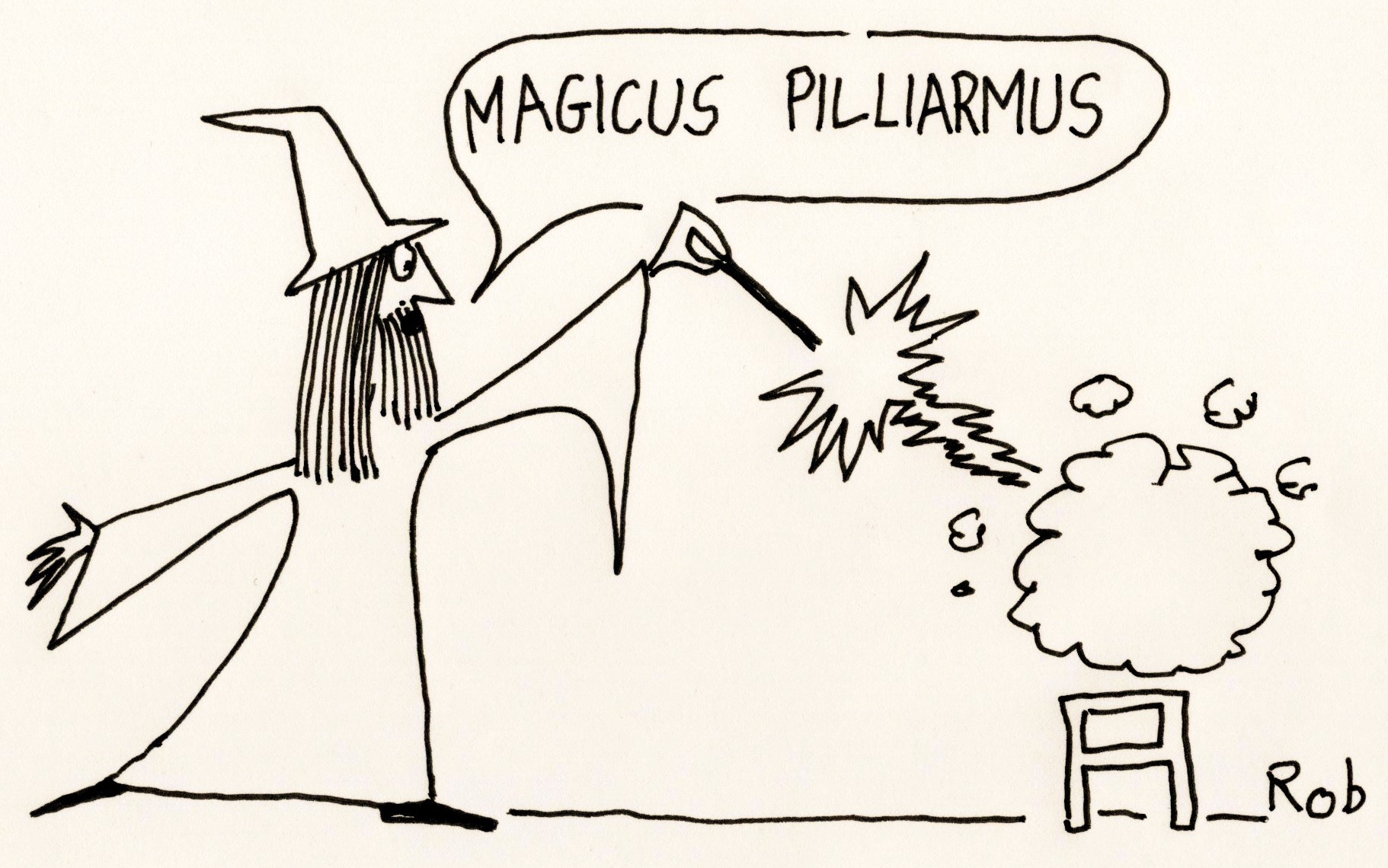
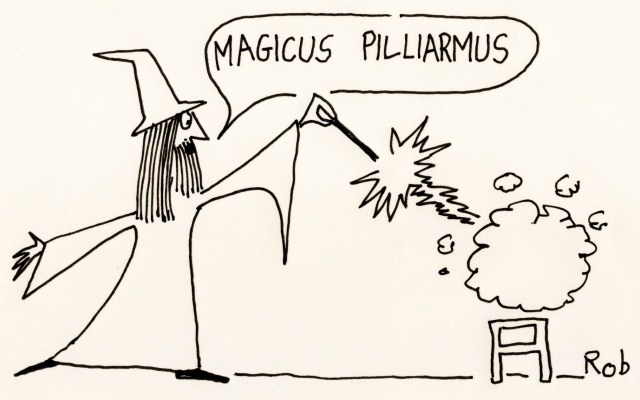
I set about blogging to work on something very specific. I wanted to create the ability to demand my muse show up for work every single day. If my butt is in my chair, there had better be some bit of sparkle hovering about in the air that I can reach up and grab by the fistful.
290815magicus

It was about developing accountability for a job and not relying upon the tired trope of Ah well, writer’s block again. What can you do?

It ain’t easy. But I don’t think true accomplishment is meant to be.

Writing a novel is broken down into blissful and not so blissful sections. There is no feeling in the world to me quite like figuring out a scene, or the dialogue, or discovering the heart of a character and what they bring to the book. Writing Story is a method of therapy and psychoanalysis to me. I discover bits of ancient truth within the unfolding of this scrap of someone’s life. I’m nothing more than a translator of a highlighted piece of the human puzzle.

Okay, so that’s the purple prose flowery blissful part for me. Creativity explodes everywhere.

The not so blissful sections are the deadlines, the edits, the rejections of your edits, the people who don’t understand why you won’t just DO SOMETHING WITH YOUR LIFE. There’s a lot of that and more. You’ll know pretty soon if you’re cut out for this kind of life pursuit or not.

Advice for those looking to write for young readers? Be youthful. Be goofy. Go back in time—really try to propel yourself to those feelings, those situations, that mindset. The way you looked at life was so different. Again, kids are not just tiny adults. They’re a whole different animal, with claws and sharpened teeth, and fairy wings and magic wands. Bring back your ten-year-old self and give her a massive welcome home hug.

My ten-year-old self wanted to write fantasy novels, so I can definitely relate to the fairy wings and magic wands. 🙂 I think as adult writers we need to maintain that level of creativity and imagination if we want come up with compelling ideas and relatable characters. Like the character of G-pa from your story. How did he appear on the scene? (I must admit that G-pa was my favourite character, he kept cracking me right up.)

Every time I wrote a scene including G-pa, I just wanted to squish the guy. His gruff exterior masked a deep love for his grandkids and I loved making him struggle with the desire to show it.

He was effortless to create, and as I’ve come to discover within my books, I apparently always find the need to have a “G-pa” character in it. He’s mostly based on my dad so I’m sure it’s a Freudian thing.

As a side note, I’m a big believer in not having adults solve problems for kids in stories, but I’m also very aware of the fact that knowledgeable, loving, and encouraging adults are an absolute necessity for guidance. I believe the ability to problem solve is one of the greatest skills we can teach our kids, and G-pa felt like a character that could help contribute to that accomplishment.

Okay, now for the final and most important question. What is your favourite homemade dish? (And have your kids mastered the art of making it yet?)

Thankfully, neither of them have taken a strong liking to all those earthy Polish dishes I had to eat while growing up—the ones fortified with blood to try to cure the pastiness out of my people or all the ground up bits that got shoved into intestinal casings and called ‘links you’ll love, I promise—now eat.’

I think we all adore Fajita Nite. Whenever I picked up the vibes that someone’s day was going to hell in a handbasket, it was the one meal that never ceased to lift their spirits. Maybe it’s the fact that I line up all the ‘fill your tortilla with these options’ on the counter and to them it’s like visiting the buffet bar at Applebee’s, or that the house smells like an old Tex-Mex cantina for the next 24 hours, or it could be because I drag the mechanical bull out into the living room for after dinner entertainment—I’m not sure, but we all love it.

And no. I’m thinking it’ll be a while before they decide to make it themselves, if ever. Some recipes just don’t taste of home if you don’t make it there.

No, they don’t! Thanks for inviting me into your blogging home today, Shelley. I’ve enjoyed chatting with you. And all the best to you with your book!

*ROBIN GOTT’s NEW POST* (click)

Don’t forget to check out what we’re cookin’ in the Scullery and what we all talked about down in the pub. Plus, you can see more of Robin Gott‘s humor–all from the only pen carved from a human funny bone.