Will Goldfish be More Clever than our Children?

Because of the nature of my work, I often find myself in the company of children and teenagers. If one intends to write for young adults, or those peeking over the wall into young adulthood to see what the fuss is all about, one finds benefit by listening to them, conversing with them, and generally just taking a softly tipped stick and poking about in territories you might not normally be invited into.

Curiously, that same ‘nature of my work’ is growing more challenging as it does not fit into the current timeframe of many young adults’ attention span—a trajectory of current evolution where now every fleeting second of focus counts and best be saturated with impactfullness.

Where I used to describe the concept of story to young readers as a richly developed plot with engaging dialogue, a diverse set of problems that might tangle complexly at first but unravel beautifully in the end, and a few solid examples of struggle, failure, perseverance, and finally success, now my definition has been forced to change. Currently, I define story as “Once upon a time there was a guy, he had a problem, he figured it out, the end.”

Much more TikTok, much less time-honored tale.
Short-form episodes are now the norm. One can see information streamed about nearly anything and those sessions require a mere 15 seconds of focus. The problem is, is that a recent study determined that the average human attention span has fallen from 12 seconds in 2000 to a whopping eight seconds today.

Goldfish have a better chance of making it to the end of that video as they are believed to have an attention span of at least nine seconds.

Somehow, our youths are being encouraged and pushed to find satisfaction with a story that lasts less time than we expect them to be standing in front of a running sink, washing their hands. I grapple with this especially hard when I realize that oftentimes just one of the myriad sentences I shove into a paragraph far exceeds the newly allotted timeframe many kids will devote to scanning words across a page. And how does one cram a beginning, a middle, and an end into a curt and clipped few moments?

One of the most difficult tasks authors—or anyone with something to sell—must do, is create a pitch. Something that answers Why should I devote my attention (or hard-earned pennies) to you? It often involves boiling your story or your product down to its bare bones—the skeletal structure that shows all strength and no fluff.

The process for authors often happens like this:

  • take a 325-page book and reduce it to one page (hard)
  • take that one page and tighten it to one paragraph (ugh)
  • take that one paragraph and shrink it to one sentence (facepalm)

If you’re writing a film script, the next bit is to slash it to fit the form Blank meets Blank. Godzilla meets The Godfather, Dirty Harry meets Harry Potter, Jaws meets The Little Mermaid—or something like that. Somehow the mash-up is supposed to bring immediate clarity to anyone hearing the phrase as to the plot, struggles, and triumphs within the storyline.

But does it really?

Can one short phrase really tell us the necessary amount needed to exclaim, “I get it”? Can a fifteen second video really reveal the depth of dance, comedy, or education? Is it even possible to jampack a “How to Fold a Fitted Sheet” into 30 seconds or “The History of World War II” into a three-minute YouTube video? Will our next generation of surgeons learn how to remove our gall bladders via Instagram stories?

Personally, it takes me donkey’s years to learn anything. And it’s not because I’m slow. It’s because I’m slow and stubborn. New information that crosses my path is met with skepticism until I can research its source, decipher which end of the political spectrum it may live on, and see Anthony Fauci demonstrate it at a White House Press Conference. It took me literally decades to watch the series MASH because I believed, like the execs telling the show’s writers, that the series run would be limited because the Army isn’t really a pool for humor.

I need convincing. I need repetition. I need my children to walk through the door at holidays and declare amazement at the fact that they’ve actually time traveled into history and perhaps I should let someone in the science department know that it’s possible.

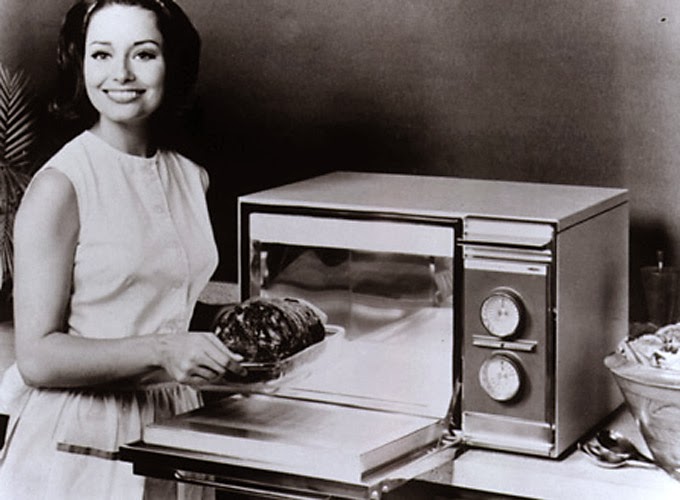
“When are you going to get a new microwave, Mother?”

“As soon as I’ve researched all the newfangled ones on the market. There’s a lot to learn and compare.”

“Have you yet learned that this antiquated piece of junk is a fire hazard?”

“DON’T TOUCH MY RADARANGE!”
But it’s more than just diving deeply into any subject to learn its function, purpose, and capability, it’s also about staying with something long enough to feel the comfort of its complexities. Typically, you cannot learn to play the piano by just watching someone else on video, and it’s downright impossible to sum up our planet’s horrific battles by declaring into a camera lens, “Humans fight. War bad”. There is nothing wrong with embracing the depth and breadth of any subject, but I feel it’s wrong to lead kids into believing any topic can be shortened into a framework of explanation that would have the writers of Cliff Notes blush at its brevity.

Our world is huge in scope and requires effortful thought to make sense of even its least complicated aspects. It’s a daunting task, and we’ll never finish it, but we certainly shouldn’t allow our children to shy away from it. History takes time to be explained. Skills take time to be acquired. Stories take time to be told.

Perhaps we can quote American author and keynote speaker Michael Altshuler more often to our children: The Bad news is time flies. The Good news is that you’re the pilot.

~Shelley

For the time being, the blog is closed to comments, but if you enjoyed it, maybe pass it on to someone else. Email it, Facebook it, or print it out and make new wallpaper for the bathroom. If it moves you, show it some love and share. Cheers!

Don’t forget to check out what’s cookin’ in the Scullery and what we all gossiped about down in the pub. Or check out last month’s post and catch up.

The Meticulously Precise and Non-Magical Way to make Whiskey

I’m nearly finished writing another book.

This one won’t be published for the public though. It’s a technical manual.

I’d never done a technical manual before; therefore, this genre has been entirely new to me.

I was at one point reminded, Technically speaking, technical manuals do not fall into a “genre,” Shelley.

Disappointing news.

I was also at one point informed that my other skills of fiction writing were, although appreciated, inapplicable with this work.

“What do you mean?” I’d asked, halfway through the job.

Please do not allow the machinery to have any “dialogue.”

Hugely disappointing news.

In my mind, everything is conversing with anything beside it. Refrigerators hum, clocks tic, boats roar, trees creek, tea kettles whistle, grills hiss, frying pans spit, drains gurgle—I could go on.

There is conversation with their purpose, with their function, and it is our choice to tune in to hear it if we choose to do so—or maybe it’s just a special type of non-worrisome derangement those of us who practice anthropomorphizing inanimate objects experience every day.

So, okay, the mash tuns, the fermenters, the stills, and bottling equipment will not be engaged with any discourse. Fine.

Also, no need to “set the scene.”

Wait. What? No “Once upon a time”? No “In a galaxy far, far away”?

No.

No “Imagine if you can, a farm field in Virginia filled with rows of waving grain. Corn so tall, so yellow, so sweet. Wheat so soft, so feathery, so—”

No. Also, just list the manufacturer of each piece of equipment. No need to give colorful backstory that creates a uh … biography for them.

Damn.

But the still is an old copper Armagnac pot which surely, if you’d allow me to research, has the most fascinating history, connecting it to a village in Gascony, and likely to some illicit brandy making where people’s lives were at risk for defying the king’s orders and skirting around the excise men, right?

No. Louis XVI died in 1793. The still was made in 2006. Write that down.

No excise men?

*insert cold stare here

Fine. Hard facts only. It has been an arduous road to travel. It has been serial numbers, maintenance schedules, standard operating procedures, operator responsibilities, quality controls, ingredient specification sheets, safety protocol, system malfunction detection. It has been measurements, sampling data, testing methods, recording methodology, and out of the realm of tolerance identification.

No language describing the invention of any equipment, the trials and tribulations of the inventor, the recognition, the accolades, the race between rivals to patent first, to reach the market, to make a name and reap rewards.

No timeline of history, the tales of great machinery malfunction and mishaps that caused strife, or injury, or daresay … death.

Nope. Just operator files.

It’s ‘if blank, do blank.’ Or ‘when this, then this.’ It’s ‘measure now, record here.’

There’s no beginning, middle, or end.

It is not a story, not a narrative, no plot.

None of the machinery barely scrapes by, screeches to a halt, or belches out for attention.

The manual is meant to be informative. Concise. Crystal clear. It is meant to provide a “just in case” scenario for an event like a catastrophic pandemic wiping out all previous operators’ ability to fight through throngs of apocalyptic zombies to appear at the facility, allowing any stranger to eventually walk in off the street, discover the book and easily, effectively, and effortlessly pick up where we left off.

No, Shelley. It is meant to use as a teaching guide for new employees.

Yeah, that too, but my take could be plausible (I mumble quietly).

So, I study each piece of equipment. I learn its function. I define its specifications. I describe its purpose. It is thirsty work as I crawl around, beneath, above, and inside many of them. I watch them perform. I study their mechanisms. I research their optimal modes.

And I learn … they are still magical.

I learn it from listening to the operators as they describe their years of experience working with each station.

The grain will stubbornly clump and ball if you don’t chase it with the paddle in the cooker. It likes to hide right in that corner.

If you don’t clamp down the hose securely, the impellor pump turns into a raging snake that’ll spit hot mash on every square inch of the production room floor.

You see that steam rising from the strip still’s parrot spout? We call that the dragon’s breath.

I did find a story. The story of waking up the yeast before releasing it into its comforting, warm bath, of performing the tightly timed choreography between pieces of machinery as they demanded immediate attention to avoid calamity, of discovering that the general consensus for many of the processes was that you just had to feel it, smell it, taste it, gauge it. The machinery had its tells, and a good operator was sensitive to them and could anticipate results because of the accumulated years of a bonding relationship.

Making whiskey requires procedural care, yes. It’s a recipe. It’s a step by step adventure that when timed perfectly churns out a salable product.

But to me, and to others, the machinery is responsible for the alchemy, the head-spinning potions, the conjuration that leads grains to glass, this honeyed, headying elixir.

But the manual will not reveal that magic. The manual will not even hint at it. The manual conceals the story.

Except it’s there. We just don’t capture it within the pages that keep the secret safe. It is for others to read between the lines, to unearth the buried story within it.

If they find it after the zombie apocalypse.

~Shelley

For the time being, the blog is closed to comments, but if you enjoyed it, maybe pass it on to someone else. Email it, Facebook it, or print it out and make new wallpaper for the bathroom. If it moves you, show it some love and share. Cheers!

Don’t forget to check out what’s cookin’ in the Scullery and what we all gossiped about down in the pub. Or check out last month’s post and catch up.
 

Explaining the Birds & the Bees, But Mostly the Bugs

But before we begin …

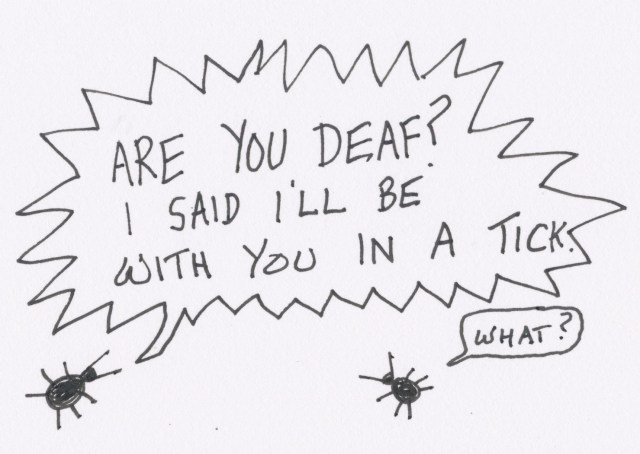
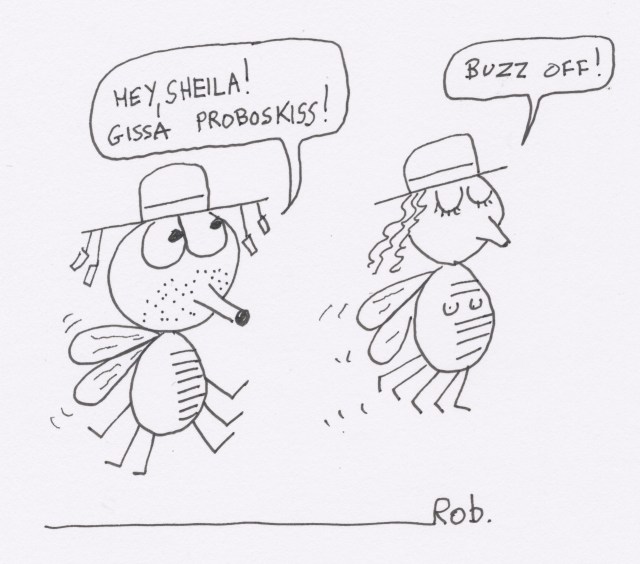
A thousand squealing thank yous to Robin Gott — sorcerer of stage, screen, and scribbles — who has so kindly taken a few minutes off from work to sit in his dressing room and whip out a handful of his amazing cartoons to accompany this post. And for so much more of Robin, visit robingott.com

~~~~~~~~~~~~~~~~~~~~

I think we can all agree that we will never, ever truly be alone.

And for some that is a giant sigh of relief, as being alone is akin to losing your entire family and all your friends—even if they only existed on screen in the form of the cast of Downton Abbey.

But for others, no matter how hard we may try, we discover that we will shuffle on this mortal coil in the company of countless others who clearly have never been invited along.

They make quick assessment of who you are, but mostly where you live, and decide to take up residence—contributing nothing to the upkeep and maintenance, and only adding to your woes.

Bugs.

As I’m pottering about my new abode, discovering nooks and cramming things in crannies, I also discover a great variety of crammed in arthropods—either walking, flying, or in some cases, swimming, depending upon the nook or cranny.

It has been a cycle of either open up cupboard, glance toward ceiling, or focus in on floor followed by squeal, squeak, or shriek.

Now don’t get me wrong. I think bugs are interesting. Fascinating, even. Because who doesn’t want to know how a frustrated Australian seaweed fly finally gets some action from all the disinterested Sheilas around him?

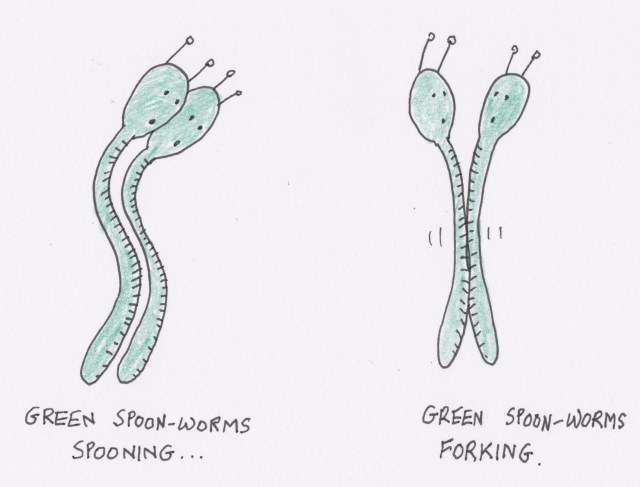
Or how a green spoon worm, happily sitting at the bottom of the sea, can accidentally inhale her husband when she simply suffered from an itch on her nose?

Well, I certainly did.

I’ve read Olivia Judson’s Dr. Tatiana’s Sex Advice to All Creation. I took copious notes about virgin births and about paralyzing would-be lovers so that your children can eat him alive. I scoured the sketches of detachable penises, and made sure I understood how one could go deaf from too much mite sex.

But seeing it in real life form, knowing that all that was happening right beneath or above my nose was something else altogether.

Hello, Pest Control.

The jolly folks on the other end of the line proved almost too happy to hear from me.

Infestation? Blight? Chiggery scourge and epidemic? How delightful! We’ll be right over.

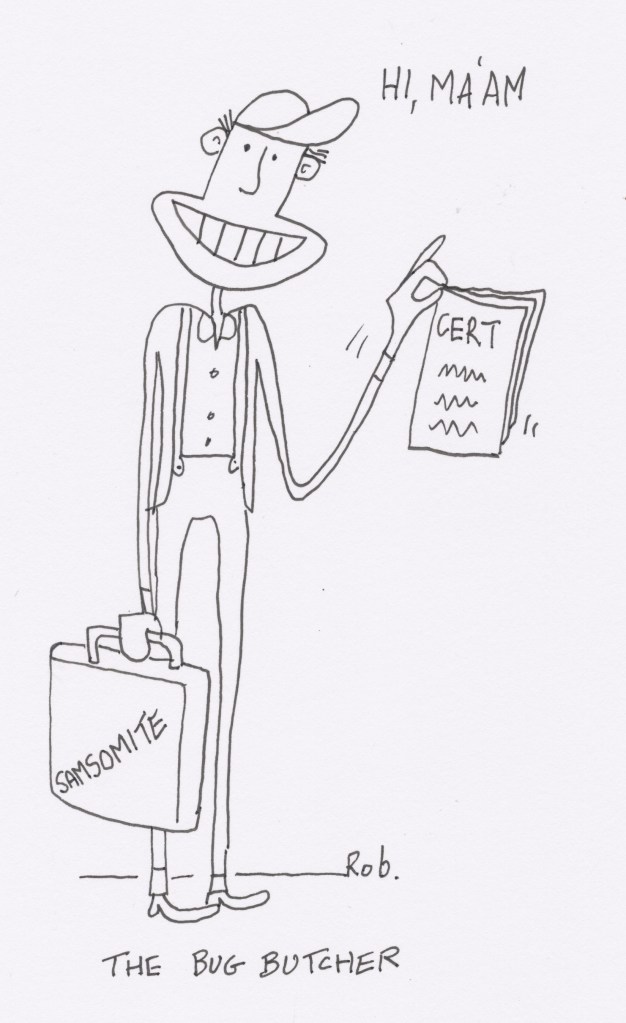
Mere moments later, I greeted a six foot three, thin as a pine sapling fellow with a beaming face exuding pure celestial rapture, and instead of shaking my hand, he held up a framed 8 x 10 diploma.

Blessings on you and yours, ma’am. My name is Jebediah, and I just got my certs.

Well, uh … I stumbled, glancing up into the scalding hot sun where his head was haloed, Praise … be?

He beamed sunshine. Yes, ma’am. And then stood, turning to admire his freshly-inked degree.

It’s not been 24 hours yet since the family gatherin’ with coffee and a slice of pie to celebrate my good fortune, but I assure you—

He peered down at me gravely.

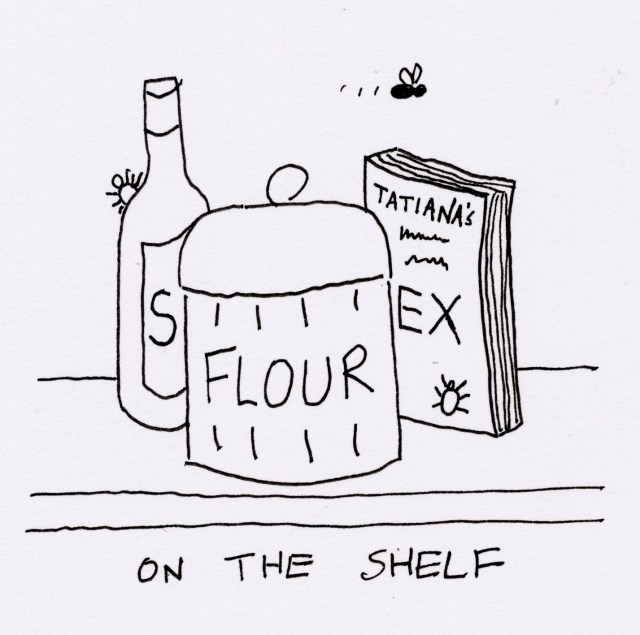
—I am fully in charge of my faculties despite sneakin’ that sip of Mama’s cookin’ sherry she hides behind the flour tin in the pantry. Ooowee!

He made to swipe at his brow, and I realized the pest company had sent over a reincarnation of Mayberry’s Gomer Pyle.

I suddenly wondered if this meet and greet should come to a quick end, as a few steps farther into the house he would be received by my own set of not-quite-choir-boy-bottles. Well over one hundred of all the Bens and Glens from Scotland, neatly lining an entire wall of shelving.

Come on in, Jebediah, I said hesitantly. Let’s see if we can’t cleanse this little dwelling of its demons.

Six steps into the house he did a three-sixty spin, his wide-eyed, slack jawed visage finding my uneasy one.

Ma’am? I saw all the wood from the outside as I was drivin’ up, but I had no idea there’d be all this wood on the inside too.

I looked at him, my head cocked with incredulity. I live in a log cabin, Jebediah.

He nodded soberly and whispered, This was not on the paperwork.

Might want to make a note of it for next time then, I suppose, but I’ll leave you to it for now. I’ll be in my little office if you need me. I pointed down the hallway.

For the next ninety minutes I heard precious little and finally decided to hunt down the biblical bug butcher.

Jebediah? I called out, and then spotted him crouched on the floor in a corner, his hand cradling an iridescent blue-winged dead wasp.

He glanced up at me, his eyebrows crinkling as he sighed. Real butes these guys are, ain’t they? This here is Chalybion californicum—what you all commonly call the Blue Mud Dauber.

Then he held out his other hand with another bug that looked exactly like the first—including the whole dead part. This here should not be confused with his cousin, the Chlorion aerarium—the Steel-Blue Cricket Hunter—as although the same size, one has a longer pedicel, and the other is much more hairy.

Also, he went on, these fellers are worthy specimens, as some of them will rid the environment of crickets and others of the vicious black widow.

I studied the young man for a full thirty seconds as he sighed long and sorrowfully once again, his head bent low over the bugs he was in charge of destroying.

Jebediah? Are you sure this is the right job for you?

He looked up at me and then swept an arm in a circle over his head. You live in a tree, ma’am.

I sniffed. Well … a dead one, really.

He nodded. Exactly. It’s the natural habitat for nearly all of these creatures. It seems … he paused, … it seems a little unnerving that there has been so much death here today. I did not expect such a high body count on my first day of work.

I walked to my bookshelf and then returned to Jebediah on the floor, holding out Dr. Tatiana’s sexpert advice for all bugs.

Here. Read this. Chances are you’ve been far too immersed in the end of the life cycle for all your many legged friends.

Jebediah read the title slowly and out loud, and then looked up at me dumbstruck. A slow smile crossed his face as he tucked the small book into his back pocket and headed for the door.

Word of warning, Jebediah, I added, you might want to keep this behind the flour tin in the pantry too.

~Shelley

For the time being, the blog is closed to comments, but if you enjoyed it, maybe pass it on to someone else. Email it, Facebook it, or print it out and make new wallpaper for the bathroom. If it moves you, show it some love and share. Cheers!

Don’t forget to check out what’s cookin’ in the Scullery and what we all gossiped about down in the pub. Or check out last month’s post and catch up.
 

You Cannot Teach An Old Cat New Tricks … Or Anything Really

“What do you think you could do? For your part in the program?” I heard the voice ask.

I looked around my desk. Papers, sticky notes, a leftover bowl of quinoa the cat was extremely interested in exploring.

“Umm …” I hesitated and tried to buy some time. I glanced at my phone, hoping it would ping with some notification that I could cleverly read out.

The phone was not helping. And the person on the other side of the line was waiting for my answer.

Yes. Yes, I very much wanted to be part of an evening called Women In Whiskey, hosted by a distillery I held in the highest of esteem. And Leslie, their head of PR, was offering me just that opportunity IF … I could create a marketable angle for why I should be there—and a persuadable reason people would feel inclined to attend because I was part of it.

The cat pulled a paw out of the bowl of quinoa, now coated with the sticky red grain.

She stared at it intently. She nosed it. Then stuck a tiny pink tongue out and gave it a tentative taste.

Shaking her head to rid herself of the apparently foul flavor, I sighed and frowned.

She didn’t even really give it a try. Judged it unpalatable without truly knowing anything about it.

If only cats were teachable … and not obligate carnivores.

“Whiskey Tasting 101,” I blurted out. “I can do an introductory course.”

There was a short pause on the other end of the line. “In ten minutes?” Leslie asked.

“Fifteen. I will squish four lessons into fifteen minutes.”

“Hmm … what kind of lessons? Remember, you’re going to be working with a food and spirits critic, a mixologist, and a distiller. You’ll have to bring something different to the table.”

Leslie knew I wrote books—middle grade, YA literature, non-fiction essays, and a lot about whisky. She knew I’d apprenticed in Scotland—studied with distillers and people who were hugely passionate with their work—all because I’d eventually developed a great love for the spirit and a yearning to make it. But my main labors were simply writing about it.

How many people would want to come to an event to hear women speak about their work in the industry and find out my part was just “Lemme tell you about my books.”

Can’t imagine that would fly.

But for the past twenty-five years I had done something that morphed accidentally into a profession. I became a teacher.

Enthusiasm can do that to a person.

Or fanaticism. Samey samey.

My history was one that was both typical and atypical of a person first introduced to brown spirits.

Typical, in that I thought it was the most disgusting thing ever to touch my lips—save for Jeremy Krazinski, who, in fifth grade, tried to plant a big one on me just beneath the monkey bars when I had no idea it was coming.

Atypical, in that only a few short years later, after having traveled repeatedly to Scotland and gaining a depth and breadth of appreciation for everything falling between the barley and the bottle, I found myself determined to make it. To understand the craft, the science, and the magic of that spirit.

My longing for a deep dive found fulfillment because of a great distillery, but my love for whisky blossomed because of a great teacher—one who discovered my first handshake with the spirit had been an avoidably painful one. I’d learned incorrectly and had a good bit of erasing ahead of me. From that moment on I’d grown resolute to not allow the same “first time flop” unfold for other people. I wanted them to love whisky as much as I did.

“What will you teach?” Leslie repeated.

I recalled a series of essays I’d long ago written called Belly Up to the Bar. “Eyeing, Nosing, Tasting, and Finish,” I said with more confidence than I felt.

Indeed, the more pertinent question going through my mind was, Sure, I can write about it, but can I aptly teach it?

I thought about the most proficient instructors in my life thus far. The ones whose lessons have left the greatest indelible imprint on me had no degrees in education—nor fancy lettering following their names. They had instinct, purpose, and need.

A cat has schooled me in the necessity of paying attention to the most muted of reverberations as much as any sound engineer. You wish to catch a prey? Listen like your life depends upon it. Hunger can tutor the stupid right out of you.

An elderly Polish neighbor repeatedly walked me through the woods as a child, revealing what will taste good raw, what will taste good cooked, and what will outright kill you if you so much as lick it.

And no doubt my parents have left me with life lessons near impossible to accumulate from anyone else: Do what you love, love what you do, and please pay attention goddammit to what Mrs. Sobieski warns you not to lick.

We are surrounded by teachers. Many have a desire to give you what they already possess: comprehension of the world. And oftentimes for free—simply because of the passion they possess with the subject.

“Okay, you’re hired,” Leslie decided.

I was thrilled. Most times in life I’ve found myself as the student—the hungry pupil desperate for know-how, happy to be on the receiving end of it. But on this night, I would get to be that teacher.

That teacher who teaches what she loves, and loves what she teaches.

Likely I will start off the session with an introductory phrase such as: “Thank you all for coming, thank you for being willing to learn, but mostly I’d like to thank Mrs. Sobieski for allowing me to be here tonight.”

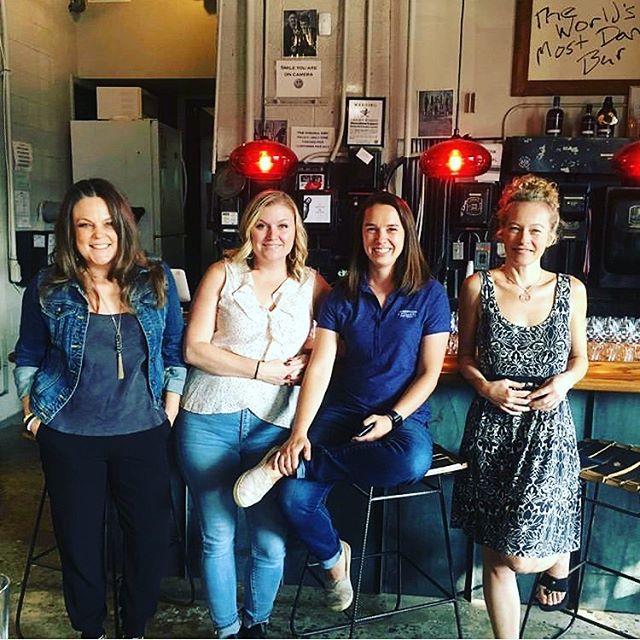
The Reservoir Distillery’s “Women in Whiskey” event.

(Robey Martin, Beth Dixon, Mary Allison, and Shelley Sackier)

For the time being, the blog is closed to comments, but if you enjoyed it, maybe pass it on to someone else. Email it, Facebook it, or print it out and make new wallpaper for the bathroom. If it moves you, show it some love and share. Cheers!

Don’t forget to check out what’s cookin’ in the Scullery and what we all gossiped about down in the pub. Or check out last month’s post and catch up.
~Shelley

Yes, Splice and Dice, But First … Stumble and Tumble

Okay, I wrote an entirely different blog post before this one. The essay you’re reading isn’t even remotely similar to the original. This one isn’t about hiking, this one isn’t about how you can effortlessly compartmentalize mountain bicyclists onto an easy to read Game of Thrones character trait spectrum, and this one isn’t about how much the other one sucked.

It really did.

Yes, you’re right, I did just make this essay about how much the first draft was awful, but we’re not going to talk about that anymore.

Because I wasted hours writing it. All thirteen hundred words of it. Which is far more than I typically allow myself for my monthly post.

People don’t have that kind of time.

Or patience for pure drivel.

Which is exactly what it was.

Seriously, enough of the old one. My point is that editing is everything.

You have to know when to keep plowing through with some endeavor, when to cut, snip, and modify, and when to just find a large fire pit to toss it all into and watch it burn, baby. Your tears can dry by firelight. It’ll be romantic.

Photo by Mike on Pexels.com

I learned long ago the importance of an editor. I learned shortly after that the importance of a good editor and how there is a difference. And now I’m learning just how badly I am in need of a life editor.

We all need people like this. People who shape, guide, instruct, and brutally shine a light on everything we’re too close to get a real grip on. How awesome would it be to have someone silently in the background? A tiny Jiminy Cricket on your shoulder who either subtly whispers in your ear as you’re about to reach for something, “Uh yeah, I wouldn’t do that. Drop it, sweetie,” or one who shouts, “Oh my godfathers, what the hell are you thinking? Run!”

Lately, I’m falling in need of something in the middle. A helpful aid who has a bird’s eye view of thirty seconds in front of me, and who maybe has a sweet and syrupy southern accent, prefacing all my idiotic choices with a, “Aww, God bless your cotton socks, honey,” so I don’t feel such a sharp rebuke with my blunders.

I’m making a lot of mistakes recently. Misjudgments, miscalculations, moving with misdirection. Energy spent on the wrong thing and on the wrong people.

It’s a little bit like the time I decided to paint my bedroom florescent yellow to increase the cheeriness factor within it and ended up suffering a year of massive migraines. I also lost a year of sleep as I slept in a room that shined as brightly as the inside of a working nuclear fusion reactor.

It stings a bit wasting two or three hours on writing an essay that turns out to be a stinker versus wasting a week on a project or plan that falls short because you lack the vital fundamental understanding needed to see the big picture.

And no doubt there are countless people who can scoff at the above paragraph’s whiny note and kick away its relevance by revealing that they wasted twenty years on a spouse who insisted they were near a breakthrough with their milestone advances in organic tree water and anti-inflammatory conifer oils when you finally opened up the door to their backyard science lab and discovered they’d been doing nothing but perfecting the art of making balloon animals for children’s birthday parties.

Experience is expensive.

But so is any worthy education, right?

I finally learned how to write musical manuscripts for a big band swing orchestra with swift speed only after three of the guys cornered me backstage following one rehearsal. They said either I sit down with them and see why the bullpuckey bunk I was penning for them stunk or they were walking and I’d be left without a horn section. Again.

It was the hands-on guidance I needed instead of the “Music Theory 101 classes” I suffered through where reams of music returned to me from a pricey conservatory instructor with his red penned notes saying, “Review page 329.”

Okay, fine, but why??

And experience is painful.

I recently attended a fifth grade science fair where I saw a young lady, casts on both arms up to her elbows, standing in front of a white board that read How High is Too High?

No doubt all of us look back and feel our lives might benefit from some redaction. From a touch up given to us by an expert. From a reshoot, or revision, or an overdub.

But our lives are not a blog post. Our days are not essays published with an eye-catching snapshot or two of the subject. We’re not a slickly scripted podcast or a mirthful vlog nailed on the twenty-first take.

We are the humans who live the stories, who then write the stories, who then publish the stories as warnings or lessons or amusement for others.

The good ones are filled with conflict and resolution.

The real ones are riddled with mistakes.

If you want to tell a great story, you really need a great editor.

If you want to live a great life, you might want to boot kick that idea of a “life editor” to the curb.

Cuz they’re going to stop you … before you even have a chance to fall into something worth writing about.

~Shelley

For the time being, the blog is closed to comments, but if you enjoyed it, maybe pass it on to someone else. Email it, Facebook it, or print it out and make new wallpaper for the bathroom. If it moves you, show it some love and share. Cheers!

Don’t forget to check out what’s cookin’ in the Scullery and what we all gossiped about down in the pub. Or check out last month’s post and catch up.