Galapagods and Goddesses

“So what are you most excited about, Mom? The giant tortoises? The penguins? The Blue-footed Boobies?”

That last one always makes every one laugh—until you see a picture of the bird, in which case you’re trying to figure out how to slyly shove one of those cutey patooties into your suitcase to return home with.

“The distillery,” I answered truthfully.

I heard the distinct sound of a hand suctioning itself onto a forehead. It would be a familiar thump as well over the next couple of weeks, as we were nearing the end of Chloe’s “Countdown to the Galapagos” calendar—the trip of a lifetime my daughter had gifted me.

Weeks earlier she had surprised me on a Zoom call.

“I’ve checked with your work—all is thumbs up, and all the animals will be looked after. I’m taking you to the Galapagos Islands.”

“What?” I was stunned. “Why?”

“Firstly, you’re welcome. And secondly, as a thank you.”

I chose to ignore the firstly bit and moved on to the latter half of her explanation. “Thank you for what?”

“You know, the whole thanks for raising, clothing, caring, feeding bit, plus all the extra effort helping me get to where I am so that I could accomplish what I have.”

She was referring to her ever so awesome job and lifelong dream of sending shit up into space. “You are welcome. I knew those math flash cards were going to pay off one day.”

“I’m serious,” she said. “You were there with the support and encouragement and shoulder—”

“Don’t forget ice cream.”

“Yes, and ice cream too,” she added.

“Why the Galapagos?”

She smiled with glee through the screen. “Well, I may never be able to take you to Mars to study what we’re hoping to discover there—possibly some origin of life, so I’m taking you to where Charles Darwin first studied it on our little planet.”

Obviously, Chloe knew exactly how the poetic parallel would fill me with admiration, and it neatly explained why she had mailed me a beautiful copy of On the Origin of Species just a few days before phoning.

And so, every day for the next two weeks I received some version of the text ELEVEN MORE DAYS TILL GALAPAGOS, MOTHER!!! And I would send her back a picture of one of the animals I could not wait to lay eyes on.

This, of course, after researching whether any of the islands had some form of working distillery upon them, and after discovering one did, announcing that this was where we had to go first.

“We are leaving work behind, Madre—no computers, no spreadsheets, and no liquor apart from that which any charming South American bartender hands you in a glass, got it?”

“But this is not work, Chloe. This is learning. This is research. And as we are going to be spending hours wandering through the ample exhibition halls, gardens, library, and living labs of the Charles Darwin Research Station, we surely will wish to further our research on other aspects of the islands’ elements as well, right?”

“Discovering how some old geezer is distilling sugarcane will likely disappoint you. It’s not going to be like you’re in Scotland, and as you’re hunting through castles and stone circles you accidentally stumble upon some ancient, perfect, long silent but suddenly brought back to life prized distillery.”

I huffed. “I will not be disappointed, Chloe. Clearly, there is an artist waiting to be appreciated—and likely frustrated that Charles Darwin is constantly overshadowing his work. I aim to aid his need for recognition.”

“You aim to be poisoned, likely by a large dose of methanol, is my guess.”

But my sweet, generous, overly and uncomfortably educated child was wrong. Meeting Adriano Cabrera of El Trapiche was one of the most memorable moments ever.  Maybe because having seen some of the world’s most impressive and flush-with-cash companies, with their shiny copper pots, their massive barrel-filled warehouses, and their gleaming tasting rooms, experiencing Adriano’s barebones setup was the refreshing, reaffirming chapter I needed to slip in to my ‘book of life.’ It brought back the this process is magic feeling that can sometimes be buried beneath all the new glamour whisky making tours now provide to consumers.

Not one of the countless distilleries I’ve visited ever employed animals as part of the workforce, and yet Adriano had harnessed not just a braying donkey to run the press that squeezes the liquid out of the cane sugar, but every bit of flora and fauna he had available to utilize.

All throughout the facility—and by facility, I mean a long, open air shack—he was growing plants indigenous to his island of Santa Cruz. Whether it was the sugar cane, the coffee bushes, or cacao beans, the surrounding landscape was filled with flowering plants.

Those flowering plants brought birds, butterflies, and bees to pollinate them, and those thriving plants introduced an abundance of wild, ambient yeasts. Those indigenous yeasts then fermented that sugar cane juice, which attracted a good handful of insects looking to score a solid buzz on their buzziness and ended up dying for the cause. And still flying with the theme that Adriano was capturing flavor everywhere, surely there’s got to be a scientist who would agree with me that those insects added a bit of nuttiness to the mash, or that their natural fats and mineral-rich exoskeletons left some “flavorprint” behind.

It doesn’t matter. I have empirical evidence. My tongue was the judge.

Once that mash trickled downhill via garden hose to the antiquated, blackened oil drum that was his makeshift still, flames licking and embracing its bottom half as it heated and fractionated the fermented juice within, the magic was nearly done.

Adriano’s method of testing his alcohol’s proof was to use a scuffed-up glass hydrometer, but more to my amusement, was his flamboyant technique of simply throwing a cupful of distillate right onto the still’s flames.

If it goes boom, we bottle, could be a motto he might consider putting onto the label.

Of course, the proof is in the pudding as well, which to me—any small, albeit worrisome, overdose of methanol aside—was a nip worth sipping and a risk worth taking.

As I see it, the El Trapiche distillery succeeded in distilling the entire experience of The Galapagos Islands’ essence of origins into liquid form. The smells, the taste, the sights, the sounds. The true flavor of all its endemic species.

Charles Darwin would have been proud.

~Shelley

For the time being, the blog is closed to comments, but if you enjoyed it, maybe pass it on to someone else. Email it, Facebook it, or print it out and make new wallpaper for the bathroom. If it moves you, show it some love and share. Cheers!

Don’t forget to check out what’s cookin’ in the Scullery and what we all gossiped about down in the pub. Or check out last month’s post and catch up.

Perseverance: It’s a Rover, It’s an Attitude, and It’s the Illusion Your Internet is not Possessed

I’d been waiting for years—literally years for this day. The momentous achievement of mankind’s drive plus Mother Nature’s good nature blending to successfully explode off this planet with the intent to mine another for life.

I know that sounds a little cryptic, so I’ll rephrase.

I would confidently say I can nail the moment my firstborn knew she wanted to be part of a team of people who propelled objects off the planet with the hope of landing them on any other orb.

It was somewhere in between her firm commitment to understand propulsion by studying toys as she repeatedly chucked them out of her crib and the choice of her first words: air pane.

Her eyes continually scanned the sky—spotting the tiniest of specks—following their trajectory until out of view.

The schooling from then till now far surpassed my levels of understanding somewhere around upper middle school—and I could spot the trend as early as fifth grade when she’d apparently announced to her math teacher that the curriculum was far too easy and please place her in an advanced class.

Her teacher, of course, called to inquire as to whether I had pushed my child to this task, and I replied saying, “Nope. My math goals for my kids are to make sure they can balance their checkbooks, not work on Wall Street.”

It was always shocking to walk into Chloe’s bedroom and see the walls plastered and the floor scattered with the computational hieroglyphics of what I believed belonged either on the cell walls of a madman, or the stone walls of a caveman.

Apparently, they were assignments.

They could have been blueprint ciphers for a big bank robbery she was involved in. I couldn’t tell.

Eventually, she figured out the entrance code to a crackerjack college and thereafter received the passwords that landed her a position on that long ago dreamed of team.

Chloe now works for her personal godhead of all space agencies and has been preparing for the very same day I’ve been preparing for, only with a little bit more effort.

I’d say we’re nearly matched on enthusiasm though.

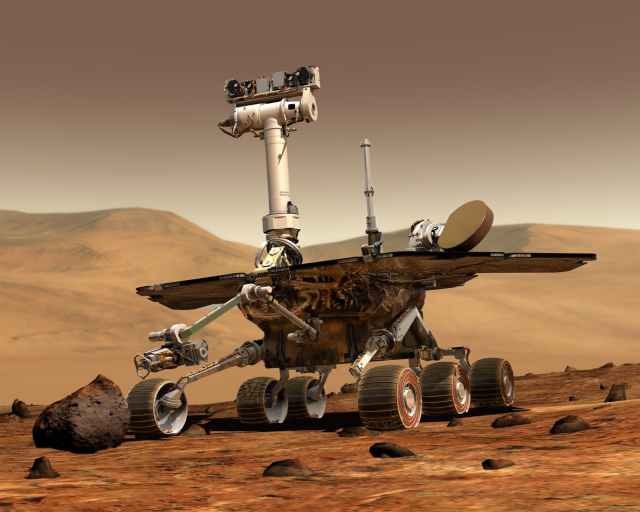
NASA’s new rover—an adorable little fella named Perseverance—could have easily been first prototyped by Pixar, as it has been anthropomorphized with heartfelt fervor and will no doubt have Disney releasing some new full-length animation about its hero’s journey shortly.

Perseverance was scheduled to leave our Earth around July 17, 2020, but due to some last minute touch-ups with makeup, and NASA’s motherly stuffing a few more bits in the little guy’s backpack before stepping his first foot onto the Atlas V bus, his launch date was delayed until July 30th.

The preparations leading up to this date went something like this:

Chloe: Would you like to come to the launch site next year in July as my guest?

Me: Hella yes.

Chloe: Mother, I am about to be issued your guest pass for launch date. It’s five months out yet. Do you still want to come?

Me: Hella yes.

Chloe: Mother, this Covid thing may be a concern. There’s been some talk about a possible spread. Are you still in?

Me: Umm … yeah, mostly.

Chloe: Mother? Have you made a will? I know it’s only May, but I can’t wait to see you.

Me: Wait. What?

Chloe: Launch is just two weeks away, and I’m guessing you’re not coming.

Me: Chloe, I desperately want to, but I’ve been told that in Florida, the moment you disembark the plane, you’re handed a flyer—not for timeshares anymore, but cemetery plots. I’m thinking I’m going to have to Zoomcall into NASA on this one, kiddo.

Chloe: I understand. I’ll make sure you’ve got the right links and time schedule.

Me: Yippy!

Let’s skip forward to the big day, links and lineup of launch window noted.

Twenty minutes before launch:

Chloe: Remember, the most important and crucial stages to watch are—of course—lift off, then less than a minute later the rocket has to make it through Max-Q—that’s critical, and then, about an hour after that, comes Atlas V’s rocket separation from the spacecraft. Got it?

Me: You betcha!

Laptop open, ready, live. Countdown in progress. T-minus 50 seconds … (I hold my breath and watch the clock.) 10… 9… 8… (insert squeals of excitement) 5 … 4 … 3 … (aaaand—stream on screen freezes)

Me: Wait! NOOOO!!! (tosses computer, scrambles for smartphone, howls while relinking link)

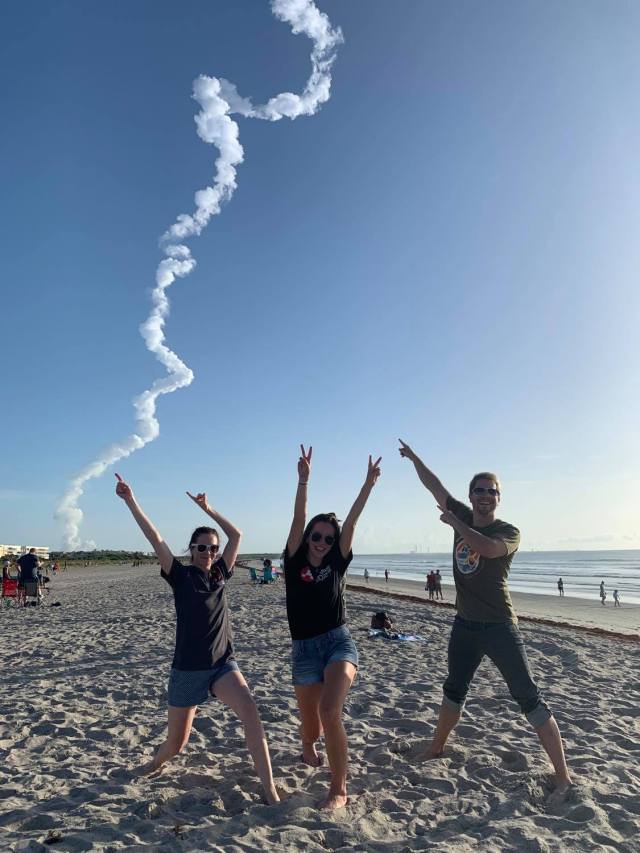
NASA: With the RD-180 main engine running, the Atlas V vehicle successfully rises vertically away from Complex 41 at Cape Canaveral Air Force Station, Florida.

Me: Dammit! Dammmm– I stop mid-blubber, as I suddenly recall there’s no time for tears. It’s Max-Q time!

Me: (Link is relinked. Eyes are peeled on rocket. Fingers are crossed for all good luck gods to see.)

NASA: T + 43 …

Me: (stream on smartphone screen freezes) gasp … looks to sky … shouts obscenity

NASA: (hourglass stops spinning and smartphone reconnects) The Atlas V rocket passed through the region of maximum dynamic pressure during ascent through the lower atmosphere.

Me: YOU HAVE GOT TO BE KIDDING ME!

I cry a little. Shower. Make coffee. Reboot both screens and sit through countless minutes of perky NASA spokespeople who remind me of what I’ve missed and, of course, highlight what’s to come.

I place laptop and phone a small distance away from me in case I’m the one with bad juju energy. But it doesn’t matter …

NASA Perky People: After accelerating the Mars 2020 spacecraft to a velocity of 24,785 mph, or about 11 kilometers per second, relative to Earth, the Centaur upper stage shut down its engine and is now re-orienting itself into the proper position for separation of the Mars 2020 payload.

Me: NASA, stop with the teaser trailer, and why don’t you admit what’s really gonna happen on my side of the screen.

NASA: It is now T + 57 minutes and the Centaur—

Me: (both screens freeze) Bingo.

I knew it. I knew it would happen. It was no surprise.

Chloe texted twenty minutes later with words that sounded like she was skipping across a playground with a Popsicle in each hand.

Chloe: Did you see it? Did you see iiiiit?!!

Me: Success! Congratulations, kiddo! How utterly thrilling, right?

Chloe: I’ve been waiting my whole life for this day. Wasn’t it amazing to see it live?

Me: Well …

Chloe: Oh, sorry, Mom. You know what I mean. I got to see it live, but seeing the livestream is only a couple seconds delayed. It’s still amazing, yes?

Me: It’s so amazing.

Chloe: And at least you’re safe at home. I’m sure it was the right choice.

Me: *sob*

~Shelley

For the time being, the blog is closed to comments, but if you enjoyed it, maybe pass it on to someone else. Email it, Facebook it, or print it out and make new wallpaper for the bathroom. If it moves you, show it some love and share. Cheers!

Don’t forget to check out what’s cookin’ in the Scullery and what we all gossiped about down in the pub. Or check out last month’s post and catch up.
Why We Need to Acquire a Taste for Flavor

As a writer, there is nothing I love more than putting on my Alice in Wonderland frock and purposefully tumbling down the rabbit hole of research.

With the exception of getting published, of course.

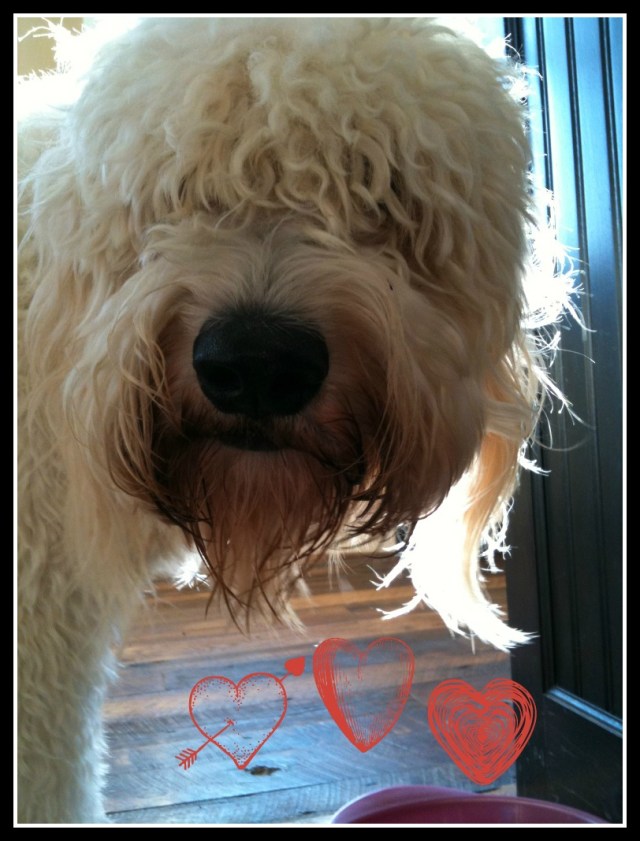
And seeing my hound gaze sincerely into my eyes over breakfast to convey that I’ve never looked more well-rested and attractive, and would I mind passing him three strips of bacon?

But the research part of necessary investigative sleuth work is wholly engrossing and powerfully magnetic.

It also turns me into an insufferable enthusiast—a gasbag of chatter with the sole purpose of spreading knowledge that may be of no interest to any other human.

I tend to forget this bit in between my research projects where I launch headlong into overzealous lectures about poisonous plants that can make you puke, or the new studies supporting the worthiness of fecal transplants to support flailing microbiomes, or the debate as to whether cereal is actually soup.

Currently, I am reviewing countless books, scientific journals, and ongoing analysis all relating to the topic of flavor. And thus far, I have been tentatively directing all conversations I have with breathing humans toward this subject.

Good morning, this is Betty from Allstate insurance. How may I direct your call?

“Hiya, Betty! I’ve got a quick question about my homeowner’s policy, but first, can I ask you how it is that you’d define the vague and rudimentary term we call ‘flavor?’”

Or …

Ma’am? This fish in your grocery cart might not be as fresh as we’d want to sell you. How about I get a stock boy to switch it out for you?

“You betcha. And it appears your orthonasal olfaction skills are exceptional, whereas I probably wouldn’t have caught anything off until I was neck deep in the whole retronasal olfaction process—one occurring during sniffing and the other only when eating and drinking.”

Or …

“Hello, Chloe, this is your mom calling. I know you’re busy, but I was just wondering if you happen to know how many different odor compounds there are in the world?”

I don’t care.

Clearly, I could use an audience who chooses to be there with me, or maybe just a therapist who listens because I pay him.

Either way, it is impossible to simply let such riveting information go unshared. Who wouldn’t want to know that circumstances affect our flavor perceptions—such as the discovery that fans attending hockey games and involved in a study, determined that ice cream tasted sweeter after their team won and more sour after they lost?

Or why hold back that researchers are collecting impressive data that shows babies have an affinity for foods if their mothers eat it while they are pregnant with said baby. Hoping your tiny tyke will be asking for seconds on that bowlful of mustard greens? Start gestationally shoveling it in, Popeye.

And by no means could I refuse to relay the critical science utilized by the food and healthcare industries where phantom aromas are helping to control high blood pressure. Has your doctor diagnosed you with hypertension and mandated you to a low sodium diet? Food industry scientists are your new superheroes, having discovered that by adding phantom aromas of ham into certain foods, your brain will believe it’s still indulging in that five-pound salt lick your tongue so badly craves.

Super interesting info, right?

You’re welcome.

One of the reasons I’m so engaged in this particular research currently is that we, as human beings, have a frustratingly underdeveloped ability to articulate concepts related to flavor. As flavor is an umbrella term that houses both taste and aroma—taste having far more descriptive language than smell—it repeatedly highlights how we struggle with a narrative for our experiences.

How do you profile the unique difference between cheddar cheese and aged Gouda? One’s cheesier than the other? What words describe these cheeses?

What is the flavor of red snapper? It’s not fishy. And stating it is of firm texture does not illustrate flavor.

Flavor is more than a sensory experience as well, as it turns on the light in our brain’s limbic system and rummages around to immediately connect that taste and smell to an emotion and memory.

Why is that when a plate of beautifully sautéed halibut is placed beneath your nose, you’re immediately flooded with the desperate optimism of a marriage proposal?

I’ll tell you why. Because you, like me, used to come home after school and whip up a batch of Gorton’s Fish Sticks and watch an episode of Gilligan’s Island where your only wish was for the professor to finally ask Mary Ann to marry him so they could make perky, adorable, and intelligent babies to populate the island they’d be stuck on forever.

No? Was it just me? Well, still it proves my point. And as an aside, I learned more about GDP, the spectrum of human usefulness, and estate planning from this sitcom than I did from Econ 101.

The scents and tastes we experience are intricately interconnected to a vast array of our bodies’ systems, and we’re too intelligent a species to answer the question – how does it taste? – with an answer like: pretty good or it doesn’t suck.

So come on, people, let’s ban together and lend a helping hand to further science. Take a swig of some Drink Me potion and start fishing around for some helpful language.

Articulation is key.

I’ve told my dog that a thousand times and refuse to pass the bacon until he can “use his words.”

~Shelley

For the time being, the blog is closed to comments, but if you enjoyed it, maybe pass it on to someone else. Email it, Facebook it, or print it out and make new wallpaper for the bathroom. If it moves you, show it some love and share. Cheers!

Don’t forget to check out what’s cookin’ in the Scullery and what we all gossiped about down in the pub. Or check out last month’s post and catch up.

Science is a Work of Art … and a Headache Full of Math

I have a love-hate relationship with physics.

I love the way it sounds as a word. It’s a pleasurable one to say—like cupcakery, flibbertigibbet, or I’ve just won the lottery.

Okay, that last one is not so much a fun word to say as it would be a fun phrase to shout.

But “physics” is lovely to pronounce.

I also love that it works the way people expect it to—airplanes alight, bowling balls roll, people don’t fall off when on the upside-down part of Earth’s rotation—stuff like that.

I appreciate—nay, love—that so many people on this planet understand the science that studies the nature and properties of matter and energy.

But what I hate … is that I’m not one of them.

It’s not that I haven’t tried, because I have. I really have. As in sat down, read books, attended lectures, asked questions, did experiments. All that jazz. Definitely not half-hearted attempts to crack the codes of complex concepts.

It was effortful work.

But it just didn’t stick.

It never does, and I feel entirely deflated with the results.

Currently, I’m working on an art installation project with someone whose background is both fine arts and engineering. We have a massive canvas which we’ve agreed to apportion and parcel between us, settling upon no theme other than some sort of Venn diagram of shared experiences.

My first outlined section involves a three-headed snake, slithering downward through the seven levels of celestial existence, depicting the metaphysical realms of deities and including the classical planets and fixed stars.

It’s pretty.

His is a physical representation of irrational numbers. It is lines both curved and precisely angled.

It is math.

I said, Can you see how mine shows the concept of the divine wrestling with—

I get it. He broke in, nodding. I’ve studied religious antiquity through art. It’s pretty straightforward. Now can you see how mine is the answer?

I squinted at the canvas. The answer to what?

To everything.

Everything? I echoed.

Yes. To the universe, to space, time, you, me, the existence and meaning of everything your mind can conjure.

My mind was not conjuring. My mind had stumbled to a cracking fat halt.

I don’t get it, I said, feeling a hot creeping blush move across my face. Where’s the formula part?

I received a look of incredulity. He pointed to the canvas. It’s right there. Where the lines and arcs intersect and join. It’s all present. It’s simple. It’s elegant. It’s beautiful.

He moved across the canvass, sweeping his hand from one point to another. Five or six minutes passed where words like “thermodynamics,” “quantum mechanics,” and “electromagnetism” were meshed with phrases like “the laws of motion” and “Bose-Einstein state of matter,” and “Are you truly not getting this?”

It made me worry. Again.

As I am currently on my way to see my daughter in her place of work. It’s a place that makes spaceships.

And everyone there comprehends all the words and phrases of physics to a point so deeply understood they can be trusted with millions of tax dollars that gets sent up to planets we all hope might one day hold a few Starbucks.

Her colleagues are the kind of people who could easily look at my art partner’s portion of our canvas and say, Yeah, man. That’s so beautiful.

They are the kinds of people who have pi tattoos, and blow-up dolls of Newton sitting a desks at work, and regularly visit therapists for anger management issues related to Flat-Earthers.

Chloe is, understandably, a little bit nervous, as in the past, when touring the facilities that educated her to qualify for her current place of employment, I apparently asked questions that left the occasional professor befuddled and giving her a second sideways assessment as to whether she may have been adopted.

Those questions usually involved time travel and multiverses—which at those moments were, in my defense, valid and being discussed by true blue scientists and not stripped from episodes of Star Trek.

And it’s not like I was asking whether all the orbiters and rovers we’ve been sending up were going to be interfering with my monthly horoscope.

Besides, I much prefer divination by means of flour. There is nothing more accurate than aleuromancy, as Chinese fortune cookies have yet to let me down.

So as I sit in my assigned seat on a fancy flying machine that surely neither Newton nor Galileo could have imagined, I am left staring out the window and wondering what I could possibly add to the art installation that could stand up to “the answer to everything,” whether I would find anything comprehendible when shortly visiting Chloe’s spacefaring factory, and whether my luggage would arrive at my final destination.

Pulling out my daily ration of much relied upon soothsaying, I cracked open my rice cookie and read today’s fortune:

A closed mouth gathers no feet.

Surely, this could be voted as a potential fourth law of motion.

I will consider it.

~Shelley

For the time being, the blog is closed to comments, but if you enjoyed it, maybe pass it on to someone else. Email it, Facebook it, or print it out and make new wallpaper for the bathroom. If it moves you, show it some love and share. Cheers!

Don’t forget to check out what’s cookin’ in the Scullery and what we all gossiped about down in the pub. Or check out last month’s post and catch up.
Rabbit Holes: Some Call it Daydreaming, Writers Call it Work

Aristotle argued that all objects craved their “natural place,”—the geocentric center of the universe. That would be Earth. Okay, well at the time Aristotle was sucking in air Earth was considered the be all end all.

And maybe yes, there exist a few folks who still believe this and are lagging a bit behind with their history homework, not having quite caught up to where the rest of us live—aka more than two thousand years in the future. And within the world of fairly trustworthy science.

Although, to be fair, the science we all believed one hundred—or even one thousand years ago was believed to be trustworthy too.

Until it wasn’t.

Regardless, it was explained to me that ‘Aristotle believed that a dropped rock fell to the earth because rocks belonged on earth and wanted to be there.’

This is from a book currently resting on my bedside table: But What If We’re Wrong? By Chuck Klosterman.

Often, I liken myself to Aristotle’s rock. I belong at my desk, in front of my screen, with my hands hovering over my keyboard, and my eyes effortfully scanning words across a page.

Except thankfully, there are other forces of nature at play (read friends and family) that repeatedly fight Aristotle’s idea of gravity where I am concerned, shoving me out into the world where people and ideas are in mix and at play.

I am not at all a fan of going places where you have to make eye contact with others, or exchange words that add up to more than those in a haiku, or share the same oxygen molecules. This behavior comes about just before birth when whichever deity is creating your personality profile decides you’ll be a professional recluse and switches on the genetic codes for artless, awkward, blundering bore.

But ultimately these opportunities are the catalyst that make the question WHAT IF burble up from the basement of my brain. And that is not an altogether unpleasant feeling.

It starts like indigestion but then belches out with measurable relief.

Yes, regularly I collect data to support the theory that I should simply stay home and away from crowds (read anyplace another person is already occupying), but more often than not, I am wide-eyed with surprise to discover the hidden gems of history, or art, or that people have moved on from wearing elastic waist pants and eyeglass ropes.

Except no. Turtlenecks are here to stay, dammit. (And the earth is the center of the universe … Yeah, yeah, I hear you.)

The WHAT IF question is one I have pinned up on my computer screen. It is the foundation for creative thinking. And creative thinking is the foundation for creative writing. And creative writing is the foundation for paying my bills—as people will not buy books that scream, “I’m exactly like that story you just read yesterday only my characters are Latvian!”

Yeah, not gonna fly.

But how many of us practice asking WHAT IF (insert head scratching query here) in real life? Chuck Klosterman did because he had to write a book where he asked a pile of crackerjack thinkers questions about their level of confidence on subjects like physics, and time, and whether AOL would ever come back into fashion.

And I do it because the thought of copying someone else’s ideas and simply giving them a limp and an accent is about as creatively appealing to my brain as separating all of the lint from my dryer into individual color piles.

Also because I enjoy electricity and food. Again … near carbon copies of other people’s tales do not equate to financial security. And more often than not a lawsuit.

But in real life? I’m not terribly sure I engage in this examination. Not nearly often enough anyway.

And maybe not at all ever—but that would be wholly embarrassing to admit on a public platform so let’s all pretend I didn’t, okey dokey?

This is not some sort of mid-life crisis desperate attempt to fill ever widening, fathomless gaps in my life, but rather just an everyday exercise of whim and whimsy. And okay, maybe a touch of the age thing, but hush—just follow me here.

It’s a fairly effortless task in my working realm, as the sky is the limit ergo, nothing is absurd. I can confidently lean back in my chair and ponder the impossible:

WHAT IF my main character quit his job, won the lottery, or discovered he had cancer?

WHAT IF my guy slowly starts to disappear, or can now communicate with polar bears, or wakes up with knees that can bend fully backward?

WHAT IF he can think himself anywhere, or program the earth to stop spinning, or activate himself to become any element in the periodic table?

WHAT IF every fictional character ever written about comes alive? WHAT IF we discover that our laws of physics only work this way on earth because we’re stuck on some default setting of one on a scale of ten and the answer has been printed on the last page of every IKEA instruction booklet?

Yeah … rabbit holes.

But I rarely spend time going into that warren when I and my life are the subjects for consideration. And it might be fun—if not a little necessary at times.

We’re all full of certitudes in life. We’re sure our political view is wide enough, confident we think with deep consideration, positive we’re slightly above average—at least in comparison to the other yahoos we find ourselves surrounded by.

But what if we’re wrong?

What if I’m not really meant to be Aristotle’s rock?

What if I’m meant to be Aristotle?

If we’re all going to be proven wrong one hundred or one thousand years from now, where’s the risk, right?

Think the absurd. Be the absurd. Do the absurd. Accomplish the unthinkable.

Physician, heal thyself? How about writer, imagine thyself.

~Shelley


For the time being, the blog is closed to comments, but if you enjoyed it, maybe pass it on to someone else. Email it, Facebook it, or print it out and make new wallpaper for the bathroom. If it moves you, show it some love and share. Cheers!

Don’t forget to check out what’s cookin’ in the Scullery and what we all gossiped about down in the pub. Or check out last month’s post and catch up.