A Little Knowledge is a Dangerous Thing. A Lot … is Exhausting.

“What do you know about rye grains?”

This was a question from my boss at the distillery I worked at.

“I know that we use them,” I’d answered. I’d been working for the company for what felt like mere minutes at that point.

“Well, you’d better know a helluva lot more than that by tomorrow morning at nine, because a journalist is going to call you with questions, and I’ve pitched you as an expert. Best crack open some books.”

Example number one.

My boss: “You’re a writer, right?”

Me: “Yes?” I soon came to answer every question of his with an upward pitch of hesitation.

My boss: “Great. Write a technical manual for the distillery. Standard Operating Procedures, maintenance schedules, testing protocols—the whole kit and kaboodle.”

Me: “Wait. I write children’s literature. For children.”

My boss: “Good point. Do not, under any circumstances, allow the machinery on the production room floor to have dialogue. Or feelings.”

Example number two.

I was undecided for all of about 30 seconds before sharing with my boss the exciting news that I had connected with a woman who owned an old historic farm and was interested in working with me on planting a small number of heritage grains. She wanted to do something environmentally interesting with the property, and I’d finally found a way to potentially run a small experiment for our distillery that would not cost an arm and a leg.

“Great,” my boss responded. “You should apply for the educational grant that’s on offer to the spirit industry right now.”

“A grant?” I said this like it’s the first time I’d used the word.

“Yes.”

“I would have to apply? Like … fill out an application? Or is it a bit more like a research paper?”

“No. It’s like a grant proposal. Documents you submit to secure funding for a research project.”

Project?? This was going to be an experiment for our distillery.”

He nodded and typed something into his computer. “It still will be. Only now, it will benefit the whole industry.” He punched a key and spun around in his office chair to face me. “I’ve just sent you the application. Make sure it shines because you’re up against a bunch of university professors and professional research organizations.”

My eyes popped wide. “Oh, good god. I don’t know how to do this. How much time do I have before it’s due?”

“Seven days.” Then he glanced over his shoulder. “Six. You’ll be fine.”

Example number three.

I came home that night, curled up on the couch in a little ball and heard Dave, my partner, whistling in the kitchen and then making his way to the living room. “Here you go,” he said. He had two drinks in his hands, one outstretched to me.

I closed the one cracked eye I’d used to identify him with and did not move to take the drink. “I hate my boss.”

He chuckled. “You love your boss.”

“He sets me up to fail.”

“I challenge you to learn.”

“Your learning challenges suck all the fun out of working, and living, and breathing. I want to be less challenged. I want to be less learned. I like breathing, and I don’t want it to be so difficult.”

“Have I ever let you fail?”

“And—” I interrupted, “I would like to come home and be able to complain about my boss. That is a right of every person in a relationship.”

His brows rose an inch. “Is this a safe space for me to complain about my employees too?”

“Yes,” I smiled. “Everyone except me. If you have complaints about my work, then we have to set up a formal meeting with HR at the office. This might be your safest method so that I’m not throwing kitchen knives at you from across the room once I hear of them.”

He reached out again to hand me a glass. “What about poisoning the other person’s drink if you’re unhappy with them? Is that off the table as well?”

I took it, and enjoyed a long swig, then looked up at him. “You love your employee.”

“She challenges me.”

“Yes, but she knows more about rye than anyone else in your distillery. And she is the only person who knows how to write a technical manual in your company.”

And,” he added, “she will shortly know how to successfully write and win a grant proposal.”

I groaned. “She is exhausted.”

“She is indispensable.”

“She is cranky.”

“She is invaluable.”

I looked at Dave and gave him a small smile. “She appreciates hearing this.”

“Great,” he said, and made his way back toward the kitchen. “By the way, how much experience do you have with—”

I quickly buried my head beneath a couch cushion. I did not hear whatever it was I would soon have experience with. I would remain blissfully ignorant for just a few moments more because I felt certain that I was not missing out on an opportunity. The illustrative scenarios above are but a smattering of my future, as one thing I knew for sure, there would be ample examples to come.

~Shelley

For the time being, the blog is closed to comments, but if you enjoyed it, maybe pass it on to someone else. Email it, Facebook it, or print it out and make new wallpaper for the bathroom. If it moves you, show it some love and share. Cheers!

Don’t forget to check out what’s cookin’ in the Scullery and what we all gossiped about down in the pub. Or check out last month’s post and catch up.

My Garden’s Grassroots Plan to Poison Me

I grew up in Wisconsin in a family that gardened.

Correction—I grew up in Wisconsin, birthed by a woman who is a gardener but who did not have as many hours in the day to tend to the gardens she created and, therefore, I was compelled to garden like the rest of my siblings.

It’s not that we were gardeners; we were the labor force of the head gardener.

Her gardens were beautiful. Flowers with spectacular colors and scents, shrubs that displayed more varieties of green than Sherwin Williams could ever creatively conceive on their swatches, grasses that were feathered, plumed, tufted, and willowy, and young saplings planted for following generations to enjoy. Truly beautiful.

And I hated them.

But then there was the vegetable garden.

It had all the bog-standard roots, tubers, vines, and greens. It had berries and herbs, beans and sprouts. It had a seasonal design. It had function. It served purpose and gave back more than you put in. Anything ornamental was likely a fluke of Mother Nature who had leftover bedazzling supplies from the other “just for show” pretentious gardens. Everything was strictly edible.

And I loved it.

It’s not that I couldn’t appreciate my mother’s other gardens, it’s just that I like functional art. I take no issue with fruits and vegetables who display flowers at first, but once they move out of that stage, they produce secondary gifts that serve more than the purpose of simply being eye candy.

Because their task is to be stomach candy.

My mother has also been proclaiming the same statement for years: Just wait, one day the gardening bug will catch up with you too.

The gardening bug has never caught me, but it has done plenty of other things. It has bitten me, wacked me, stung me, and left me with skin diseases that are akin to that of a biblically impressive, untreated leper.

I get it. I am not meant to be gardening. In reality, I think the whole physical kingdom of the outdoors is threatening me with warning shots off the bow the moment I step foot into the open air.

Three weeks ago, I ventured outside to tame just one small area around a tree—one small area within one small garden surrounded by myriad other gardens my mother had meticulously, painstakingly, exhaustively established over the nearly two decades when she lived in the house I now occupy and must tend to.

I was armed to the teeth, as I always am, when finally overwhelmed by the guilt of not tending to her Eden properly. I was covered in tick repellent, sun repellent, and enough fashion repellent clothing to deter any misguided compliments should another human make eye contact.

Alas, surely nefarious nymphs were afoot and saw me as their springtime fling, for shortly following the grueling three hours of bending, digging, pulling, and yanking then gathering, dragging, piling, and swearing, I stripped off my clothes and dashed to the shower to pummel sore muscles and purge myself of sweat.

The first thing I saw in the mirror was a bullseye mark on my elbow, and as I leaned in, as anyone with eyes north of forty will do, I squinted and scowled to identify the interloper. A deer tick, of course. And apparently one who defied years of scientific research and the chemical laboratories in which they discovered how to thwart the appetites of blood sucking creatures.

My luck. But not surprising. I dug him out with freshly cleaned nails and likely took a patch of much needed elbow padding flesh with him just to be safe.

The next morning, I woke up with a bump and then two, and then ran out the house to work with the quick “must have gotten a spider bite on my arm during the night” type of assessment.

It was only while I was knee deep in a field of barley—well waist high actually—and listening to a professor of small grains lecturing about just how difficult it is to deal with covered smut, downy mildew, and net blotch that a farmer standing next to me kicked my toe and said quietly, “Whoooeee! Looks like you just had a tussel with some sumac—just like a dog rollin’ in a big ol’ cowpie patty. What happened?”

He was looking at my arms.

I looked down at my arms.

Oh, dear god, these were not arms. Surely, they were in truth barley stalks with covered smut, downy mildew or net blotch, right? Had I caught the blights the professor was talking about? I glanced up to the sky.

What have I done to piss off whomever is in control here? I muttered.

I drove home and tried not to notice the new symptom of itch.

How did this happen? How was I now breaking out in blistering bumps of poison ivy?

The next morning it was not just my arms, but my trunk and eyelid, and earlobe, and the bridge of my nose that sported the hot pink pustules. It was hideous. And unbelievable. And unbearable.

I called my dermatologist.

You must have had a gap in your clothing. Urushoil likely got between your gloves and your shirt, then you sweated, then that sweat carried the oil all over, and of course you tried to wipe off your face. You’re an idiot.

This is how my dermatologist speaks to me. She knows my luck with anything epidermally- related. Every year I’m forced to pay for skin scrapings and disparaging rebukes. In fact, even my insurance company knows my ill-fortune with greenery and sunshine, and they have announced they will no longer support my relationship with the outdoors. They’ve given me an ankle bracelet that sets off an alarm when I’m within two feet of a window.

I have managed though, and I’ve come across a motherlode of hazmat suits leftover from the pandemic’s PPE phase of fashion, so I’ll likely invest in one of them befor my next gardening venture.

But I seriously must truly reconsider any “next gardening venture,” as if there’s one thing I’m tired of being categorized as, it’s someone who makes rash decisions.

~Shelley

For the time being, the blog is closed to comments, but if you enjoyed it, maybe pass it on to someone else. Email it, Facebook it, or print it out and make new wallpaper for the bathroom. If it moves you, show it some love and share. Cheers!

Don’t forget to check out what’s cookin’ in the Scullery and what we all gossiped about down in the pub. Or check out last month’s post and catch up.

Some People Live in the Matrix. I Live in a Hadron Collider.

It has been a crummy month.

I have had more balls thrown at my head, more rugs pulled from beneath me, and more Charlie Brown and Lucy football moments in this short space of time than an Amazon warehouse has isles.

One wretched thing after another has befallen where I find myself looking up into the ether and wondering if it would be easier to find the nearest cliff to leap off, or if I should just become a comedian and work out all my trauma on stage like everybody else.

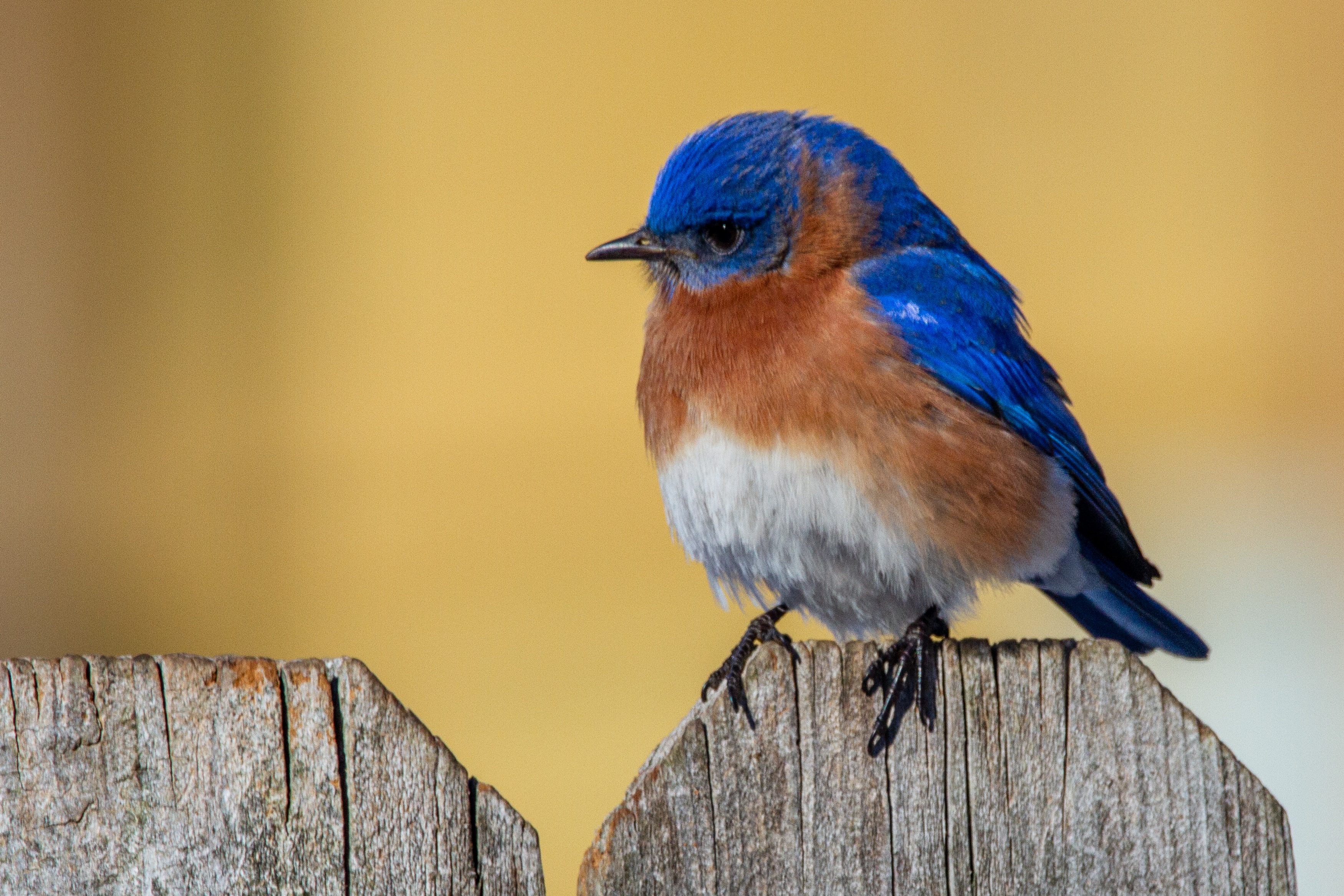
Also, my beautiful, newly installed woodstove has become a deathtrap for bluebirds. Countless feathered friends have been falling down the great length of pipe, fluttering for hours in the dark with no place to get a footing until, exhausted, and like Augustus Gloop, who fell into Willy Wonka’s chocolate pond and got sucked through a body-hugging pipe, the birds find a way to squeeze themselves through tiny crevices and make their way into the glass encased box of the wood stove itself. And there they sit. Panicked. Anxious. In wholly unfamiliar territory. And they have no idea how to escape.

I have called my woodstove company—these feeling, and oh-so-brilliant installers I have written about in the past—who have simply laughed at the number of phone calls they’ve gotten in just one week over this very same issue.

Why is there not some form of wiring around the cap of the chimney? I ask.

Well, cuz that’d be bad for the health of the chimney, they state.

And what of the health of the bluebirds?  I add.

I can hear them tsk. Yer just gonna have to find a way to communicate to them that what they’re doing is stupid.

I sigh.

I count fifteen avian rescues I have made this week alone and reflect on how one of the main contributing factors to my terrible-horrible-very bad-no good month has been the inability to communicate some of the most basic, necessary, and essential needs I required.

If I couldn’t do it for myself, how would I presume to do it for others?

I marvel at the irony that my life’s work sits firmly beneath the umbrella of communications and yet my transmissions are received as garbled, twaddling claptrap. I am a writer, an educator, and an editor. I work with language all day long, and yet I have fallen flat on my face and repeatedly taste the same snoutful of dirt, always lifting my head, blinking around bewilderingly, wondering how the hell I’ve landed here again.

I reach carefully into the woodstove and put my hands around a tiny, terrified bundle of fluff. I feel it whiffling about between my enclosed fingers. I release it through an open window and say after it, Don’t make the same mistake twice. And then, moments later, there is another bird—surely not the same bird—flapping and frantic, coming down the pipe.

I go outside to look at the chimney.

Ye see, the indifferent installer lectures me on the phone, the idiot birds are damn straight positive they should be making a nest in that there tiny space up top. They think it’s the right thing to do.

All month long I had been positive I was doing the right thing too, but just like the bluebirds, I kept falling down the pipe.

What was it that made both the birds and me fail to see the futility of our actions and the physical and mental harm we were putting ourselves through?

Was it trusting our instinct? Allowing a bypass of brains to follow a simple responsive reflex? Was it relentless and unquestioning doggedness?

Maybe we were all testing Einstein’s famous quote describing insanity as “doing the same thing over and over and expecting different results.” But lots of smart people do that. And they do that for their jobs. Because this is how the world actually works. Physicists smash the very same particles together repeatedly—trillions of times over—in a precisely repeated fashion, and guess what? The results are not the same. They are vastly different. Physicists are not insane.

I am not insane.

My bluebirds are not insane.

Perhaps, we all live in a giant collider, where in the world of quantum physics—the land where the bluebirds, the physicists, the particles, and I apparently live—we are playing under the rules that chaotic randomness and wild variability are the norm.

Maybe in this landscape, there is a chance that I will express a string of words that will deliver the exact meaning they are intended to present. Maybe in this realm, the bluebirds will discover that nestbuilding in a springtime chimney is a brilliant decision under certain realities.

In some scientific circles, the argument is not one defending the accusation of insanity, rather the complaint of not having full access to reality.

Suddenly, I am wrenched back to a very shrill state of consciousness where I see my cat, who I SWEAR I’d locked in another room, come dashing across my feet, a squeaking tweetstorm of flapping feathers in her mouth. A chase ensues up the stairs, under the bed, and into a corner, where I finally snatch the poor songbird from the literal jaws of death.

I soothe the tiny creature and take it outside where, waiting for it to catch its breath, I whisper, I’m sorry. For both of us. But this certainly sheds light on one bit of controversial science. Obviously, we did not prove Schrödinger’s alive or dead cat question, but I do feel we’ve cracked the back of existing parallel universes, as I swear that animal is still locked away in my office. So, there’s hope for us yet.

Which is when the bird turns to look me in the eye and say, They call ME crazy, but you’re the one holding out for a Netflix comedy special.

~Shelley

For the time being, the blog is closed to comments, but if you enjoyed it, maybe pass it on to someone else. Email it, Facebook it, or print it out and make new wallpaper for the bathroom. If it moves you, show it some love and share. Cheers!

Don’t forget to check out what’s cookin’ in the Scullery and what we all gossiped about down in the pub. Or check out last month’s post and catch up.

If I Truly Loved You, I’d Treat You Like Dirt

One of the best, most desired gifts I received this year during the holidays was a box to hold garbage.

I know, you’re all wondering if I’ve accidentally held my head in the oven too long whilst last cleaning it or, if finally, all those heavily scented, potentially carcinogenic candles from Bath and Body Works that I sniff on an hourly basis to keep me meditatively peaceful have created some cognitive disorder, but I assure, neither have occurred.

That said, my new container truly has me skipping about with a euphoric outlook because Rumpelstiltskin—my big new bucket—turns garbage into gold.

That’s right you clever clogs, I finally got a compost bin.

For the last two months I have been studying everything for its C/N ratio. It’s a beautiful formula for anyone growing closer to ditching their tax ID and social security number to live off the grid, or serial killers studying John Wayne Gacy and making mental notes as to how to improve on his form.

Decomposition can be deadly, but also beautiful. Therefore, for true success, one must know any material’s carbon to nitrogen proportions.

I promise this is not a lesson in organic chemistry, but who doesn’t love the idea of your old food making your new food?

Apparently, most people coming to my house.

Yes, I know, a good chunk of folks visiting my little log lodge leave less than stellar reviews when they begin to realize that a stay with me means you’ll likely be too cold or too hot, there’s a fair to middling chance you may get a teeny touch of dysentery because comestible manufacturer’s expiration dates on packages in the fridge are bogus, and you’ll need to memorize a list of things that go into a) the recycling bin, b) the compost bin, and c) the landfill bin.

The latter is highly discouraged and comes with a free set of annoying questions wondering if we might find another use for that object and an array of facial expressions that clearly cast doubt on whether you’ve truly watched any documentary of Greta Thunberg like you promised you did.

No judgement. She’s not for everyone.

But it’s plain to see I’ve now upped my game in the kitchen. A massive stock pot sits on the counter and is the receptacle to all things that will fortify my soil, enrich my diet, and likely cure cancer. The timeline is somewhat futuristic with each addition, but I’m in it for the long haul.

Basically, I have a new job. I now tell people that I am a terra firma farmer. A sod shaman. A ground grower. An anthrosol alchemist. Maybe the last one goes a bit over the edge, but you get my point. I’m harvesting dirt.

Into the stock pot go greens and browns. Everything from vegetable peels to coffee grounds are tossed in with delight. Egg shells, fruit, tea bags and olive pits. Pumpkins, tofu, peanut shells, and potato eyes. Old paper napkins? In they go. Q-tips and chopsticks? Join your friends. Pencil shavings and Ugg boot fluffage? Step right up and dive right in. Once that pot is chock-a-block full, they’re dumped into that beautiful new spinnable bin outside.

These are just your Joe-Average bits and bobs that fall under the category of acceptable, but Google appears to understand that nearly every day I start a fresh search with my standard question of “Can I put (insert questionable item) into my compost bin?”

So along with the above, I’m tossing in lint and dust bunnies, old match sticks and house plants (RIP, I swear I tried), holey wool socks and burlap sacks. I’m drawing the line at nail clippings. Just can’t do it.

Of course, there’s all the outdoor additions—the leaves, the grass, the weeds, and twigs. Pine cones, and bird’s nests (once they’re done with them), sawdust, and straw. I am finding it all. Picking it up, shoving it in, and swirling it about.

I’m sure my family thinks I’m losing a few more marbles because it then appears that I’m having a conversation with my compost pile, but obviously, they have no idea that I’ve popped in a handful of hardworking worms and are simply offering a few words of encouragement. It’s not like I’m talking to the bacteria or fungi, as that would be ridiculous.

We all know that fungal intelligence is geared more toward spatial recognition and memory, so I just leave them Post-it notes as reminders of where they are and what to do. Duh.

And now I churn, I peek, I poke, and wait.

I check temperatures, humidities, pH balances, and take weekly requests for movie night.

If I find a worm on the ground, I give him a noble Roman name and introduce him to the giant Saturnalia party where all his soon to be friends are closely gathered in the vomitorium.

This huge metropolis is teeming with life and death and decay–microbes, mites, nematodes, and invertebrates.

I encourage gluttony, as they are only doing their job.

I nurture meaningless affairs because reproduction is critical.

I tell heroic stories of their ancestors—those who have cleaned up polluted spill sites and made communities safe to live in again, or of those who went into medicine and actually became medicine.

I inspire futuristic dreams of outrageous proportions. Fungi? You are capable of becoming buildings and replacing concrete. Bacteria? You can become biofuels or gobble up greenhouse gases. Worms? A growing number of people find that it is equally as important to save one of you as it is to save a panda.

I tell my new friends who are feasting on these precious scraps the same thing: You is kind, you is smart, you is important.

I’m hoping they will remain as down to earth as I know them all to be. I am rooting for them because I know them all now. I be-leaf in them, and I feel like we are soil-mates.

Okay, maybe, just maybe, I have held my head in the oven too long.

But even if everyone around is begging me to stop with the wordplay and move away from the compost, I will only agree to drop the puns because I’m keeping my ground.

Happy dirt season!

~Shelley

For the time being, the blog is closed to comments, but if you enjoyed it, maybe pass it on to someone else. Email it, Facebook it, or print it out and make new wallpaper for the bathroom. If it moves you, show it some love and share. Cheers!

Don’t forget to check out what’s cookin’ in the Scullery and what we all gossiped about down in the pub. Or check out last month’s post and catch up.

The Art of Literally Taking Stock

I know many people look at January as a fresh start—the beginnings of new habits, the shedding of old ones, and the promise of a brighter, shinier version of themselves—that is, if most things stick on the list of I’m-serious-about-it-this-year resolutions.

But January has adopted a new meaning for me over the last couple of years simply because I’ve taken over a task no one at work is terribly thrilled to be assigned.

Inventory.

I’m absurdly delighted when faced with the challenge of organizing—of tackling chaos and wrestling it into neat rows of tidy “make sense” portions. Cupboards, pantries, file cabinets—I’ll orchestrate any item with the same military fervor Captain von Trapp had for queueing up offspring.

The snag is that my goods to groupify are not errant children, and the gap left in their absence does not allow me to tenderheartedly sigh and roll my eyes with slight amusement that a bottle, a case, or a barrel of whiskey has wandered off and is likely still up in its bedroom, wholly caught up in a drossy bit of literary drivel.

Instead, there are a couple of weeks of high anxiety, raised eyebrows, and countless vexed but ludicrous searches that include scouring closets, lifting stacks of paper, and requesting people empty their pockets. In the end, most of those absent cannot be categorized as truly AWOL—more like absent without the official paying attention to her spreadsheet.

Sometimes we just have too much stuff. Or perhaps, in my case at work, we have too much stuff that isn’t bolted to the ground behind barred holding cells.

Coincidentally, my library sent me a book suggestion at precisely the same time I was fretfully reckoning inventory. It is called: The Gentle Art of Swedish Death Cleaning.

Disturbing, for sure, but curiously poetic, perhaps.

After reading a review of the book, I’m not sure I’d categorize it as art, or event gentle, but cleaning before you kick the bucket with the bucket you’re soon to kick is pretty accurate. Maybe it’s a Swedish translation thing?

Maybe the meta quality is what appeals to me but being as practical and word obsessed as I am, I would likely change the title to If You Can’t Eat It, Drink It, or Read it, Toss it.

Or better yet, How to Start Losing Your Shit and Have People Thank You for It.

And again, having been raised in the hard-nosed and utilitarian kingdom of the Mid-West, my people would definitely see value in this idea. Of course, many of them are Swedish, so we’re tilting the scale a bit here too.

As I see it, January is a month where myriad people try on the activity of shedding. Whether it’s weight, bad habits, or toxic relationships—why not start combing through the clutter too, right? Dostadning is the Swedish word that blends death and cleaning, although maybe there should be a “pre” thrown in there for good measure and clarity. Hard to reach corners are even harder to reach from the inside of a coffin, right?

And even though I’m a massive fan of spring cleaning no matter the season, the Swedish concept adds a new layer of consideration and thoughtfulness to the activity: do it now so your kids don’t have to. Although, in my case, it might be better stated as do it now because your kids won’t—they’ll just “accidentally” torch it and take the insurance loss.

I don’t want to leave my offspring with feelings of resentment once I’ve shuffled off this mortal coil, and I certainly don’t want to leave them with a dozen boxes of high school memorabilia, drawers full of obsolete electrical cords from my Commodore 64 and Atari 7800 console, and that shed full of traffic cones, chamber pots, candle nibs, and “Do Not Disturb” signs from every hotel I’ve ever visited. I’d prefer to leave them each a heartfelt hand-written note, their favorite meal prepared and labeled in the freezer, and enough Tupperware with matching lids to last a lifetime. I imagine with this type of forethought, they would at least raise a toast to my ability to properly assess their busy lives and needs.

So, I have decided to start dostadning this month. I will work to rid myself of files, of furniture and of films that only run on archaic VCR players. I will purge my closet of garments from junior high, my drawers of mismatched socks, and my cabinets of the grass clippings that were once pungent herbs. I no longer need bed linens for bed sizes I do not possess, prom dresses from the 80s, or floppy discs that still might hold banking data from banks that have long ago shuttered.

Hell, I may even shed three letters from my name, as they’re superfluous as well.

We’ll see.

It’s the act of tidying up that aids the pursuit of simplicity—of giving space to only things that still serve you. Yes, it’s the Marie Kondo-ing exercise, and it likely exists in every culture.

No doubt we can all see the benefit of lightening not only our daily load but also the hefty responsibility we pass on to those we leave behind. There is also no doubt that my employer would prefer I not classify missing valuable liquor as the gentle art of Swedish death cleaning, as he will quickly Marie Kondo my ass right out of employment and feel sparkling joy in his own act of KonMari.

For now, I’ll keep working at hunting for the full bottles, and tossing out the empties.

~Shelley

For the time being, the blog is closed to comments, but if you enjoyed it, maybe pass it on to someone else. Email it, Facebook it, or print it out and make new wallpaper for the bathroom. If it moves you, show it some love and share. Cheers!

Don’t forget to check out what’s cookin’ in the Scullery and what we all gossiped about down in the pub. Or check out last month’s post and catch up.