Some People Live in the Matrix. I Live in a Hadron Collider.

It has been a crummy month.

I have had more balls thrown at my head, more rugs pulled from beneath me, and more Charlie Brown and Lucy football moments in this short space of time than an Amazon warehouse has isles.

One wretched thing after another has befallen where I find myself looking up into the ether and wondering if it would be easier to find the nearest cliff to leap off, or if I should just become a comedian and work out all my trauma on stage like everybody else.

Also, my beautiful, newly installed woodstove has become a deathtrap for bluebirds. Countless feathered friends have been falling down the great length of pipe, fluttering for hours in the dark with no place to get a footing until, exhausted, and like Augustus Gloop, who fell into Willy Wonka’s chocolate pond and got sucked through a body-hugging pipe, the birds find a way to squeeze themselves through tiny crevices and make their way into the glass encased box of the wood stove itself. And there they sit. Panicked. Anxious. In wholly unfamiliar territory. And they have no idea how to escape.
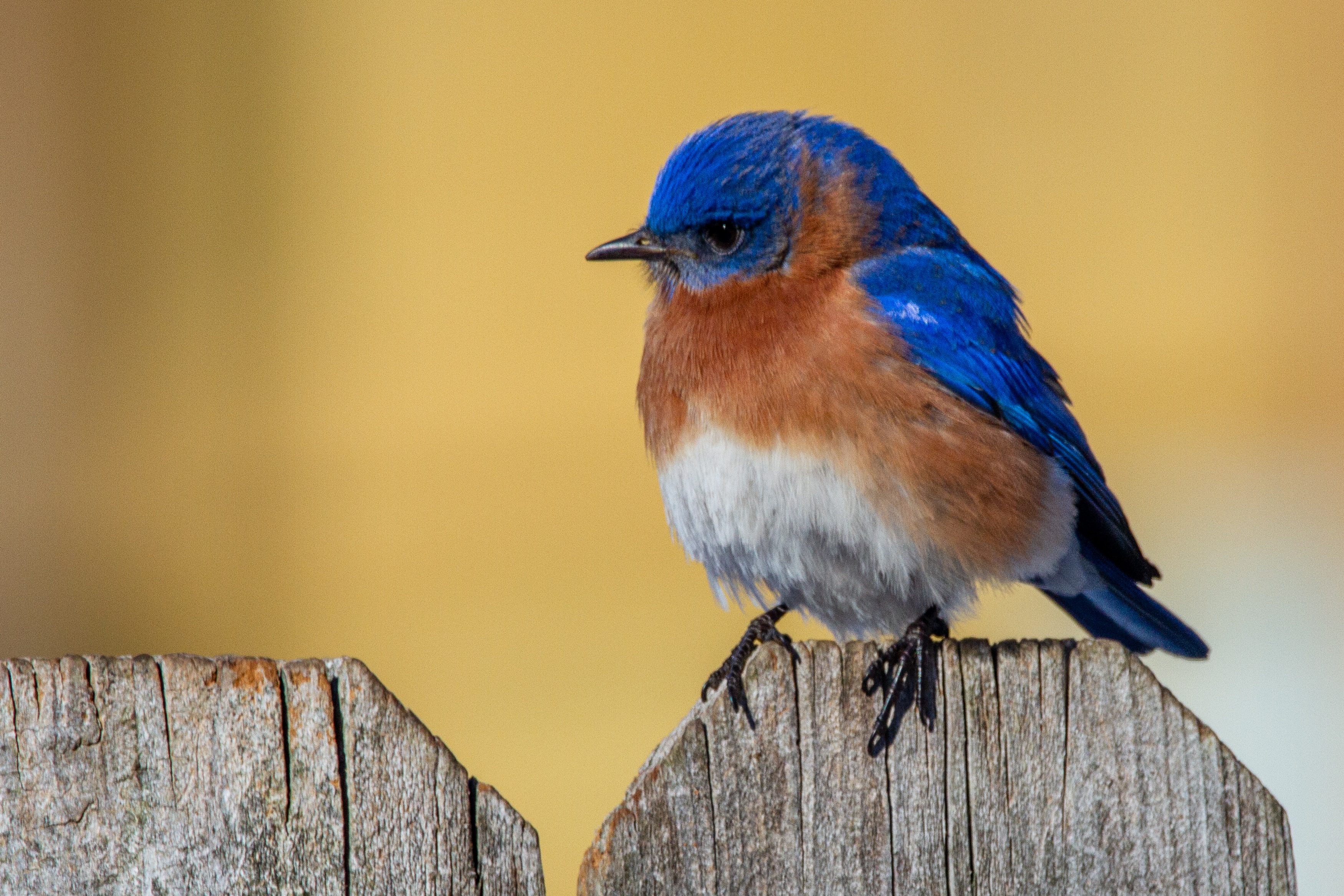
I have called my woodstove company—these feeling, and oh-so-brilliant installers I have written about in the past—who have simply laughed at the number of phone calls they’ve gotten in just one week over this very same issue.

Why is there not some form of wiring around the cap of the chimney? I ask.

Well, cuz that’d be bad for the health of the chimney, they state.

And what of the health of the bluebirds?  I add.

I can hear them tsk. Yer just gonna have to find a way to communicate to them that what they’re doing is stupid.

I sigh.

I count fifteen avian rescues I have made this week alone and reflect on how one of the main contributing factors to my terrible-horrible-very bad-no good month has been the inability to communicate some of the most basic, necessary, and essential needs I required.

If I couldn’t do it for myself, how would I presume to do it for others?

I marvel at the irony that my life’s work sits firmly beneath the umbrella of communications and yet my transmissions are received as garbled, twaddling claptrap. I am a writer, an educator, and an editor. I work with language all day long, and yet I have fallen flat on my face and repeatedly taste the same snoutful of dirt, always lifting my head, blinking around bewilderingly, wondering how the hell I’ve landed here again.

I reach carefully into the woodstove and put my hands around a tiny, terrified bundle of fluff. I feel it whiffling about between my enclosed fingers. I release it through an open window and say after it, Don’t make the same mistake twice. And then, moments later, there is another bird—surely not the same bird—flapping and frantic, coming down the pipe.

I go outside to look at the chimney.

Ye see, the indifferent installer lectures me on the phone, the idiot birds are damn straight positive they should be making a nest in that there tiny space up top. They think it’s the right thing to do.

All month long I had been positive I was doing the right thing too, but just like the bluebirds, I kept falling down the pipe.

What was it that made both the birds and me fail to see the futility of our actions and the physical and mental harm we were putting ourselves through?

Was it trusting our instinct? Allowing a bypass of brains to follow a simple responsive reflex? Was it relentless and unquestioning doggedness?

Maybe we were all testing Einstein’s famous quote describing insanity as “doing the same thing over and over and expecting different results.” But lots of smart people do that. And they do that for their jobs. Because this is how the world actually works. Physicists smash the very same particles together repeatedly—trillions of times over—in a precisely repeated fashion, and guess what? The results are not the same. They are vastly different. Physicists are not insane.

I am not insane.

My bluebirds are not insane.

Perhaps, we all live in a giant collider, where in the world of quantum physics—the land where the bluebirds, the physicists, the particles, and I apparently live—we are playing under the rules that chaotic randomness and wild variability are the norm.

Maybe in this landscape, there is a chance that I will express a string of words that will deliver the exact meaning they are intended to present. Maybe in this realm, the bluebirds will discover that nestbuilding in a springtime chimney is a brilliant decision under certain realities.

In some scientific circles, the argument is not one defending the accusation of insanity, rather the complaint of not having full access to reality.

Suddenly, I am wrenched back to a very shrill state of consciousness where I see my cat, who I SWEAR I’d locked in another room, come dashing across my feet, a squeaking tweetstorm of flapping feathers in her mouth. A chase ensues up the stairs, under the bed, and into a corner, where I finally snatch the poor songbird from the literal jaws of death.

I soothe the tiny creature and take it outside where, waiting for it to catch its breath, I whisper, I’m sorry. For both of us. But this certainly sheds light on one bit of controversial science. Obviously, we did not prove Schrödinger’s alive or dead cat question, but I do feel we’ve cracked the back of existing parallel universes, as I swear that animal is still locked away in my office. So, there’s hope for us yet.

Which is when the bird turns to look me in the eye and say, They call ME crazy, but you’re the one holding out for a Netflix comedy special.

~Shelley

For the time being, the blog is closed to comments, but if you enjoyed it, maybe pass it on to someone else. Email it, Facebook it, or print it out and make new wallpaper for the bathroom. If it moves you, show it some love and share. Cheers!

Don’t forget to check out what’s cookin’ in the Scullery and what we all gossiped about down in the pub. Or check out last month’s post and catch up.

The Benefits of Not Being Born a Blue Blood

There is nothing I love more than suddenly getting the undeniably gleeful itch to go on a trip, and then, just as suddenly, coming to my senses and feeling around on my head to see if I’ve developed a large lump that would suggest some sort of tumor or disease, or maybe even discover the whole thing is absent.

I think I’m like a lot of people in the world—those who can envision the excitement of an exotic location, a change in weather, or discovering new cuisine—but it’s right thereafter I have those dreamy notions, all perfect and picture-worthy, that I remember every trip is actually three trips built into one.

And then I also suddenly remember how much I hate to travel.

Usually, everything comes to a screechingly swift and mind-clearing halt.

Except this time.

This time I got caught up in all the romance of it: I’d travel alone, create a schedule based on only my whims and interests, and I’d not have to share a bed or bedroom with anyone that spent a good portion of the night farting, belching, snoring, or hacking up large chunks of lunch or half their body hair.

Solo travel.

The other bonus is the whole fly by the seat of my pants kind of planning.

Except … I am a total planner. And planning is the heart of part one in a three-part trip.

Those three trips inside every adventure away from home?

  • The planning phase – the trip as you build it and see it in your mind
  • The experiencing phase – the trip as you live it hour by hour and moment to moment
  • The remembering phase – the trip as you want yourself and others to recall it

Two out of three phases require some mind gamery, and in some cases, therapy once complete.

So, I leaped into the planning phase—the dreaming, the scheming, the OH-MY-GOD-I’M-GOING-TO-USE-AI-FOR-THIS phase.

Yeah, I had a serious sit-down chat with Artificial Intelligence and after asking it the wholly boring traditional questions whose answers I always first seek out like: What should I do in this town? And What should I eat in this town? And Where will I find a place where the people are allowed to pour scotch?  I then grew tired of traditional and began asking questions that a five-year-old might ponder.

Where would you go if you had legs?

Where does it smell the best in this town?

Can we meet for a drink and use your credit card to pay for it?

After soaking in a few weeks of the blissful planning phase and creating my seriously-this-will-be-amazing itinerary, I did the one thing that always makes every highly orchestrated schedule implode on itself: I embarked.

I somehow suffer from amnesiac qualities that are in full gear during the planning phase—I forget how much I love historic markers and cannot stop from pulling over onto the side of the road to read every one of them—even though most of them are simply pointing out yet another place George Washington had slept. Truly the man should have been tested for narcolepsy.

I forget how I am so giddy being on break from the “every day” that I will engage in conversation with cashiers at the filling station, or women in any restroom, or every stray cat lying in the sun on the sidewalk for hours.

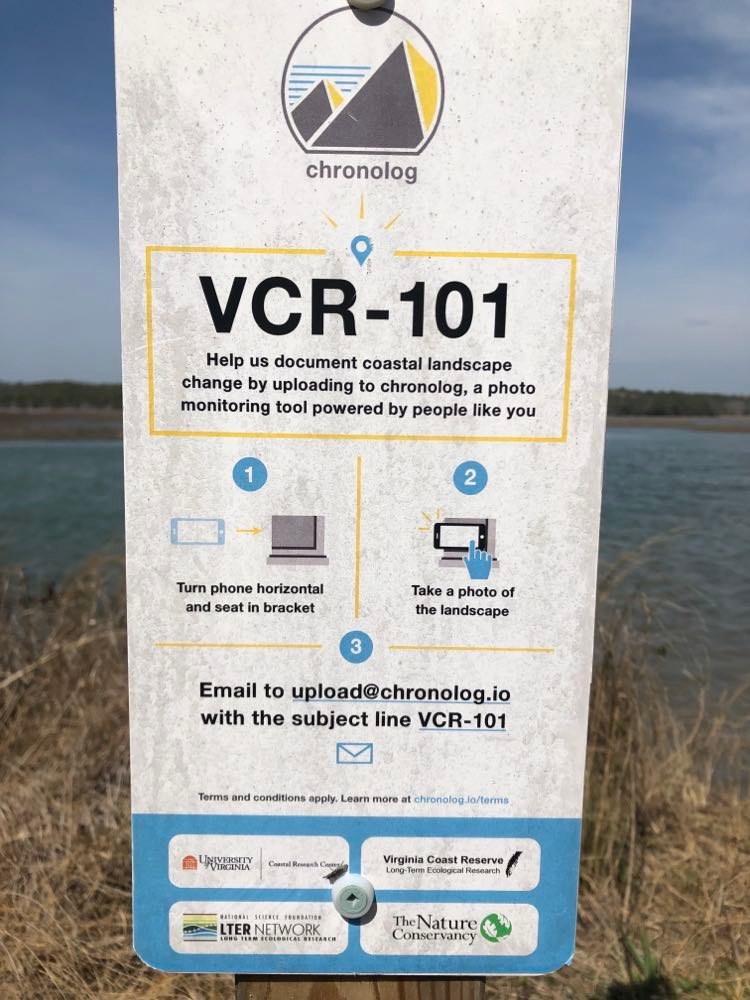
I forget that I am a total sucker for every notice and signboard request to “please snap a photo of this landscape and send to our club/organization/county offices so that we can chart the progress of our cleanup efforts/garden growth/bluebird house project.”

I forget how I can be halfway through a trail hike and come across a somewhat hidden chemical manufacturing plant that, upon pressing Google for information, harvests horseshoe crabs for biomedical research. I then discover that Horseshoe crabs’ blood is collected to support the production of LAL, or Limulus amoebocyte lysate, a clotting agent that aids in the detection of human pathogens in patients, drugs, and intravenous devices. And then I finally discover that a horseshoe’s blood is blue! Feeling very Erin Brockovich-like, I realize I have uncovered absolutely nothing except a creepy photo of how these crabs go through the bloodletting process.

Altogether though, these activities completely obliterate any timetable I’d painstakingly crafted, and my days are filled not with seaside lounging, wine tastings, garden walks, and museums, but rather rusty highway markers, indifferent alley cats and camouflaged fowl, and the eyeroll-worthy wasted pursuits of seafood cruelty.

This … is how I spend my time.

Finally, of course, I come home, and being the well-practiced fiction writer that I am, must craft a slightly racier version of the truth. An embellishment here and there, a tale grown taller where height was needed, a yarn spun with a rainbow of color where it might truthfully have been categorized as beige.

The historic marker may have a map taped to the back of it which leads me to a dilapidated governess-in-training school, where a tattered and overlooked diary reveals the daily abuses suffered by schoolgirls whose once wealthy families fell on hard times, forcing them to offer up their female issue for future employment—if they could make it past the cruel headmaster’s daily taste for vehemence and depravity.

The footpath placard’s request for an uploaded snapshot unleashes a deluge of texts and phone calls not from The Nature Conservancy, as advertised, rather an arm of the Defense Intelligence Agency stating that my latest photo reveals I am the closest individual to the Lesser Spotted Great Ebony Igris which is believed to be used by certain foreign countries as a spying device, and what ensues is a day-long chase to gather closer proof to their suspicions. Clearly, Citizenry Science working at its full potential.

And the blue-blooded horseshoe crabs whose vital liquid is drained from their heart until it ceases to flow? What more could I add to that really. It’s perfect already.

This is how it goes. The trilogy of one trip. I look back and wonder at its success. I wonder if I am rested and sated with tasting a week of different living. I wonder if it was money well spent. I wonder if I will remember the true details and recall them with fondness over time.

I wonder if anyone will buy the new book I will start penning tomorrow—the one about an illicit ring of runaway governesses who harvest horseshoe blood for mountains of cash and open an elite spa and recovery center for repatriated creatures involved in avian espionage.

Perhaps it is better to travel hopefully, than to actually arrive at all.

~Shelley

For the time being, the blog is closed to comments, but if you enjoyed it, maybe pass it on to someone else. Email it, Facebook it, or print it out and make new wallpaper for the bathroom. If it moves you, show it some love and share. Cheers!

Don’t forget to check out what’s cookin’ in the Scullery and what we all gossiped about down in the pub. Or check out last month’s post and catch up.

If I Truly Loved You, I’d Treat You Like Dirt

One of the best, most desired gifts I received this year during the holidays was a box to hold garbage.

I know, you’re all wondering if I’ve accidentally held my head in the oven too long whilst last cleaning it or, if finally, all those heavily scented, potentially carcinogenic candles from Bath and Body Works that I sniff on an hourly basis to keep me meditatively peaceful have created some cognitive disorder, but I assure, neither have occurred.

That said, my new container truly has me skipping about with a euphoric outlook because Rumpelstiltskin—my big new bucket—turns garbage into gold.

That’s right you clever clogs, I finally got a compost bin.

For the last two months I have been studying everything for its C/N ratio. It’s a beautiful formula for anyone growing closer to ditching their tax ID and social security number to live off the grid, or serial killers studying John Wayne Gacy and making mental notes as to how to improve on his form.

Decomposition can be deadly, but also beautiful. Therefore, for true success, one must know any material’s carbon to nitrogen proportions.

I promise this is not a lesson in organic chemistry, but who doesn’t love the idea of your old food making your new food?

Apparently, most people coming to my house.

Yes, I know, a good chunk of folks visiting my little log lodge leave less than stellar reviews when they begin to realize that a stay with me means you’ll likely be too cold or too hot, there’s a fair to middling chance you may get a teeny touch of dysentery because comestible manufacturer’s expiration dates on packages in the fridge are bogus, and you’ll need to memorize a list of things that go into a) the recycling bin, b) the compost bin, and c) the landfill bin.

The latter is highly discouraged and comes with a free set of annoying questions wondering if we might find another use for that object and an array of facial expressions that clearly cast doubt on whether you’ve truly watched any documentary of Greta Thunberg like you promised you did.

No judgement. She’s not for everyone.

But it’s plain to see I’ve now upped my game in the kitchen. A massive stock pot sits on the counter and is the receptacle to all things that will fortify my soil, enrich my diet, and likely cure cancer. The timeline is somewhat futuristic with each addition, but I’m in it for the long haul.

Basically, I have a new job. I now tell people that I am a terra firma farmer. A sod shaman. A ground grower. An anthrosol alchemist. Maybe the last one goes a bit over the edge, but you get my point. I’m harvesting dirt.

Into the stock pot go greens and browns. Everything from vegetable peels to coffee grounds are tossed in with delight. Egg shells, fruit, tea bags and olive pits. Pumpkins, tofu, peanut shells, and potato eyes. Old paper napkins? In they go. Q-tips and chopsticks? Join your friends. Pencil shavings and Ugg boot fluffage? Step right up and dive right in. Once that pot is chock-a-block full, they’re dumped into that beautiful new spinnable bin outside.

These are just your Joe-Average bits and bobs that fall under the category of acceptable, but Google appears to understand that nearly every day I start a fresh search with my standard question of “Can I put (insert questionable item) into my compost bin?”

So along with the above, I’m tossing in lint and dust bunnies, old match sticks and house plants (RIP, I swear I tried), holey wool socks and burlap sacks. I’m drawing the line at nail clippings. Just can’t do it.

Of course, there’s all the outdoor additions—the leaves, the grass, the weeds, and twigs. Pine cones, and bird’s nests (once they’re done with them), sawdust, and straw. I am finding it all. Picking it up, shoving it in, and swirling it about.

I’m sure my family thinks I’m losing a few more marbles because it then appears that I’m having a conversation with my compost pile, but obviously, they have no idea that I’ve popped in a handful of hardworking worms and are simply offering a few words of encouragement. It’s not like I’m talking to the bacteria or fungi, as that would be ridiculous.

We all know that fungal intelligence is geared more toward spatial recognition and memory, so I just leave them Post-it notes as reminders of where they are and what to do. Duh.

And now I churn, I peek, I poke, and wait.

I check temperatures, humidities, pH balances, and take weekly requests for movie night.

If I find a worm on the ground, I give him a noble Roman name and introduce him to the giant Saturnalia party where all his soon to be friends are closely gathered in the vomitorium.

This huge metropolis is teeming with life and death and decay–microbes, mites, nematodes, and invertebrates.

I encourage gluttony, as they are only doing their job.

I nurture meaningless affairs because reproduction is critical.

I tell heroic stories of their ancestors—those who have cleaned up polluted spill sites and made communities safe to live in again, or of those who went into medicine and actually became medicine.

I inspire futuristic dreams of outrageous proportions. Fungi? You are capable of becoming buildings and replacing concrete. Bacteria? You can become biofuels or gobble up greenhouse gases. Worms? A growing number of people find that it is equally as important to save one of you as it is to save a panda.

I tell my new friends who are feasting on these precious scraps the same thing: You is kind, you is smart, you is important.

I’m hoping they will remain as down to earth as I know them all to be. I am rooting for them because I know them all now. I be-leaf in them, and I feel like we are soil-mates.

Okay, maybe, just maybe, I have held my head in the oven too long.

But even if everyone around is begging me to stop with the wordplay and move away from the compost, I will only agree to drop the puns because I’m keeping my ground.

Happy dirt season!

~Shelley

For the time being, the blog is closed to comments, but if you enjoyed it, maybe pass it on to someone else. Email it, Facebook it, or print it out and make new wallpaper for the bathroom. If it moves you, show it some love and share. Cheers!

Don’t forget to check out what’s cookin’ in the Scullery and what we all gossiped about down in the pub. Or check out last month’s post and catch up.

The Historically Boozy Woozy Benefits of Hooch

As a person who works within the spirits industry (the drinkable not ghostly kind), I am often told of the detriments that accompany imbibing alcohol. We are reminded by our physicians, by our parents, by well-meaning, health-conscious friends, and by finger-wagging party poopers as to the many harms, dangers, and hazards that accompany a tipple or two, and are firmly advised to give hooch a wide berth lest we fall prey to its evils.

As a researcher by heart and by nature, I am always looking for an argument to counter the above—a dataset, a study, some persuasive proof that as long as one employs an element of good sense and restraint, one can find great joy and enrichment from the quaffing, the swilling, and the indulging of giggle water.

And I have found one.

In fact, I have found ten.

In truth, I have found more than ten, but I have narrowed the list to my ten favorites.

It takes a sturdy and determined nature to search through bland and archaically worded historical documents, but 15th century German physician, botanist, and alchemist, Hieronymus Brunschwig’s work deserves not only an unearthing, but a spotlight shined upon his analysis. So please, allow me to sing the praises of the unsung.

As Hieronymus sees it, the benefits to drinking alcohol are thus:

  1. It comforts the heart.
    • Agreed. Nuff said.
  2. It heals all old and new sores on the head.
    • Perhaps this is simply a slip of translation from German to English, but most of us might agree that alcohol is the cause of most sore-headedness and not the cure. *shrug
  3. It gives you good color.
    • This is no doubt true, as how many of us have sat across from an individual at a pub—one who’s all rosy cheeked and glossy-eyed from an elixir’s effect—and so much the better for it?
  4. It cures baldness, body lice, and fleas.
    • Currently, there is no data to support this theory, although perhaps we’re still in the infancy of further research.
  5. Dr. Brunschwig also believes it cures toothaches, bad breath, and cankers.
    • This, I believe, explains why my dentist always smells of hooch when I go in for my annual cleaning.
  6. It causes the tongue to become well-speaking.
    • Now who of us have yet to attend a party where some individual, perhaps having become a bit too free with the firewater, will toss off his tie, leap upon the nearest coffee table, and begin spouting off a soliloquy worthy of Shakespearian applause?
  7. It eliminates belching, farting, and the painful swelling of breasts.
    • As these were my late Aunt Marge’s three most vociferous daily complaints, I feel somewhat cheated in missing the opportunity to aid her ailments.
  8. It dissolves bladder stones.
    • Alas, I feel the Mayo may not be fully behind Herr Hieronymus on this one, but likely there exists one or two urologists out there who skipped this chapter in med school and would stand behind the tipple treatment versus cystolitholapaxy.
  9. It provides courage.
    • There is ample historical evidence to endorse this argument simply by counting the number of battles won and marriages proposed.
  10. And lastly, my favorite medicinal remark in favor of partaking in the boozy bevies is that “It cures the bites of rabid dogs and heals all stinking wounds.”
    • *sigh. Pure poetry, right?

And there we have it. Scholarly legwork is ongoing and appears to be just as contentious as the arguments for and against eggs, vitamins, and checking the morning headlines.

Surely at some point science will parse out the good, the bad, and the ugly when it comes to the advantageous effects of ethanol and not simply roll collective eyes when we argue with limp proof of merely the desirable ones. Until that time, may I suggest you take heed from the sage words of the late, great Johnny Carson:

I know a man who gave up smoking, drinking, sex, and rich food. He was healthy right up to the day he killed himself.

So, cheers to you all, and to Heironymus Brunschwig for all his efforts. I toast to your good health with, Alcohol may be man’s worst enemy, but the Bible says love your enemy.

~Shelley

For the time being, the blog is closed to comments, but if you enjoyed it, maybe pass it on to someone else. Email it, Facebook it, or print it out and make new wallpaper for the bathroom. If it moves you, show it some love and share. Cheers!

Don’t forget to check out what’s cookin’ in the Scullery and what we all gossiped about down in the pub. Or check out last month’s post and catch up.
Problems with One’s Nose: It Just Doesn’t Make Scents

I think we can all agree—that whether you’ve experienced it firsthand or not—having Covid is no fun.

I can’t think of any illness that would actually fit into the “fun” category, so perhaps the above statement is a bit of a no-brainer declaration.

Still … there is an aspect of this affliction that is forcing me to do something I do find to be pleasurable—research­­—as I (along with millions of other humans) are desperate to determine when, if ever, our sense of smell will return to our bodies.

The symptoms of SARS-CoV–2 are dizzying, to be sure—one of them including experiencing dizziness. That evidentiary concurrence aside, other symptoms include the typical sniffling, sneezing, coughing, aching, stuffy head, fever, so you can’t rest for lack of medicine annoyances. Some of these ailments arising to the level of not just vexing irritations but life-threatening pathologies.

The non-life-threatening, but definitely life-depressing disorder of anosmia—or smell blindness—is a fairly reliable indicator for the Average Joe lacking an at home Covid test to determine if they have been infected with this miserable and unrelenting virus. As an individual whose job relies upon her sense of smell, I long ago created a list of all maladies of the disease that I knew might reliably express themselves and highlighted in yellow and then orange and then pink the one that I absolutely, under no circumstances could tolerate. And then promptly began agonizing over its possible appearance until, I’m guessing, my brain finally took to heart all those self-help, yogi meditations I spent years fostering and “manifested” my thoughts into intentions.

Here you go. You think it, you become it.

The loss of smell for most people is dispiriting—especially if you’re a human who likes to eat.

The loss of smell for a person who is surrounded by hundreds of small alcoholic vials filled with aromatic compounds that are no longer aromatic is panic-inducing, terrorizing, and humbling in a collapse into a puddling heap on the floor type of way.

What now? Is the question of the day, although it really wasn’t a daily query as much as it became an hourly one.

So much of my life’s work is dedicated to identifying odorants—the good the bad and the ugly. They’re all incredibly fascinating to me and important to the labors I’ve been employed to pursue. I have never taken my ability to smell for granted—in fact, I’ve protected its presence and fostered my olfactory skills like a zealot chasing after the title of “Olympic medalist” in that category.

I walk into a room and the first things I notice are the odorants—the primary, the secondary, the tertiary. Has someone burnt toast? Has a dog passed gas? Is that woman wearing the same scarf from yesterday when she slipped outside into the alley to have a quick cigarette?

I walk into a patch of someone else’s presence and can oftentimes flesh out a rhinal history. The cologne they wear, the detergent they use, the curry they ate. It’s a Sherlockian mystery that unfolds itself one odorant at a time.

And now it’s gone. Poof.

Coincidentally, two weeks ago, I noticed a side-effect to a new medication I’m on which revealed that I may experience hyperosmia—an increased sensitivity to odorants. Hot diggity, I thought. A dream come true, right? Until I’d been stuck in a car with a person who, whenever speaking, gave off the exhalating perfume of someone who had perhaps dined on the soup made from the sewer on a hot August day. It wasn’t their fault. Their stomach was appropriately breaking down breakfast with the human chemicals assigned to that job—it’s just that it felt like I was in that organ with them.

Being on the opposite ends of the scent spectrum in such a short period of time provides—along with a bit of whiplash—an opportunity to experience the edges, to assess this bodily sense with the effect of a volume dial. Too much and you whirl with nausea, too little and life becomes monochrome—a dull gray, monotony that snatches away all color, absconds with your anticipation, and tosses you into a steeply descending pit of “why bother?” (Or, at least, for me it did.)

I have a phrase—a formula—I use to describe a concept when teaching on developing the skills of nosing and tasting: scent + taste = flavor.

Scent involves our olfactory epithelium—a small patch of tissue high in the nasal cavity that houses around 400 of our body’s olfactory receptors. When aroma molecules attach themselves to the receptors—either singularly or in combination with others—we can identify somewhere between 100 million to 1 trillion different odorants.

Taste is defining sweet, sour, bitter, salty, and umami compounds.

Putting the two together is how we experience flavor. Strip one away and the pow and wow factor of food is crippled. Hamstring both and you’re left with … what??

If I allow my freaked out, blubbering inner doomsayer to answer that question, it would be search for a cliff tall enough to leap from. If I am to respond more appropriately, more hopefully, more like an individual who gravitates toward solid science than pointless hysteria, I would say, a not unsubstantial amount.

I am forced to hunt for the other. To seek out what else contributes to the sensory experience of flavor, as there are a few more things than one might expect to include.

  1. Viscosity – a measure of thickness, glossiness, syrupiness, adhesion.
  2. Chemesthesis – this occurs when the receptors on the skin react with a chemical placed upon them—where your mouth and nose are concerned, we have the examples of:
    • Menthol (a cooling sensation—your toothpaste, gum, or minty herbs)
    • Capsaicin (a thermal impression—your hot sauce, spicy peppers, or chili powders)
    • Carbonation (a tingling of the receptors—think soda, sparkling water, fizzy champagne)
    • Alcohol (a prickling phenomenon—might as well go for the gold and make it high proof)
  3. Sounds – the oral and sonic experience that comes from the crunch of your sugar snap peas, the squeak of your cheese curds, the crackle of your potato chips, the smacking stickiness of your peanut butter, the effervescence of those Pop Rocks.
  4. Temperature – No need to explain, you know the scale.
  5. Mindfulness—It has been studied and believed that “expectation” contributes to flavor as well, as scent and taste stimulate the limbic system and ultimately stir up memories.

I cling to the fact that the nuances of what contributes to flavor is fairly rich with examples. And paying particular attention to the extra sensory “we’ve always been here, but you’ve just ignored us” elements highlights their contribution to an experience rich with stimuli.

Is it the same?

Nope. Not even close. For me, anyway.

Will it suffice?

It will have to. At least until biology rights itself, a stem cell transplant program is offered up by my GP, or Mark Zuckerberg finds a way to “meta” my olfactory receptors back into reality. But for now, I will sniff, sip, slurp, and swirl everything I find—to invite back into my brain, to welcome back into my realm, to appreciate with renewed vigor the one thing my mental health hinges upon.

Until all returns, I will remain annoyingly and worrisomely … scent-o-mental.

~Shelley

For the time being, the blog is closed to comments, but if you enjoyed it, maybe pass it on to someone else. Email it, Facebook it, or print it out and make new wallpaper for the bathroom. If it moves you, show it some love and share. Cheers!

Don’t forget to check out what’s cookin’ in the Scullery and what we all gossiped about down in the pub. Or check out last month’s post and catch up.