Will Goldfish be More Clever than our Children?

Because of the nature of my work, I often find myself in the company of children and teenagers. If one intends to write for young adults, or those peeking over the wall into young adulthood to see what the fuss is all about, one finds benefit by listening to them, conversing with them, and generally just taking a softly tipped stick and poking about in territories you might not normally be invited into.

Curiously, that same ‘nature of my work’ is growing more challenging as it does not fit into the current timeframe of many young adults’ attention span—a trajectory of current evolution where now every fleeting second of focus counts and best be saturated with impactfullness.

Where I used to describe the concept of story to young readers as a richly developed plot with engaging dialogue, a diverse set of problems that might tangle complexly at first but unravel beautifully in the end, and a few solid examples of struggle, failure, perseverance, and finally success, now my definition has been forced to change. Currently, I define story as “Once upon a time there was a guy, he had a problem, he figured it out, the end.”

Much more TikTok, much less time-honored tale.
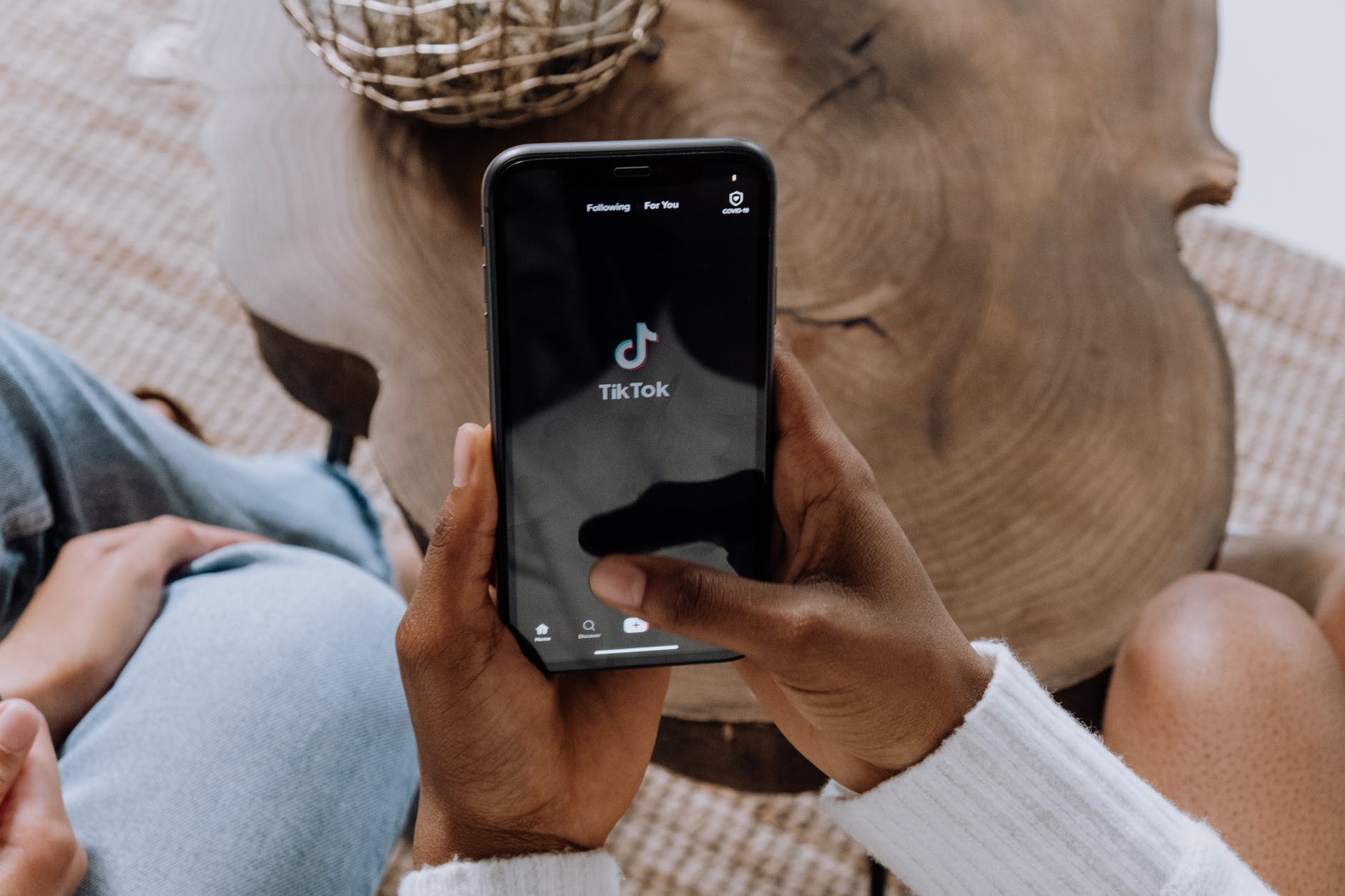
Short-form episodes are now the norm. One can see information streamed about nearly anything and those sessions require a mere 15 seconds of focus. The problem is, is that a recent study determined that the average human attention span has fallen from 12 seconds in 2000 to a whopping eight seconds today.

Goldfish have a better chance of making it to the end of that video as they are believed to have an attention span of at least nine seconds.

Somehow, our youths are being encouraged and pushed to find satisfaction with a story that lasts less time than we expect them to be standing in front of a running sink, washing their hands. I grapple with this especially hard when I realize that oftentimes just one of the myriad sentences I shove into a paragraph far exceeds the newly allotted timeframe many kids will devote to scanning words across a page. And how does one cram a beginning, a middle, and an end into a curt and clipped few moments?

One of the most difficult tasks authors—or anyone with something to sell—must do, is create a pitch. Something that answers Why should I devote my attention (or hard-earned pennies) to you? It often involves boiling your story or your product down to its bare bones—the skeletal structure that shows all strength and no fluff.

The process for authors often happens like this:

  • take a 325-page book and reduce it to one page (hard)
  • take that one page and tighten it to one paragraph (ugh)
  • take that one paragraph and shrink it to one sentence (facepalm)

If you’re writing a film script, the next bit is to slash it to fit the form Blank meets Blank. Godzilla meets The Godfather, Dirty Harry meets Harry Potter, Jaws meets The Little Mermaid—or something like that. Somehow the mash-up is supposed to bring immediate clarity to anyone hearing the phrase as to the plot, struggles, and triumphs within the storyline.

But does it really?

Can one short phrase really tell us the necessary amount needed to exclaim, “I get it”? Can a fifteen second video really reveal the depth of dance, comedy, or education? Is it even possible to jampack a “How to Fold a Fitted Sheet” into 30 seconds or “The History of World War II” into a three-minute YouTube video? Will our next generation of surgeons learn how to remove our gall bladders via Instagram stories?

Personally, it takes me donkey’s years to learn anything. And it’s not because I’m slow. It’s because I’m slow and stubborn. New information that crosses my path is met with skepticism until I can research its source, decipher which end of the political spectrum it may live on, and see Anthony Fauci demonstrate it at a White House Press Conference. It took me literally decades to watch the series MASH because I believed, like the execs telling the show’s writers, that the series run would be limited because the Army isn’t really a pool for humor.

I need convincing. I need repetition. I need my children to walk through the door at holidays and declare amazement at the fact that they’ve actually time traveled into history and perhaps I should let someone in the science department know that it’s possible.

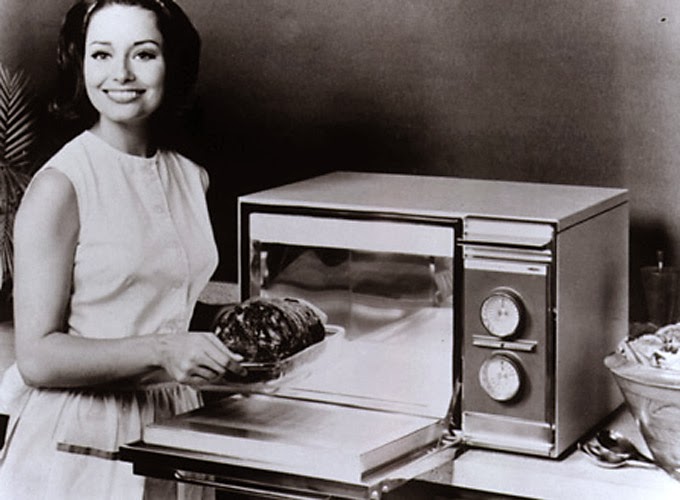
“When are you going to get a new microwave, Mother?”

“As soon as I’ve researched all the newfangled ones on the market. There’s a lot to learn and compare.”

“Have you yet learned that this antiquated piece of junk is a fire hazard?”

“DON’T TOUCH MY RADARANGE!”
But it’s more than just diving deeply into any subject to learn its function, purpose, and capability, it’s also about staying with something long enough to feel the comfort of its complexities. Typically, you cannot learn to play the piano by just watching someone else on video, and it’s downright impossible to sum up our planet’s horrific battles by declaring into a camera lens, “Humans fight. War bad”. There is nothing wrong with embracing the depth and breadth of any subject, but I feel it’s wrong to lead kids into believing any topic can be shortened into a framework of explanation that would have the writers of Cliff Notes blush at its brevity.

Our world is huge in scope and requires effortful thought to make sense of even its least complicated aspects. It’s a daunting task, and we’ll never finish it, but we certainly shouldn’t allow our children to shy away from it. History takes time to be explained. Skills take time to be acquired. Stories take time to be told.

Perhaps we can quote American author and keynote speaker Michael Altshuler more often to our children: The Bad news is time flies. The Good news is that you’re the pilot.

~Shelley

For the time being, the blog is closed to comments, but if you enjoyed it, maybe pass it on to someone else. Email it, Facebook it, or print it out and make new wallpaper for the bathroom. If it moves you, show it some love and share. Cheers!

Don’t forget to check out what’s cookin’ in the Scullery and what we all gossiped about down in the pub. Or check out last month’s post and catch up.

Perseverance: It’s a Rover, It’s an Attitude, and It’s the Illusion Your Internet is not Possessed

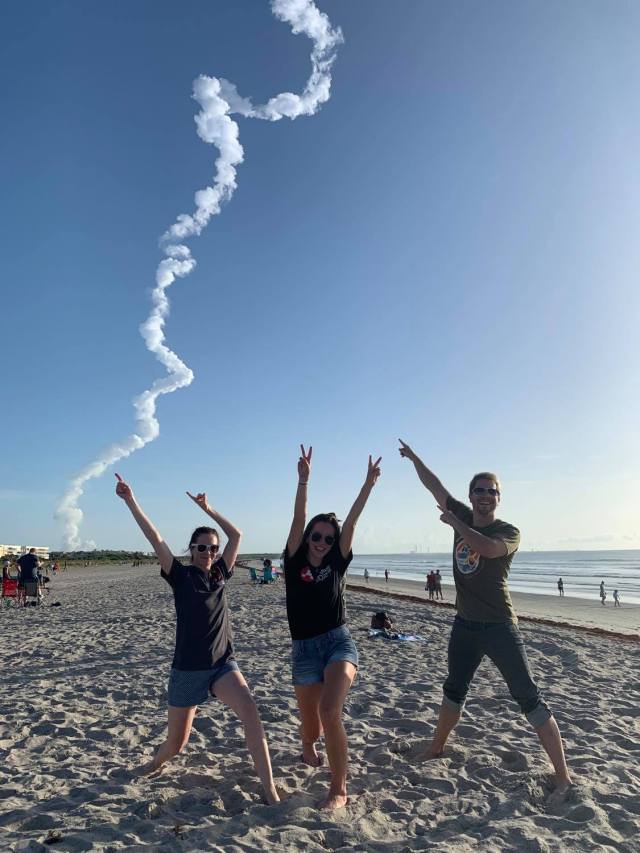
I’d been waiting for years—literally years for this day. The momentous achievement of mankind’s drive plus Mother Nature’s good nature blending to successfully explode off this planet with the intent to mine another for life.

I know that sounds a little cryptic, so I’ll rephrase.

I would confidently say I can nail the moment my firstborn knew she wanted to be part of a team of people who propelled objects off the planet with the hope of landing them on any other orb.

It was somewhere in between her firm commitment to understand propulsion by studying toys as she repeatedly chucked them out of her crib and the choice of her first words: air pane.

Her eyes continually scanned the sky—spotting the tiniest of specks—following their trajectory until out of view.

The schooling from then till now far surpassed my levels of understanding somewhere around upper middle school—and I could spot the trend as early as fifth grade when she’d apparently announced to her math teacher that the curriculum was far too easy and please place her in an advanced class.

Her teacher, of course, called to inquire as to whether I had pushed my child to this task, and I replied saying, “Nope. My math goals for my kids are to make sure they can balance their checkbooks, not work on Wall Street.”

It was always shocking to walk into Chloe’s bedroom and see the walls plastered and the floor scattered with the computational hieroglyphics of what I believed belonged either on the cell walls of a madman, or the stone walls of a caveman.

Apparently, they were assignments.

They could have been blueprint ciphers for a big bank robbery she was involved in. I couldn’t tell.

Eventually, she figured out the entrance code to a crackerjack college and thereafter received the passwords that landed her a position on that long ago dreamed of team.

Chloe now works for her personal godhead of all space agencies and has been preparing for the very same day I’ve been preparing for, only with a little bit more effort.

I’d say we’re nearly matched on enthusiasm though.

NASA’s new rover—an adorable little fella named Perseverance—could have easily been first prototyped by Pixar, as it has been anthropomorphized with heartfelt fervor and will no doubt have Disney releasing some new full-length animation about its hero’s journey shortly.

Perseverance was scheduled to leave our Earth around July 17, 2020, but due to some last minute touch-ups with makeup, and NASA’s motherly stuffing a few more bits in the little guy’s backpack before stepping his first foot onto the Atlas V bus, his launch date was delayed until July 30th.

The preparations leading up to this date went something like this:

Chloe: Would you like to come to the launch site next year in July as my guest?

Me: Hella yes.

Chloe: Mother, I am about to be issued your guest pass for launch date. It’s five months out yet. Do you still want to come?

Me: Hella yes.

Chloe: Mother, this Covid thing may be a concern. There’s been some talk about a possible spread. Are you still in?

Me: Umm … yeah, mostly.

Chloe: Mother? Have you made a will? I know it’s only May, but I can’t wait to see you.

Me: Wait. What?

Chloe: Launch is just two weeks away, and I’m guessing you’re not coming.

Me: Chloe, I desperately want to, but I’ve been told that in Florida, the moment you disembark the plane, you’re handed a flyer—not for timeshares anymore, but cemetery plots. I’m thinking I’m going to have to Zoomcall into NASA on this one, kiddo.

Chloe: I understand. I’ll make sure you’ve got the right links and time schedule.

Me: Yippy!

Let’s skip forward to the big day, links and lineup of launch window noted.

Twenty minutes before launch:

Chloe: Remember, the most important and crucial stages to watch are—of course—lift off, then less than a minute later the rocket has to make it through Max-Q—that’s critical, and then, about an hour after that, comes Atlas V’s rocket separation from the spacecraft. Got it?

Me: You betcha!

Laptop open, ready, live. Countdown in progress. T-minus 50 seconds … (I hold my breath and watch the clock.) 10… 9… 8… (insert squeals of excitement) 5 … 4 … 3 … (aaaand—stream on screen freezes)

Me: Wait! NOOOO!!! (tosses computer, scrambles for smartphone, howls while relinking link)

NASA: With the RD-180 main engine running, the Atlas V vehicle successfully rises vertically away from Complex 41 at Cape Canaveral Air Force Station, Florida.

Me: Dammit! Dammmm– I stop mid-blubber, as I suddenly recall there’s no time for tears. It’s Max-Q time!

Me: (Link is relinked. Eyes are peeled on rocket. Fingers are crossed for all good luck gods to see.)

NASA: T + 43 …

Me: (stream on smartphone screen freezes) gasp … looks to sky … shouts obscenity

NASA: (hourglass stops spinning and smartphone reconnects) The Atlas V rocket passed through the region of maximum dynamic pressure during ascent through the lower atmosphere.

Me: YOU HAVE GOT TO BE KIDDING ME!

I cry a little. Shower. Make coffee. Reboot both screens and sit through countless minutes of perky NASA spokespeople who remind me of what I’ve missed and, of course, highlight what’s to come.

I place laptop and phone a small distance away from me in case I’m the one with bad juju energy. But it doesn’t matter …

NASA Perky People: After accelerating the Mars 2020 spacecraft to a velocity of 24,785 mph, or about 11 kilometers per second, relative to Earth, the Centaur upper stage shut down its engine and is now re-orienting itself into the proper position for separation of the Mars 2020 payload.

Me: NASA, stop with the teaser trailer, and why don’t you admit what’s really gonna happen on my side of the screen.

NASA: It is now T + 57 minutes and the Centaur—

Me: (both screens freeze) Bingo.

I knew it. I knew it would happen. It was no surprise.

Chloe texted twenty minutes later with words that sounded like she was skipping across a playground with a Popsicle in each hand.

Chloe: Did you see it? Did you see iiiiit?!!

Me: Success! Congratulations, kiddo! How utterly thrilling, right?

Chloe: I’ve been waiting my whole life for this day. Wasn’t it amazing to see it live?

Me: Well …

Chloe: Oh, sorry, Mom. You know what I mean. I got to see it live, but seeing the livestream is only a couple seconds delayed. It’s still amazing, yes?

Me: It’s so amazing.

Chloe: And at least you’re safe at home. I’m sure it was the right choice.

Me: *sob*

~Shelley

For the time being, the blog is closed to comments, but if you enjoyed it, maybe pass it on to someone else. Email it, Facebook it, or print it out and make new wallpaper for the bathroom. If it moves you, show it some love and share. Cheers!

Don’t forget to check out what’s cookin’ in the Scullery and what we all gossiped about down in the pub. Or check out last month’s post and catch up.
The Meticulously Precise and Non-Magical Way to make Whiskey

I’m nearly finished writing another book.

This one won’t be published for the public though. It’s a technical manual.

I’d never done a technical manual before; therefore, this genre has been entirely new to me.

I was at one point reminded, Technically speaking, technical manuals do not fall into a “genre,” Shelley.

Disappointing news.

I was also at one point informed that my other skills of fiction writing were, although appreciated, inapplicable with this work.

“What do you mean?” I’d asked, halfway through the job.

Please do not allow the machinery to have any “dialogue.”

Hugely disappointing news.

In my mind, everything is conversing with anything beside it. Refrigerators hum, clocks tic, boats roar, trees creek, tea kettles whistle, grills hiss, frying pans spit, drains gurgle—I could go on.

There is conversation with their purpose, with their function, and it is our choice to tune in to hear it if we choose to do so—or maybe it’s just a special type of non-worrisome derangement those of us who practice anthropomorphizing inanimate objects experience every day.

So, okay, the mash tuns, the fermenters, the stills, and bottling equipment will not be engaged with any discourse. Fine.

Also, no need to “set the scene.”

Wait. What? No “Once upon a time”? No “In a galaxy far, far away”?

No.

No “Imagine if you can, a farm field in Virginia filled with rows of waving grain. Corn so tall, so yellow, so sweet. Wheat so soft, so feathery, so—”

No. Also, just list the manufacturer of each piece of equipment. No need to give colorful backstory that creates a uh … biography for them.

Damn.

But the still is an old copper Armagnac pot which surely, if you’d allow me to research, has the most fascinating history, connecting it to a village in Gascony, and likely to some illicit brandy making where people’s lives were at risk for defying the king’s orders and skirting around the excise men, right?

No. Louis XVI died in 1793. The still was made in 2006. Write that down.

No excise men?

*insert cold stare here

Fine. Hard facts only. It has been an arduous road to travel. It has been serial numbers, maintenance schedules, standard operating procedures, operator responsibilities, quality controls, ingredient specification sheets, safety protocol, system malfunction detection. It has been measurements, sampling data, testing methods, recording methodology, and out of the realm of tolerance identification.

No language describing the invention of any equipment, the trials and tribulations of the inventor, the recognition, the accolades, the race between rivals to patent first, to reach the market, to make a name and reap rewards.

No timeline of history, the tales of great machinery malfunction and mishaps that caused strife, or injury, or daresay … death.

Nope. Just operator files.

It’s ‘if blank, do blank.’ Or ‘when this, then this.’ It’s ‘measure now, record here.’

There’s no beginning, middle, or end.

It is not a story, not a narrative, no plot.

None of the machinery barely scrapes by, screeches to a halt, or belches out for attention.

The manual is meant to be informative. Concise. Crystal clear. It is meant to provide a “just in case” scenario for an event like a catastrophic pandemic wiping out all previous operators’ ability to fight through throngs of apocalyptic zombies to appear at the facility, allowing any stranger to eventually walk in off the street, discover the book and easily, effectively, and effortlessly pick up where we left off.

No, Shelley. It is meant to use as a teaching guide for new employees.

Yeah, that too, but my take could be plausible (I mumble quietly).

So, I study each piece of equipment. I learn its function. I define its specifications. I describe its purpose. It is thirsty work as I crawl around, beneath, above, and inside many of them. I watch them perform. I study their mechanisms. I research their optimal modes.

And I learn … they are still magical.

I learn it from listening to the operators as they describe their years of experience working with each station.

The grain will stubbornly clump and ball if you don’t chase it with the paddle in the cooker. It likes to hide right in that corner.

If you don’t clamp down the hose securely, the impellor pump turns into a raging snake that’ll spit hot mash on every square inch of the production room floor.

You see that steam rising from the strip still’s parrot spout? We call that the dragon’s breath.

I did find a story. The story of waking up the yeast before releasing it into its comforting, warm bath, of performing the tightly timed choreography between pieces of machinery as they demanded immediate attention to avoid calamity, of discovering that the general consensus for many of the processes was that you just had to feel it, smell it, taste it, gauge it. The machinery had its tells, and a good operator was sensitive to them and could anticipate results because of the accumulated years of a bonding relationship.

Making whiskey requires procedural care, yes. It’s a recipe. It’s a step by step adventure that when timed perfectly churns out a salable product.

But to me, and to others, the machinery is responsible for the alchemy, the head-spinning potions, the conjuration that leads grains to glass, this honeyed, headying elixir.

But the manual will not reveal that magic. The manual will not even hint at it. The manual conceals the story.

Except it’s there. We just don’t capture it within the pages that keep the secret safe. It is for others to read between the lines, to unearth the buried story within it.

If they find it after the zombie apocalypse.

~Shelley

For the time being, the blog is closed to comments, but if you enjoyed it, maybe pass it on to someone else. Email it, Facebook it, or print it out and make new wallpaper for the bathroom. If it moves you, show it some love and share. Cheers!

Don’t forget to check out what’s cookin’ in the Scullery and what we all gossiped about down in the pub. Or check out last month’s post and catch up.


The Need for Meedful Media

The word social is not one I would use to describe myself with. Like, ever. As a writer, I am comfortably cloistered away, far from noise, or distractions, and, most disconcerting to many … people.

Yes, I prefer to be far away from people.

Primarily because people are noisy and distracting. Of course, it’s true, they are many, many other things as well. People are generous, and interesting, helpful and creative, some of them are good at balancing silverware on their faces and can be truly entertaining. And if they could be all those wonderful things without the not so wonderful things, I’d be hooked on people. I really would.

Now the word media is one I rely upon heavily for myriad reasons. My work must be transported through the “agencies of mass communication” in order to be utilized, to provide some worth for others, to be functional and purposeful.

My goal, as a writer, is to find words, string them together into a pattern that either entertains or informs, and move a reader of those words to either act upon or experience something.

It’s pretty simple.

Yet the action of putting the words social and media together, side by side, is anything but simple.

It’s an effortful act of interaction if one wishes to be significant. And that interaction requires the bonding of human beings—to relate, and to be relatable.

Without that engagement, every author’s efforts simply sit on a library shelf, or a bookshop discount table, or in a warehouse somewhere with a bucketful of other unloved, unknown books.

The clincher is, you cannot just shout at people to, “Look over here! Hey! I’m annoyingly loud!” without them giving you an eye roll and going back to grouting their tile with a lot more enthusiasm.

I have worked with people who are slick and savvy at social media. They have studied the art probably with more intense effort than a teenaged boy, who measures and charts the growth of his biceps after each twenty reps of push-ups.

And if you’ve ever been a mother to a teenaged boy, or been a teenaged boy yourself, you may recall that I am not kidding about the “intense effort” applied.

But these clever engineers of awareness campaigns are usually paid professionals. At times, it’s best to employ them. They can be expensive, and regrettably … a little impersonal.

So here is where the paradox lies for many.

One must understand just how important it is to truly connect with someone you’re trying to get the attention of. And oftentimes, anyone marketing a product or idea goes about grasping that attention with the success of a five-year-old relentlessly tugging on the pant leg of their mother while she’s soaking up juicy neighborhood gossip from her best friend down the street.

You will be ignored.

We, as consumers, learn to turn a blind eye against the overwhelming influx of info wash that can at times feel like a fire hose of detritus. We have to. To keep our minds and moods safely intact.

Unless … and this is a big, important word … unless we get a whiff of something that brings value to our lives. Then we pay attention. Then we find some focus. Then we see the worth. Then we spread the word.

Long ago, years ago, when I first started publishing—whether a blog post online, a book in solid form, an essay, a picture, a tweet, a vid—it didn’t matter so much on the format—what I realized quickly was that if I wished to stand out within the noisy, info-saturated platform I worked within, I would have to show up with two things: something fresh, and something urgent.

Fresh, in that you can take old ideas and sharply spank them into something vibrant and sparkly—to appeal to a new set of eyes and ears, and reinvigorate some older ones.

Urgent, in that the content one produces must fill the recipient with a need to share. This is the smartest way to spread one’s work: word of mouth. Same goes for any industry.

If what you offer is something old—something people already possess—they’ll vote you straight off The Gong Show. You’re an amateur with dubious talent.

Connecting to people on both levels—both in content and campaign—requires consistent attention to crafting one’s skill, but also developing sincerity. And you can’t fake that. It’s been tried. It’s transparent. And people feel like taking a hot shower with a bucket of bleach and a wire brush after they’ve been exposed to it.

The timeless and repeated counsel I’ve been given can be summed up thusly: The years, the schooling, and effort you put into your craft should first and foremost be evident. What you write (or make) should resonate. It should amplify the meaningful not the meaningless. If you find it cannot captivate an audience, either go back to the drawing board, or find other employment where you can succeed. Don’t reconcile with offering up poor output. We need noteworthy voices that refuse to settle with generating mind-numbing content.

Then, when that content has been spat upon and polished to an absolute sheen, find one person who believes in it. Then find another. Find two. Be patient. Find ten. Be diligent. Be gracious. Reciprocate. Give back. Be social.

Yes, be social.

Not in the gossipy, drink in hand, playlist in the background kind—the kind I struggle with endlessly. Rather the kind where you contribute to society. To culture. To humanity. To the betterment of someone, somewhere else.

If you’re reading this post, then you’re part of the overwhelming majority of people who are somehow touched and involved in social media. You don’t have to be selling a widget to find this essay applicable—because, widget or not, you are selling something: yourself.

Spread your ideas, pass on your work, share your vision. Just make sure it is worthy and worthwhile to pay attention to.

~Shelley

PS–(In case you missed it!) An important update to all the Robin Gott Doodle Devotees out there! Robin has opened a new site where you can finally and officially purchase some of his finest and funniest work via a website called Society 6. To quote the champ of chuckles, “I know it sounds like some kind of low-budget South African sci-fi film, but it’s actually an online market place for all sorts of design.” Don’t miss out. Check it out here: ROBIN GOTT

For the time being, the blog is closed to comments, but if you enjoyed it, maybe pass it on to someone else. Email it, Facebook it, or print it out and make new wallpaper for the bathroom. If it moves you, show it some love and share. Cheers!

Don’t forget to check out what’s cookin’ in the Scullery and what we all gossiped about down in the pub. Or check out last month’s post and catch up.
Climb Every Mountain (even those without cell service)

One day, when my children were very young, I said to them, “Do not live a safe life.”

Over the years, they’ve come to understand what I meant by that. Be bold. Explore. Seek adventure. Leap!

And they’ve both taken those words to heart, and each in their own ways.

One has decided to live as far away from home as possible and still be considered a resident American. And the other has decided she’s not even entirely satisfied with the offerings of this planet, and is seeking to set up permanent dwelling on some other.

I’m fine with that. In a weird, No, I’m not taking it as indicative of how near you’d like to be to me.

Because that would be safety. Not the message I was pumping.

But I suffer the byproduct of all that, Go concur the world! flag waving. My fault. Entirely. And suffer I do. Because I was born a worrier. I have grown to become Olympic level competitive on that scale.

There are messages that come to me from both kids that fuel the scale of anxiety, like:

Wait, what day is it today? Oh, god, it’s July?

Or

A gift from you of one hundred dollars? Finally food!

Or

I’m heading to Patagonia for a hike. You won’t hear from me for at least a week.

That last one is what I’m going through right this very minute. And I’m not going through it very well. I think I’d go through it better if I’d not had exchanges like:

Me: You know it’s winter there now, right?

Her: Good point. I’ll pack a scarf.

Me: How will we communicate?

Her: Communicate? Mother, the whole point is to leave all people behind.

I have deep breathed my way through nearly twenty-four hours of her traveling to simply get to where nobody else is. And now, knowing that it’s pretty likely she has arrived at the base of some glacial fjord—because we lost communication five hours ago—it is simply a projection of my mind’s interpretation of her scrabbled together emailed itinerary that I will cling to.

Let’s take a peek into the inner workings of a somewhat neurotic, definitely overprotective mother’s brain as we view her schedule, shall we?

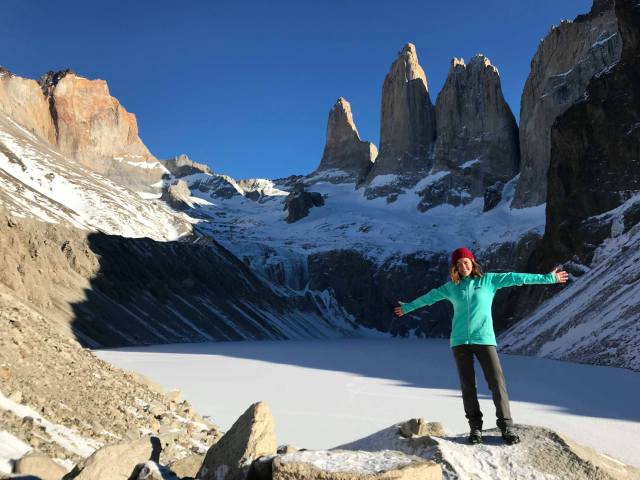
Day 1 – Something something Torres del Paine something something Estancia Sector. *shrug* I don’t know. It’s all in Spanish. I just filled in the proper names of places.

Day 1 (my take) – Hike from the lowest point of some fjord until you feel a torrential pain across your body, then point yourself toward Antarctica—from whence a stiffer cold wind is blowing—and stand in this section until the pain has subsided, and you can move forward again. Or the spring thaw arrives.

Day 2 – More Spanish words including Ascencio River, then Los Vientos, followed by Chileno Montaña, and finally, La Morrena.

Day 2 (my take) – Forge across river of ridiculously fridgid temperatures, lose your vientos, which could be food, or water, or all camping gear. I’m not sure here. Then lose the trail map and find yourself totally alone, cold, and without wifi.

Day 3 – Blah blah blah foreign words including Nordenskjöld Lake, Almirante Nieto Hill, and again, another word ending in something that sounds like it hurts, Cuernos del Paine.

Day 3 (my take) – She’s somehow found herself in a small area that Scandinavians have staked claim to, they give her shelter, and whatever that new untranslatable Norwegian word that defines coziness is, they watch a Danish drama, then put her in a sauna to thaw out, and finally roll her back out into the snow for a taste of compare and contrast—life, versus you wish life would end.

Day 4 – There’s something about the Francés Valley, words that end with the phrase The Italiano Campsite followed by other foreign text and the concerning location Hills Paine Grande, ultimately coming to an end with even more worrisome words placed side by side Paine Grande Mountain Refuge.

Day 4 (my take) – Clearly, she’s in Europe now. I saw nothing about flights or boats. I have no idea how she’s arrived on that continent. But the thing that disturbs me most is that she agreed to trek the ‘Hills of Great Pain’ followed by the ‘Mountain of Great Pain.’ The last word ‘refuge’ does little to assuage my anxiety, as being an American, I fear she may be shown the same kind of hospitality our country is currently offering others who are seeking shelter. Paybacks, baby.

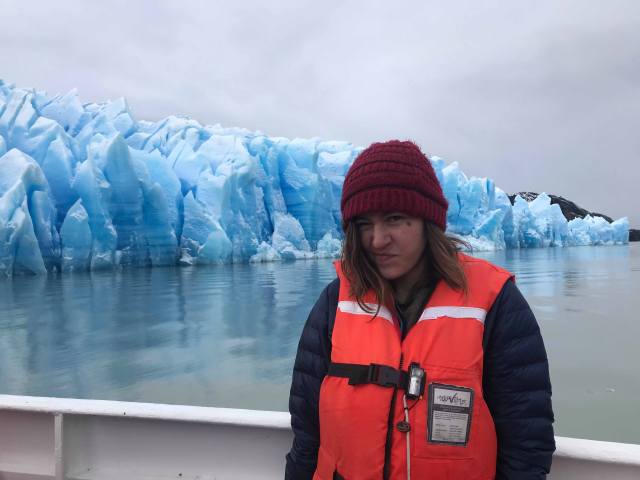
Day 5 – I used Google translate. And I think all of us know exactly the sharp accuracy of linguistic interpretation available here, right? Using this fine tool, I have made out the phrases chunks of floating gray glaciers, catamaran dividing great blocks of frozen spears, and impossible to operate ice field.


Day 5 (my take) – I think Google did a fine job. I think if she has made it this far, she will make it no further. I think that this part of Chile is sending a message: Go ahead and just try. We love a good laugh. And we’re keeping you in this frozen tomb until climate change forces us to defrost.

I have stopped looking at her itinerary. I’ve come to realize that translating biblical Hebrew texts into Middle English and Old Norse would be a better use of my time, and I’d best get moving on learning all three dead languages. In another week’s time there will either be a phone call from my exhausted but exuberant child at the airport or an ex-band member of ABBA—now retired cliff dweller—in Patagonia with some unfortunate news.

Either way. It’s all out of my hands.

But it is a safe bet that my whole “do not live a safe life” series of lectures will continue to come back and bite me on the backside, for as I dropped this child off at the airport and shouted out at her receding figure, “Have a safe trip!” the last thing I heard was a fading cackle of irony.

~Shelley

PS–An important update to all the Robin Gott Doodle Devotees out there! Robin has opened a new site where you can finally and officially purchase some of his finest and funniest work via a website called Society 6. To quote the champ of chuckles, “I know it sounds like some kind of low-budget South African sci-fi film, but it’s actually an online market place for all sorts of design.” Don’t miss out. Check it out here: ROBIN GOTT

For the time being, the blog is closed to comments, but if you enjoyed it, maybe pass it on to someone else. Email it, Facebook it, or print it out and make new wallpaper for the bathroom. If it moves you, show it some love and share. Cheers!

Don’t forget to check out what’s cookin’ in the Scullery and what we all gossiped about down in the pub. Or check out last month’s post and catch up.