Otolaryngologists: They Sound too Good to be True

“Pardon me?”

This was phrase I was uttering with more and more frequency. Along with huh?, what?, and For Pete’s sake, speak up!

I knew something was amiss. I used to pride myself with the fact that I could hear a truck coming up my mile-long driveway before my dog could. I used to consider unplugging the refrigerator, two rooms away from my desk, because its electrical hum was hugely bothersome. I used to be able to hear a mouse pass gas at fifty paces.

But it all came to a meteorically headlong halt, upsetting my world and disrupting my work.

And by fast, I mean over the space of about 3 months. But it seriously felt like lightning speed if I don’t pay too much attention to the fact that I refused to pay too much attention to it.

This is what I told the otolaryngologist when I first went to see him—the part about sudden deafness being a near overnight happenstance. The fact that he raised one eyebrow clear up to his hairline makes me think I was less than convincing, but we’d never met before, so it’s likely he was unfamiliar with my “fiction author”-like ways of creating more tension in fairly bland scenarios.

Wording is everything.

But so is hearing, because without it, I must use my third eye—or third ear—to metaphysically conjure up the sound of those sweet words I love.

“It’s not too bad when I’m on my own and the world is quite silent, but the second any sound is a part of the landscape, I’m keenly aware I’m going profoundly deaf.”

The doctor narrowed his eyes at me.

“It’s a massive challenge to read people’s lips on any good day, but it’s near impossible to read my dog’s lips now as he’s way behind on facial grooming.”

Again, the doctor said nothing, but his own pursed lips spoke volumes. He motioned for me to lie back and turn my head so he could investigate one ear. After a muffled bit of rooting around, he grabbed one of the smallest vacuum cleaners I’ve ever seen and deftly earned his fee.

I sat up, wide-eyed and thrilled.

Sound is amazing after you’ve lost most of it. Everything is distinct, crystalized, and heightened. Likely I would welcome the hum of the fridge once I got home. But we still had one other defunct ear to attend to, and I also had questions.

“I’m actually really glad I was forced to come see an ENT, as part of what I do for work is teach people about aromas and flavors, and we spend a fair bit of time discussing my favorite part of the body—the olfactory epithelium.”

“Really?” he said, as he motioned for me to switch sides for the second ear.

“So, as I’m here, I was wondering if you could tell me what you would say are the most important things the average person would find interesting about this organ?”

He leaned down to peer into my ear and said, “That … is a wonderful question. I would definitely make sure they know—”

And then I heard nothing but the sound of the world’s tiniest Hoover.

I panicked a little, as this was my one chance to chat before being rushed out of the building so that the physician could continue seeing the long line of people fearing they’d gone deaf, all pacing the waiting room.

I tried lifting my head just a smidge, and he suddenly paused the Miracle Ear Electrolux. “Did that hurt?” he asked.

“Nope. I just missed what you’d said.

He chuckled. “I said—”

The doll-sized Dyson started back up again.

Surely, he’s doing this on purpose, I thought. Perhaps he feels his service fee should not include a month’s worth of his schooling crammed into a five-minute lecture.

He sat back and gave me a smile. “Did you get all that? There’s some marvelous science to share, for sure.”

I felt my face arrange its features into a bleak visage. “Nearly,” I tried to say convincingly.

He turned to his assistant. “Go grab the packet, please.” The doctor then turned to me as his assistant slipped out the door. “No worries. I’m having Charles bring you one of our anosmia sourcebooks. It’s a fat pamphlet full of everything I tried to tell you, plus some remarkable scratch and sniff pages that help identify whether you’ve lost your sense of smell or taste. You’ll love it. Everything you need and a ton of stuff you’ll want to share.”

I smiled, thrilled. Both because I could mostly hear now and because I was getting a free bucketload of captivating science. Scratch n Sniff! I couldn’t wait.

Charles returned and happily handed me the packet. “We’ve only got one left,” he mentioned to the doctor.

The doctor reclaimed my prize. “Pardon me,” he said apologetically. But now I was positive he was enjoying the tease. “Maybe next time, as this packet is hard to come by.”

I sighed. “I’m sorry to hear that.”

“Ah!” he patted my knee as he moved swiftly toward the door. “A pun! Very good!”

And then I knew I had my sharp-eared sense back because I could hear the sound of my own eyes roll skyward.

~Shelley

For the time being, the blog is closed to comments, but if you enjoyed it, maybe pass it on to someone else. Email it, Facebook it, or print it out and make new wallpaper for the bathroom. If it moves you, show it some love and share. Cheers!

Don’t forget to check out what’s cookin’ in the Scullery and what we all gossiped about down in the pub. Or check out last month’s post and catch up.
One Man’s Trash is Another Man’s Singles Club

There is one area in my life where I prove I’m a walking dichotomy. It’s the space that divides how I write, and then … everything else.

As a writer, one is usually tossed into one of two buckets. You can be defined as a plotter or a pantser. Plotter people are diligent with outlines, with creating the beginning, the middle, and the end of their story before penning any work on the manuscript, and they have a good sense of direction for the scope of the project when they first pull up that blank page and begin inserting the rest of the necessary details.

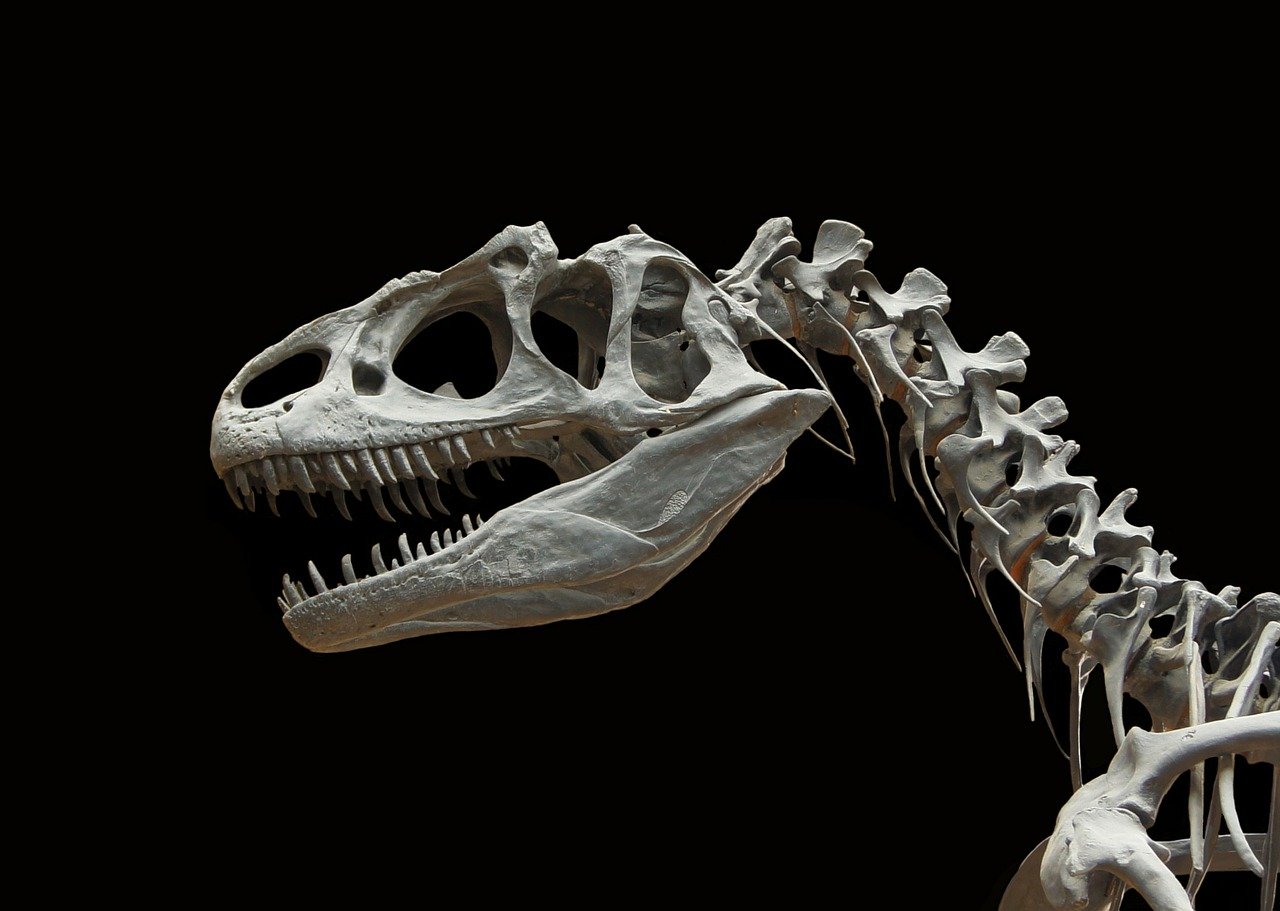
Pantser people (as in fly-by-the-seat-of) are more like archeologists who stumble upon a small protrusion of bone under foot. They then find their tools and carefully start digging, sweeping away all debris surrounding the bone until they’ve unearthed the complete animal that is their marvelous story. That story is mostly hidden from them until they’ve completed the dig. They typically have little to no idea as to the type of animal (the genre), the number of bones (characters, plot points, etc.), and whether the animal is whole (does this baby have a beginning, middle, and end or is it riddled with mind-boggling gaps?).

I’m a pantser with my writing and a plotter in life.

It is unexplainably weird.

One would think that with the freewheeling way I like a story to unveil itself, I would reflect that same sort of attitude in daily life. Except I cannot stomach the risk. Planning and organizing everything brings me the same level of calm as eating a giant blueberry muffin. When finished doing either, I just feel all is well with the world, and maybe a little bloated.

Which is why I struggled against the universe this month as it tried to make me switch hats without warning.

To set the stage, I am big on recycling. I am also a penny pincher and a teensy bit of a hoarder, but I think in healthy doses, these three can go hand in hand and not have people worrying you should be institutionalized. I’m more thrifty than anything else, saving things until I can no longer gain benefit from them. Like the four old computers and their accompanying monitors sitting in a corner and waiting for me to decide on their futures.

My county has a biannual “hazardous material and home electronics” recycling day at the dump. This would be my first visit participating in the festival, but I chose only one computer to do the test run with—as I wanted to assess the safety factor of handing over defunct equipment that had previously held all my life’s most protected information within it.

I thought it would be easy. As in, drive in, hand over, say thanks, drive off.

It was not. It actually was more like: drive in …

My county dump had opened its golden gates at 8 am. I arrived at 9. It wasn’t until 9:30 that I realized I’d possibly made an error in judgment. It wasn’t until 9:31 that I realized I’d definitely made an error in judgement.

Photo by Tom Fisk on Pexels.com

I had a whole plan for this day—a million things to do—and those things had each been assigned a very specific time slot. Today was all about efficiency, and the fact that I was inching forward in a line I couldn’t see the front of meant someone was messing about with my day’s plot.

After half an hour of waiting in a mostly idle position and spotting one car leaving the dump every five minutes, I began to study my surroundings and not just stare at the entertaining piles of refuse divvied up into appropriate heaps. I surmised several things:

  1. My county dump had obviously hired engineers from Disney World to create a snaking path toward the attraction we were destined for.
  2. That snaking path was going to take each car around the entirety of the landfill, circling its footprint so that all of us could see just how wasteful a county we actually were.
  3. The entire county had shown up to throw something away.
  4. I left my smart phone at home.

It was now 9:45 and I had inched five cars farther along the circumference of madness mountain. I was in the middle of doing a complicated mathematical spreadsheet in my head inputting data that included the number of cars I could see in front of me, a guestimate of how many lengths of the chain of cars in front of me it might require to circumvent the entire rock of rubbish, how long it took to empty out the trunk of each car, and a little side bet on when anyone would become angry and frantic enough to get out of their car and climb the trash tower and get a look on the other side.

Two things were certain—one was that you could not turn around and leave. It was one way only. And two was that I could not do a complicated mathematical spreadsheet in my head.

I looked longingly into the backseat and wished I could make that computer come back to life.

I had mail to answer. I had a book to edit. I had a lawn to mow. And somewhere around hour two I realized I had a bladder to empty.

I spent the time watching the girl in front of me and the guy behind me get out of their cars and start chatting. I cleaned out my glove box. I listened to the only radio station without static interview a famous Indian chef about the best traditional Diwali recipes one should cook. I watched the car in front of me run out of gas and the car behind me fill it up again from red plastic containers. I watched two people hug. I wondered how many people had left their kids at home with a “be back in a sec!” statement. I watched the girl in front of me and the guy behind me share an incredibly romantic picnic on the hood of one car. I meditated in 7-minute increments, in between each eight-foot leap forward. I panicked thinking about the nearly three hours sitting in my car, the potential to run out of gas, and the desperate need to pee. I cried during the makeshift wedding involving the girl in front of me and the guy behind me. I shouted out my window that I could cook them Gulab Jamun and Paneer Tikka if they needed catering for the reception.

At 1 pm—four hours after first getting in line to safely dispose of my one old computer, I pulled up to a guy dressed entirely in plastic. I assumed he was safe from Covid, from hazardous waste, and from freezer burn if he were to be improperly refrigerated.

The guy opened my trunk and said, “Just this?”

I rested my head on the steering wheel and muttered, never again.

He closed my trunk and shouted, “I hope you made some friends!”

I slowly followed the car in front of me out of the dump’s gates, watching the new happy couple with the “Just Married” words written from the contents of old fast food ketchup packets across their back window, and listened to the tinkling of a few metal gas and oil canisters they’d tied to the backend bumper.

It was rather surreal to look back at my plotter self and watch two pantsers unfolding life as it came to them. And driving home behind the newlyweds I couldn’t help from smiling. Who would have thought the county dump serviced residents with both drop offs and pickups?

~Shelley

For the time being, the blog is closed to comments, but if you enjoyed it, maybe pass it on to someone else. Email it, Facebook it, or print it out and make new wallpaper for the bathroom. If it moves you, show it some love and share. Cheers!

Don’t forget to check out what’s cookin’ in the Scullery and what we all gossiped about down in the pub. Or check out last month’s post and catch up.

The Impossible Job of Thanking Your Barista

I’m sure you’re up to your earballs in leftover turkey right about now. That is, if you overestimated how much turkey only you and one other person plus your dog could wolf down in two days’ time. Or maybe you were like me and decided that come hell or high water, you were going to make five gallons of bone broth with that carcass, and needed all 14 pounds of the turkey you ordered last year—pre-Covid—when you found that super-duper farm that said they would raise the bird to your specifications.

For Pete’s sake, that farmer read Harry Potter to your poultry from the the end of June onward. And he played it Vivaldi before bedtime. And he regularly fed it a posh protein diet of sautéed shredded lizard sprinkled with dried grasshopper powder, delicately placed atop a bed of tender shaved young bulbs. On special occasions, old Tom got a soup pureed with snails, slugs, and worms, swirled with a small dusting of sand and gravel for grit to aid with his proper digestion.

Yeah, you really can’t go back on someone’s efforts like that.

So, a lot may have changed from last year’s big food festival, and this year’s attendance level might have been reduced to only those you regularly sneeze on and don’t apologize to. But the one thing that has remained a steady and dependable guest at all of our tables is the necessary presence of gratitude.

We are reminded of it everywhere. We may be feeling rather down in the dumps about not scarfing down half of Aunt Marge’s Rum Chiffon Pie this year, but all we need do is read the headlines to remind ourselves about how many Aunt Marge’s are no longer around to make such a treat.

It’s an effortless endeavor to see that we are not alone in our suffering or sadness, and there are countless others who may be experiencing greater loss than we are.

It reminds me a little bit of growing up in Wisconsin. One was not allowed to indulge in the wholly justifiable complaining about how cold one was. Because it was not a personal experience. Everyone was cold. Chin up. Shut up. Get up. And get on with it.

But back to the gratitude.

Typically, I am the type of person who nearly falls on my knees in appreciation for anyone who’s kind enough to even hold open a door for me, let alone ease some significant burden. And I’m annoyingly delighted to see every sunrise or sunset, every flower bloom, or bird in flight. I get an absolute thrill even hearing my dog belch as I’m confidently assured he loved the meal I prepared for him so much that he snarfed it down too quickly and ate a bucket of indigestible air.

Yeah, uber grateful person.

So, it came as a bit of a head-scratcher when I recently heard an interview with A.J. Jacobs, an author I adore, as he spoke about his latest book, Thanks a Thousand.

Knowing how seriously he plunged into his research when writing something new—like The Year of Living Biblically: One Man’s Humble Quest to Follow the Bible as Literally as Possible, where he took it upon himself to obey the divine suggestions to “Love thy neighbor,” “Be fruitful and multiply,” and of course, “Stone adulterers,” I had no doubt his newest book would be as intricately studied.

Mr. Jacobs takes the elemental concept of exploring how gratitude can enrich our lives and produce countless experiences where we are more thoughtful and grounded by using his morning cup of coffee as the chosen object of his determined efforts to thank everyone who was a part of making it materialize before him.

Seems rather effortless really, but in truth … it is impossible.

From the clerk who rang up your bag of beans, one can move to the roaster, the trucker, the airline, the packagers, the bean harvester, the farmer, the mechanic who fixed the tractor the farmer needed to use to plant the beans. The manufacturer of the tractor, the countless companies that created the parts for that manufacturer, the construction workers who built those plants, the people who made lunch for those construction workers. I think you get my point. The list is exhaustive.

Jacobs speaks to and visits miners and biologists, goatherds and smugglers, and that travel required trucks and airplanes, boats and motorcycles. He realizes the myriad materials that went into the making of that sip—the rubber, wood, steel, and bat guano. His assessment is that it required thousands of human beings collaborating across dozens of countries.

To make one cup of coffee.

In an era when we feel so disconnected from one another, A.J. Jacobs illuminates the miracle of human cooperation. Togetherness. Relationships. Synergy. Support.

It is not unlike the super-human efforts that have gone into the research and development of one of many vaccines our planet is desperately and impatiently waiting upon. We have discovered that it takes the whole world to help the whole world.

And as the world and all its many inhabitants do what they can to heal our planet and our people, let’s take a moment to realize just how connected we really, truly are and need to be.

This year we may be apart. But it is so that next year and for countless years following we can be together, closer than we’ve ever been before, because gratitude became the cream in our coffee.

~Shelley

For the time being, the blog is closed to comments, but if you enjoyed it, maybe pass it on to someone else. Email it, Facebook it, or print it out and make new wallpaper for the bathroom. If it moves you, show it some love and share. Cheers!

Don’t forget to check out what’s cookin’ in the Scullery and what we all gossiped about down in the pub. Or check out last month’s post and catch up.

Knock, Knock. Who’s There? History. And a Bunch of Dead People Who Want In.

I have heard countless tales about the mystical days of the year when there is a thinning—an opening of the usually bolted door between the living and the dead.

I find these legends to be magnetic and irresistible from both the historical perspective in that apparently our folk tales of old are still captivating enough to be passed on and hold great longevity, and also because I’d love to know who is the guy who lifts the latch on that door and allows it to creak open with invitation.

Sure, it could be the wind, but seriously, that’s way too many years of perfectly timed coincidence, right?

The chunk of consecutive days known as Halloween or Samhain (the ancient Celtic festival), All Saints Day, and All Souls Day are three celebrations and commemorations when, beginning October 31st  through November 2nd, many people’s thoughts are steeped in leaf blowers, credit card bills showing an overabundance of pumpkin spiced lattes, and fear. (That second one causes the third one to bloom when the pounds run high and the dollars run low.)

Samhain marked the end of all things warm and sun-related, and the beginning of the coffin making season. The Celts marked their new year beginning on November 1st, and likely didn’t bother with any yearly census until spring, as people dropped like flies during the cold winter months.

I’ve always preferred Samhain to Halloween, or All Hallows Eve, as typically the costumes are better. Yes, they both incorporate some semblance of gathering—festive or otherwise—but the getups worn in days of old were truly meant to ward off ghosts. And what spirit wouldn’t turn tail and leave when peeking in to join the massive bonfire only to see animals being sacrificed within it and the party guests all draped in a few extra severed heads and blood-soaked skins.

Begone, you destructive wraiths! Leave our crops be or we shall threaten you with … Wait, hey, Bob? What are we threatening these dead people with?

Let’s say MORE DEATH, Dick, okay? Can we all agree that ‘more death’ is our menacing chant?

I could be wrong, but even with this action and logic I’m going to vote that the chilling and shuddery-inducing specters are more inclined to back off from a party such as this than one where folks are dressed in chintzy polyester tat from Walmart.

Personally, I think donning a naughty bar maid getup is likely more of an invitation rather than a deterrent to any lonely ghoul.

And although we may be in the thick of a ghastly pandemic at present, the fear felt by the living souls 2000 years ago was more of a “the entire village” type of dread as there really existed no “K” modeled economy forecast where when things went pear-shaped, some folks did well, and some felt they were in the middle of another version of The Hunger Games.

Back then, once you’d run out of firewood by dismantling all the furniture and eventually the homesteading structure itself, it was back to living surrounded by an outcropping of rocks and prickly gorse bushes instead of moving in with family. Because by that time, you may have actually eaten the only family that had a couch you could surf.

Once the Romans conquered a good chunk of the Celt’s turf, the new residents began to feel some softening of celebrations might be in order.

Maybe instead of scaring away all the dead, you folks should switch it out and commemorate them? We’ve come across far fewer demands for the sacrifice of livestock if we simply recite a few of their shinier earthly moments.

The request may have been a resounding NO! from the remaining Celts, which might have made the Romans give in a smidge and answer with:

Fine, fine, we’ll stretch the whole thing out a bit—keep your “frightnight”, but then word from corporate is that we make the next day one for the dearly departed, and then follow that up with a nod to old Pomona. She’s the Roman goddess of fruit and trees, and who doesn’t love bobbing for apples, eh?

Despite the church’s efforts to delicately rosy up and combine the fetes of the past, these people were surrounded by fearful imagery most of the time, whether it was a lack of food in the cupboard, the rush of pillaging neighbors who didn’t ascribe to that whole “do not covet thy neighbor’s anything, or simply waking up next to a spouse with three working teeth and a penchant for wild onions. Times were scary.

So why would they wish to set aside three whole days to mingle with the dead and focus on all that fear—all the prophesying of bad crops to come, or another mouth to feed, or hearing the soothsayer reveal that your mother-in-law was soon to move in?

Maybe for the same reason that we ride rollercoasters, or go through haunted houses, or check in with our 401ks.

Likely those actions are simply to show ourselves that it can always get worse, and we should be grateful for the now.  

As for me, I’m still left wondering if that doorman is really more of a Beefeater type of position or a “someone’s left the barn door open again” kind of deal, as perhaps the latter would explain precisely why it gets so damn cold in the winter, eh?

~Shelley

For the time being, the blog is closed to comments, but if you enjoyed it, maybe pass it on to someone else. Email it, Facebook it, or print it out and make new wallpaper for the bathroom. If it moves you, show it some love and share. Cheers!

Don’t forget to check out what’s cookin’ in the Scullery and what we all gossiped about down in the pub. Or check out last month’s post and catch up.

Wandering Off with Profound Purpose

There is a trail I’ve grown to love. A roughly kept path, both rutted with roots and covered in cobwebs, it’s a weekly venture I now refer to as six miles long and two hours deep.

I’m the only one on this stretch, just me and my hound. It feels abandoned and forgotten—or perhaps never discovered. As if prepared for footfall but neglected of promotion.


It’s divided into neatly portioned passages, each segment unique with temperament and attitude. To enter one is to be enrobed within that identity, where changes, both subtle and of magnitude, shift your focus and your vigilance.

A spread of one mile bears a perfect canopy, deciduous arms reaching to embrace and braid, the rustling sounds of leaf brushing leaf and branch chafing branch.

Another offers the heat of sun and great crunch underfoot, as in this landscape, only those forged in a fever can cope and thrive.

Along the route there are dens and burrows. Fallen trees extend the invitation to any fauna weary of their old abodes to nestle somewhere new, a chance to peak from behind still rooted tubers and discern if this view will suffice.

There sits a sanctum halfway through where modern day has not been given permission to bloom. A small, grassy clearing dotted with the remnants of those who lived on it first—or died on it last. A lichened crop of chimney stones resist the urge to collapse, to follow those who built it toward a soft grave of repose.

The surreally green colored moss floor muffles all that travels across or through it, a lush weighted blanket keeping history quiet, but comforted.

Three corner stones, the vestiges of walls, invite the visitor to conjure the past and evoke voices long suppressed by the quelling power of isolation. They still whisper though. But only if you listen.

And I do.

I listen more, hear more, breathe more, smell more. I feel the gnarly rough-skinned barely buried roots that spread beneath my feet, catch my shoe, stub my toe. I feel the sponginess of rotting trees as I traverse across them, the pliable composition of their cells. The crack of their forgiving nature resounds across the hollow or the hilltop, upsetting the status quo soundscape and thrusting a hush upon the busy conversation of all woodland tongues.

There is an unraveling that takes place when walking unencumbered. When untethered from manmade sound, sights, and people. This is a forum for the memory reels to unspool, for the strolling narrator to develop his tale, for soliloquy in all its unpracticed inelegance to gush forth without restraint.

This trail is where I find rebalance. Where presets are over-ridden, and recalibration transpires. It is where rejection is handled, malfunctions are tackled, and failures owned. Insight is sought—if one hopes to move forward—for there is little benefit to a walk such as this if deep and soulful pursuit of the truth is ignored.

Emerging on the other side is transcendent and electrifying. Revelatory in that the accomplishment of such a trek was as feasible as hoped, and wondrous with the fresh new mental space now unoccupied.

The trail stays with me only fleetingly, the feel of crushed pine needles beneath me, the scent of forest floor decay, the melody of life as it exists in that treasured space.

So, I soldier on until next time. I muddle through the concrete days, the desk-filled hours, the mundane and must-be-dones.

The path waits there for me … or for no one.

But it is there, and I have felt its wonder.

~Shelley

For the time being, the blog is closed to comments, but if you enjoyed it, maybe pass it on to someone else. Email it, Facebook it, or print it out and make new wallpaper for the bathroom. If it moves you, show it some love and share. Cheers!

Don’t forget to check out what’s cookin’ in the Scullery and what we all gossiped about down in the pub. Or check out last month’s post and catch up.