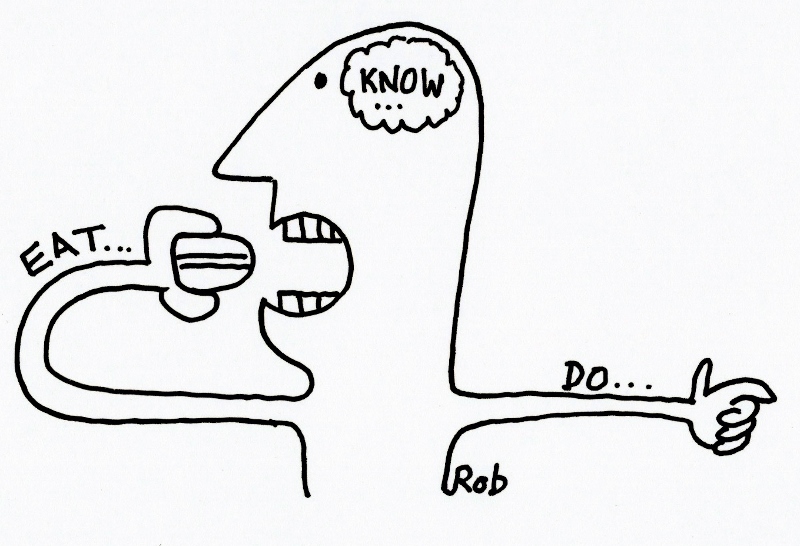
Gone Fishin’

Hey Peakers,

Rob’s off sharpening pencils, washing paintbrushes and hopefully finding some decent Swedish summer fun, and I’m in the middle of a pile of laundry and interviews for the new book.

Peak Perspective is taking a much-needed nap.

We’ll be back next week for another round of amusement.

Have a good one everybody. Cheers!

~Shelley & Rob

Don’t forget to check out what we’re cookin’ in the Scullery and what we all talked about down in the pub. Plus, you can see more of Robin Gott‘s humor–all from the only pen carved from a human funny bone.

Why I Wrote DEAR OPL- Part 3

*Just a heads up to anyone new joining in–this is not my typical blog post. This is part 3 of 3 for a speech I’m preparing and posting here to get valuable feedback from my community. If you’re interested in joining in (and I so hope you are), and you’ve not had a chance to read part 1 or part 2, you might want to take a minute and get up to speed. I look forward to hearing what all of you have to say. It’s been wonderfully worthy and I thank every one of you for participating!

~~~~~~~~~~~~

What’s in it?

My sleuthing skills progressed mainly because food labels showed up. I, therefore, became obsessed in the pursuit of truth.

I suspected that every chemical I read about on the back of a label and couldn’t identify was likely a form of my mother’s mystery ingredients I had to watch out for. The only things I could trust were foods in their whole and original form. And this is something our culture has removed us from in a very real and dangerous way.

Despite the higher intake of calories our western diets have had us adopt, people are hungry. We’re now eating more food than ever before yet we are starving for nutrients. And our bodies are yelling this fact out to us. We’re struggling with these massive and overwhelming cravings for sugar. It’s hugely addictive and, in fact, scientists have discovered rats will work eight times harder to get sugar than they will to get cocaine.

Our average modern diet is not providing the nourishment our bodies require for good health, and because of it, our bodies are suffering more insulin spikes than a tumultuous day on Wall Street.

Basically, we have an abundance of calories, but a shortfall of nutrients.

200615OPL_07 (800x688)

I find this to be a shocking and saddening state of affairs, but if you really want to hear something that will make the hair on your arms stand at attention, here’s another one of those eye-popping statistics I alluded to earlier:

The junk food industry spends about 2 billion dollars each year targeting children. One scary study found that elementary school kids in the US see an average of 254 ads from McDonalds each year. That’s just ONE company in the sea of junk food advertisers.

We are bombarded with media that dictates what we want, what we’re hungry for, what gadgets we’re desperate for, what will make us feel better about ourselves or our lives, and what will make us feel included. Kids are targeted even more so. It’s overwhelming and impossible for them to filter these messages or tune them out, and certainly challenging for them to interpret and identify how they are being subtly and not so subtly molded.

The Center for Disease Control and Prevention (CDC) now reports that around 12.5 million children aged 2-19 are obese. And this is just in the United States. If you need a mental graphic that’s like nearly the entire population of Ecuador. Or how about this one—two Norways, a Botswana and a Liechtenstein. Worldwide we’re talking about 43 million kids.

Yeah, it’s a lot. Want to elevate that arm fur another notch? The World Health Organization estimates that in ten years time, over 70 million children globally will be obese. And the most alarming surprise? This number is only including children from ages 0 to 5.

Diet-related diseases are the biggest killers of human life. Far bigger than homicides, pneumonia, kidney disease, accidents. The statistics are jaw-dropping.

It makes you want to curl up in a ball and cry, doesn’t it?

Or we can do something about it.

Which brings us to part three: WHAT WE NEED TO DO

  1. No amount of exercise is going to help you run away from a bad diet.

It’s really hard to recognize a problem despite the fact that it’s growing right beneath our noses, mostly because it’s a fairly unremarkable one. It’s not remarkable because it’s become common.

We all know what a dog looks like—we’ve seen gobs of them over our lifetimes. Nothing too terribly novel about them from where we stand right now. But if you woke up one morning and looked outside and spotted a flying dog, you’d probably pause and really study the anomaly … until it wasn’t an anomaly anymore. If pretty soon flying dogs were just as common as grass, then no one would really see them any longer—which is what’s happening to our children. Obesity is becoming familiar, universal and ordinary.

We can’t let this happen.

It would be incredibly easy to point our extra pointy fingers at the heart of the problem and scream until we’re blue in the face at the food industry, but if any of you have ever been in a situation where you’ve pointed a finger at someone and assigned blame, I think you’ll also recall that they didn’t offer either an apology or any available energy to help solve the problem.

200615OPL_08 (800x497)

More often than not they likely gave you back a pointy finger as well—but facing in a different direction.

A better response might be to ask for partnership in problem-solving. Our food industries can make food education a top priority of their business. Help us shop, teach us how to cook, educate us about nutrition. A win for the public and a win for their public relations. Besides, it does not show savvy business sense to kill off your clientele.

The restaurant and fast food industry, which have gotten us hooked on the drugs of sugar, fat and salt by targeting consumers with their persuasive advertisements, could help wean us off the extremely unhealthful amounts or face selective taxation from the government to cover the skyrocketing cost of healthcare: a price tag we do not have the funds to pay for—no matter how far down into our purses we dig.

We need restrictions on advertising to children who are most vulnerable to these campaigns. We need to protect those who are easy targets, those who are easily preyed upon, and those who will suffer the most.

Also, we need clearer food labeling—something effortless and easy so consumers don’t have to count grams or teaspoons. Something like the proposed traffic light label. Red for high amounts of free sugars, yellow for mid-level amounts, and green for Go for it, buddy.

We need to give our children LIFE SKILLS. We can get in the kitchen with them, teach them the basics of nutrition, educate them about what they’re eating and illuminate how it will affect the quality and longevity of their lives. It’s going to be a mess, but maybe architects can start making kitchens with a large drain in the middle of the floor which allow you to just hose down the walls after a family cooking session.

We can take the necessary steps to overhaul our school lunch programs. And currently there are a handful of people pioneering over this treacherous landscape who are battling to illustrate that pizza should not be considered a vegetable because it has tomato sauce in it. Jamie Oliver, Alice Waters, Michelle Obama and Congressman Tim Ryan from Ohio are a few familiar names who have been leading the campaigns of international food revolutions. These folks are shaking up government nutritional guidelines, instituting school garden programs, and proposing ways to lower the cost of healthy foods so that everyone can have access to them. But there are many, many more who are working in the trenches and mostly without a spotlight. We need to support their endeavors.

The three points I’ve highlighted—what we eat, what we know, and what we need to do—are part of a task we need to knuckle down and get busy with—a cause we need to champion. Creating and implementing solutions to our epidemic is a global obligation we owe ourselves, our children and our children’s children.

We need a new killer slogan for our planet. Not a slogan that will kill us.

I propose something like this:

Planet Earth: come for the food, stay for the fun, die when you’re old.

200615OPL_09 (786x800)


~Shelley

Don’t forget to check out what we’re cookin’ in the Scullery and what we all talked about down in the pub. Plus, you can see more of Robin Gott‘s humor–all from the only pen carved from a human funny bone.

Why I Wrote DEAR OPL – Part 2

*Just a heads up to anyone new joining in–this is not my typical blog post. This is part 2 of 3 for a speech I’m preparing and posting here to get valuable feedback from my community. If you’re interested in joining in (and I so hope you are), and you’ve not had a chance to read part 1, you might want to take a minute and get up to speed. I look forward to hearing what all of you have to say. It’s been wonderfully worthy thus far!


So let’s talk about the foul new four letter word that’s getting everyone’s knickers in a twist. FOOD.

200615OPL_03 (800x550)

  1. Our diets have drastically changed form.

So much of what we used to eat was effortlessly easy to identify by using just one word to define it. For instance: apples, squash, lentils, pecans. Now the western diet needs a box to hold it in and a label to identify it with.

And a chemist to explain it all.

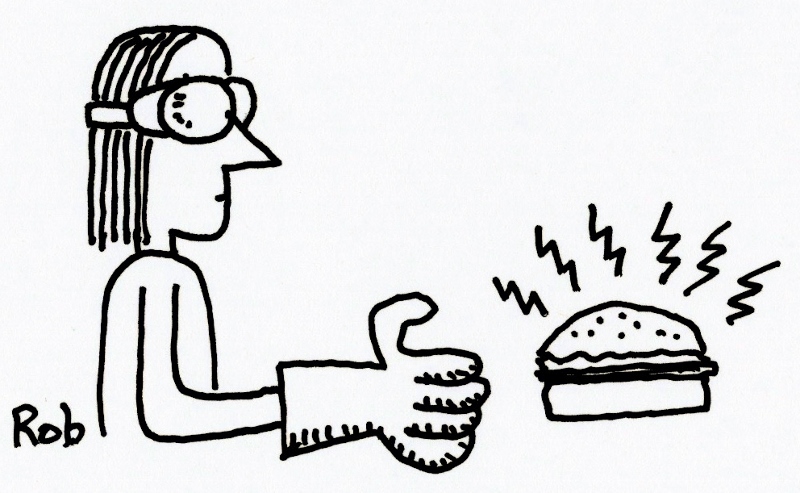
More and more of our food is processed with ingredients that most seventh graders aren’t allowed to handle without plastic gloves, eye goggles, and their science teacher in attendance.

200615OPL_04 (800x493)

It happened right beneath our noses. As a kid, I remember the hour and a half of effort I’d spend making brownies—with the flour, the sugar, the butter and eggs, the melting of chocolate and the teaspoons of vanilla and salt and baking powder.

And almost overnight it changed. It’s now a box, an egg, and a splash of water from the faucet. It’s not so much food anymore as it is a magic trick no one really wants to pull back the curtain on and spoil. Not that spoiling is a concern any longer as science has discovered a way to make a fast food hamburger last longer than most marriages.

Reading nutrition labels dredges up memories of your earliest years in grammar school sounding out new words, and also proves to be a test of one’s grasp of the periodic table of elements. Plus, the regulations for what our government is allowing into our food and defining as food live in a murky swamp and are up for interpretation by the manufacturer.

That old line stating That which does not kill us makes us stronger, should be revised to read:

That which does not kill us—because the studies are ongoing and are being run by folks who have a vested interest in their financial outcome—does not kill us …yet.

Our food of today is no longer the food it was fifty years ago. A carrot is no longer a carrot. Chicken is no longer chicken. A hunk of fabulous chocolate cake is still the sugar bomb it was no matter how long ago it was made, but that’s sort of a given and doesn’t serve my argument. And my point is that things have changed in the food growing world.

Our soils are depleted. Our animals are fed unnatural food meant to supersize them toward growth and not health. We’ve introduced pesticides into our diets that have altered our endocrine function. We’ve stripped off minerals and vitamins from processed foods and have replaced them with chemicals meant to give them a shelf life rivaling the length of time it would take you to read off the numerical value of pi.

Some of the ingredients added into our foods today are ones not meant to contribute to our health or the food’s supermarket shelf endurance, but rather the perceived value of the manufacturer’s product.

We’re talking weight.

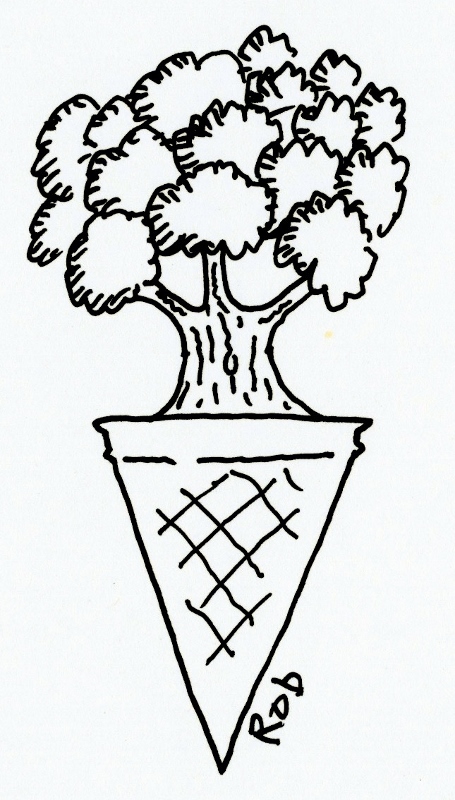
And just as WEIGHT is the hefty issue we’re struggling with here globally, putting additives into food that give it extra bulk and substance is a widespread technique used across the food industry. Cellulose, an indigestible fiber made from wood pulp, is a common item you’ll find in most processed foods. Supermarket bread, bags of shredded cheese, barbecue sauce and ice cream.

Yep, ice cream too.

Have yourself a Blue Bell country day. (Embrace nature. Hug a tree. Better yet, eat one.)

Carvel Ice Cream. It’s what happy tastes like. (And trees.)

200615OPL05 (455x800)

I could go on snarkily updating ice cream slogans, but the point I’d like to highlight is that cellulose has no nutritional value and our government food regulators have no policies regarding its use in manufacturing. Thus far scientists have determined that eating it in small quantities is what they’ve labeled as GRAS – Generally Regarded As Safe. And even if this remains to be so, it still points to the unhealthy practice of eating food that is deficient of the valuable nutrients we want and need for ourselves and our children.

Not surprisingly, there are plenty of other things food makers are slipping into the ingredient lists of their products these days:

Binders and extenders—nonmeat products used to create bulk and texture.

Coloring agents Blue #1 and #2, Yellow #5 and #6, and Red #40—a rainbow of creativity if your goal is to eat the Nickelodeon television channel.

Azodicarbonamide, or ADA—a funky little compound that keeps your bread spongy and your yoga mat squishy.

And don’t forget growth hormones—feedlot operators’ kitschy little answer to America’s question, “Where’s the beef?”

There is a solid handful of folks who are vocal and persuasive when illuminating the presence of these additives in hundreds of food items today. They draw attention from the press and the population occasionally takes note. Sometimes manufacturers stand up and defend their choices and sometimes they pull the worrisome ingredient from their recipe and replace it with something else. Oftentimes food scientists will jump in, provide a little data and the fire dies down—that is until a few more rats die, enough signatures on a petition are accumulated, or an organization’s lobbying funds dry up.

If you look behind the grand kerfuffle made about alarming ingredients, you’ll see the main message is simply that food manufacturers are putting unnecessary chemicals and compounds into our grub and there are alternatives.

Next let’s talk about the research, the studies, and the dry and brittle data. It’s WHAT WE KNOW.

  1. Architects are growing worried that they are building houses with an expensive and worthless room.

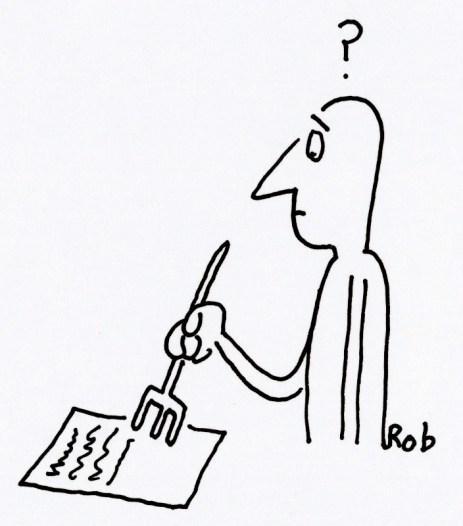
Kitchens are full of cobwebs. For many school-aged children, breakfast is skipped or breakfast and lunch are eaten at school. Dinner is handed over through the driver’s side window. And the new dinner plate is a cardboard box or bucket. Millions of kids are looking at a fork and a knife with the same confused look on their face when handed a pen or a pencil.
200615OPL_06 (704x800)

Food education used to come from the home. Our grandmothers painstakingly took the time to write down the recipes that were crafted and perfected by the generations before them. Houses had gardens, produce markets were plentiful and dinner was a scheduled event that you showed up for rain or shine.

We learned how to shuck corn, peel potatoes and pinch a pie crust. You watched the bread rise, carved a chicken and got your hands slapped away if you tried to steal a cookie that was still cooling on a half sheet.

Now I’m not suggesting everyone return to churning butter and dig themselves a root cellar, but I find it unsettling that way too many children do not realize that chickens actually have bones.

Food is the most marvelous thing in the way that it’s often attached to the meaningful events in our lives. Birthdays. Holidays. Dates. Parties.  And we count on it for all the meals that are nothing more than something that satisfies an urge or are simply a scheduled time of day activity. An appreciated break from our busy lives. Breakfast, lunch and dinner.

Growing up, food was incredibly important to my family for many different reasons. I came from a clan of six and although I can’t recall ever going hungry because we didn’t have enough to eat, there were a few times when funds were quite tight and I chose to go hungry because of what was on offer.

To stretch a dollar and a pound of ground beef, my mom would creatively find all sorts of fillers—tofu was one and soy protein was another. She was quite ahead of her time. Powdered milk was cheap and showed up repeatedly—and I don’t care how you disguise it, it had about as much tastebud appeal as liquid cardboard.

As my family ancestry was Polish, my folks oftentimes introduced us to unusual foods that in my opinion would likely have had the offspring of scavenging beasts raise an eyebrow when encouraged to eat it by their parents. Blood seemed to be an ingredient in way too many things for your average nine-year-old’s comfort. I began thinking I should truthfully detail my family’s heritage as part Polish, part vampiric.

Of course, growing up where I did in the Midwest, many folks were hunters, and one evening a platter of what my folks labeled “tiny chicken” showed up on the kitchen table. It did not take me and my siblings long to figure out why my mom was no longer complaining about the unruly squirrel population taking over her summer garden.

And lastly, my mother’s favorite extender of any meal—cream of mushroom soup. Detesting mushrooms was a hobby of mine, and finding these spores in my food became an obsession. After highlighting my childhood foodscape, it’s not so surprising to see how I began to grow incredibly suspicious of all my food. I wanted to know the answer to a very important question:

What’s in it?

~~~~~~~

*I hope you’ll come back next week for part 3. And I hope you may consider offering your thoughts thus far.

Cheers everyone!

~Shelley

Don’t forget to check out what we’re cookin’ in the Scullery and what we all talked about down in the pub. Plus, you can see more of Robin Gott‘s humor–all from the only pen carved from a human funny bone.

Why I Wrote DEAR OPL

Who Writes a Prologue to a Blog Post? … Umm, Me.

A heads up to this beautiful community I have come to know and embrace. The next three posts are not ‘blog posts’—they are a polished rough draft of a speech.

I’m crowdsourcing and asking for your valuable input.

The speech isn’t about the book I’ve written for children, it’s about the messages within the book that I’m trying to highlight by spreading awareness. Years ago, these topics grabbed me by the shoulders, shook me until my teeth rattled and demanded I do something about them.

The book is a vehicle to address these topics with children. The speech is my outreach campaign to engage parents, educators, and activists who care about how food politics are aggressively influencing our health.

So, I’m asking you to read and comment. Help me make an impact. Tell me what works for you, what doesn’t, what you’d like to see more of, or what you feel detracts. Your opinions matter to me.

This is not a plea to purchase my book. This is an appeal to help me make a difference. If this isn’t your shtick, I promise your names will still be rattled off in my nightly prayers of Please let these folks win some lottery in life. The point is to take advantage of eager, willing voices and collective brain power.

Your thoughts mean a great deal to me. I want to carry them with me as I carry this message to others.

And now … Why I Wrote DEAR OPL.

~~~~~~~~~~~~~~~~~~~~~~~~~~~

I’m usually not one for eavesdropping—okay, who am I kidding? I’m a writer. I’m always listening in on conversations all around me. It’s a fountain-like source of creativity I regularly tap into. And it’s addictive. But it’s part of my job.

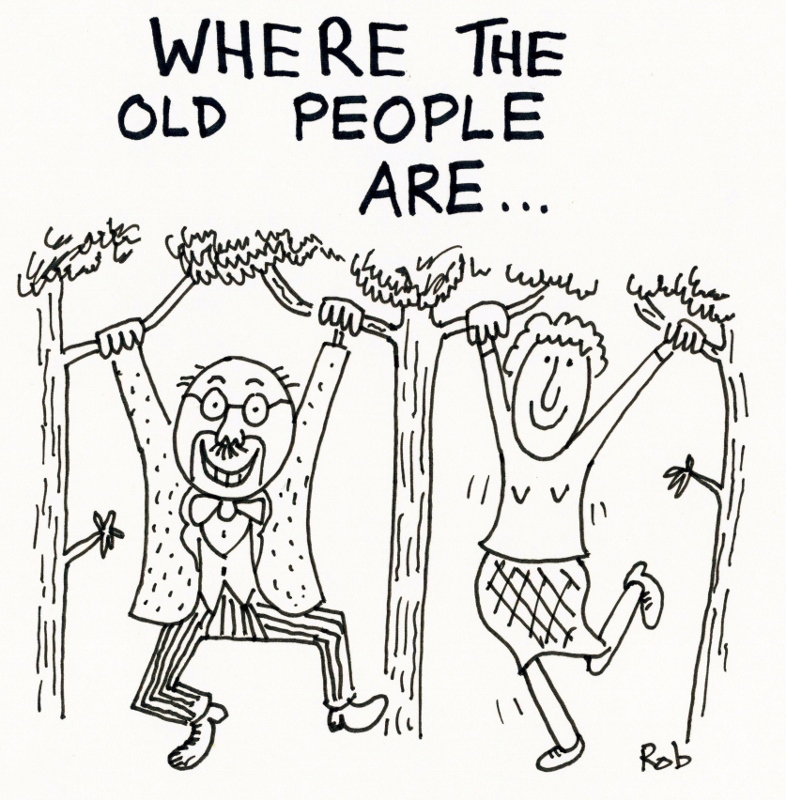
On this particular occasion—while I was working—I just happened to overhear a conversation that made me cringe. We were in Australia, and my then seven-year-old son was chatting with an Australian lad who was just a little bit older than him. The boy asked my son where he was from. I heard my son answer, “America.” The other boy’s response was, “Oh. Where the fat people live.”

200615OPL_01 (800x658)

I sat back and thought about that unflattering national slogan. It did not have a sexy ring to it.

I thought about a few other places that had slogans to capture the essence and beauty of what they had to offer.

Egypt: Where it all began.

Bahli: The islands of gods.

Disneyland: The happiest place on Earth.

And now …

America: Where the fat people live.

The more I thought about it, the more a few other slogans repeatedly popped into my head. Like this one:

McDonald’s: I’m lovin’ it.

It gave me a lot to chew on—excuse the pun—but it really had me thinking about how big ideas could be distilled down to a few simple words. And sometimes those words could leave a bad taste in your mouth.

But I like slogans. I am all about slogans—or catchphrases or mottos—whatever you want to call them. I surround myself with them because throughout my whole life I’ve found them to be effective.

In fact, here’s an example of just how powerful one became:

As I was growing up, studying classical music was a precise and strictly defined practice. There were rules and not much wiggle room for interpretation of any of them.

I remember as a teenager sitting at the piano with a friend of mine who had not studied classical, but was rather raised playing jazz and improv. We were very different musicians. One afternoon we tried to find a song that both of us could play together on the piano. It ended up being something I could read off sheet music and he improvised alongside.

When we’d finished the piece, he turned to me and said, “Okay, now don’t do it regular.” I didn’t know any other way but regular, and when I found out that’s what I was, I aimed to change it.

In fact, that became the slogan with which I raised my children. My children weren’t particularly thrilled with my ‘swim against the current’ motherly advice as it made them stick out in ways that would make most kids’ toes curl. Their complaining fell on deaf ears and was usually followed with that old parental pearl of It’ll build you some character!

When years ago I heard the highly acclaimed entrepreneur, Seth Godin, say, “Ordinary is boring,” I nearly leaped out of my skin. I wanted to rush to my children and point out that I wasn’t crazy, I wasn’t trying to ruin their fun, I was simply trying to enrich their lives.

That phrase of Just Don’t Do It Regular became a theme song I was determined to sing when coaching my kids through countless situations as if I were some first draft version of Maria Von Trapp or a slightly more colorfully dressed adaptation of Mary Poppins. The last thing I wanted for them was a ‘go with the flow’ predictable experience. I wanted them to counteract the narrative of their generation. If they had something to say to the world, it would take words noteworthy and uncommon in order to be heard above the fray.

And people pay attention to noteworthy and uncommon. After that trip to Australia, it seemed like I repeatedly stumbled upon the same message directed at a growing swath of our planet’s population.

We are in trouble, people. We have a big fat problem on our hands … and hips and thighs and bellies.

I couldn’t ignore the message.

After slogging through a forest full of research articles and data authored and collected by the World Health Organization, the Center for Disease Control and a compilation of all of Dave Letterman’s Top Ten lists, I realized that some of my sources were—although meticulously detailed and scientific—extremely dry and nearly impossible to swallow.

It’s as if the WHO and CDC embraced both Seth and McDonald’s mottos and made an unlikely lovechild tagline for themselves: We’re boring, and lovin’ it.

My guess is that neither of the big research and data collection agencies thought their articles could use any spicing up—with something like a massive neon lit memo—in order to hail the attention of the folks who were most desperately in need of reading it.

Extracting the main point message was easy though:

A shocking number of people are eating themselves to an early death. In particular, children.

I spent a lot of time looking around and asking the silent question, Does everyone know this? And then I spent a lot of time thinking it really shouldn’t be a silent question. And lastly I spent a lot of time trying to figure out how I could take the message about our world’s growing epidemic of obesity and spread the word in a way that wouldn’t make people fall asleep with their eyes open.

To reach children, I wrote a book.

But for all of you, I’ve broken the message into three bite-sized portions of important information that I’ve gathered from myriad experts—aka folks far more clever than me—whom I’ve hunted down from all corners of this great round ball we live on. Those three points—the meat and marrow of this talk—are thus:

  1. WHAT WE EAT
  2. WHAT WE KNOW
  3. WHAT WE NEED TO DO

200615OPL_02 (800x546)


*I hope you’ll come back next week for part 2 of 3. And I hope you may consider offering your thoughts thus far.

Cheers everyone!

~Shelley

Don’t forget to check out what we’re cookin’ in the Scullery and what we all talked about down in the pub. Plus, you can see more of Robin Gott‘s humor–all from the only pen carved from a human funny bone.

Uncivilized Wildlife: One Big Bloody Battle

I’m a creature of habit.

A couple of them I like and have come to depend upon—like sleeping, eating, and general brain function reliability.

One or two have stuck around that I’m not terribly fond of—like hitting the hay too late, forgetting where I’ve parked the car, and stalking Neil deGrasse Tyson in hopes that he’ll change his mind and finally decide to co-author a scientific paper with me on the plausible objectives of time travel through human-sized, uncooked rigatoni noodles.

140615timenoodle (800x381)

I think he’s afraid he’ll have to do most of the authoring. But I’ve assured him I will pull my weight. I will keep our coffee cups filled. I will keep all the pencils sharpened. And I will do my best to man our Twitter page and keep it filled to the brim with pithy, clever snippets that reflect our opinions on all things hyperspace bypass related.

This bad habit could turn into a big bonus for the both of us.

My creatures are creatures of habit too.

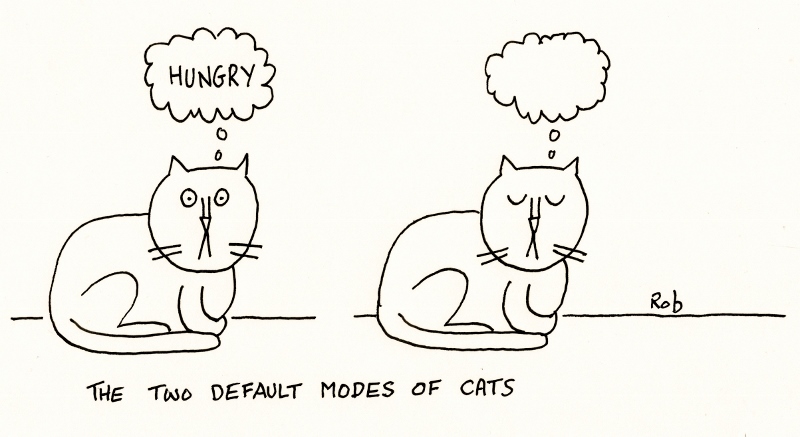
The cat is awake to eat.

And then isn’t.

140615defaultcats (800x437)

My hound has a slightly more varied routine, but he too keeps a predictable schedule, which is why at around 11:30 last night I was surprised to see him wander into my bathroom while I was finishing my evening ablutions.

“Shouldn’t you be outside making your last security rounds?” I asked him with a mouthful of toothpaste.

Ran into a tiny snag.

“Why are you bleeding all over my bathroom floor?”

The tiny snag had teeth.

“This does not bode well for my precious Italian faux marble tiling,” I said, wondering if the pooling blood would stain.

A little help here?

I sighed. “Go get me a bucket of bleach and a wire brush.”

A Band-Aid would suffice.

“And if I go into that housekeeping cupboard tomorrow and notice you’ve stolen all my camphor moth balls again, there’ll be a reckoning.”

I had a stuffy nose.

“Use the Neti Pot!”

And so it went.

I cleaned him up and noted the two deep puncture wounds on one side of his hind leg and the graze of teeth marks on the opposite side.

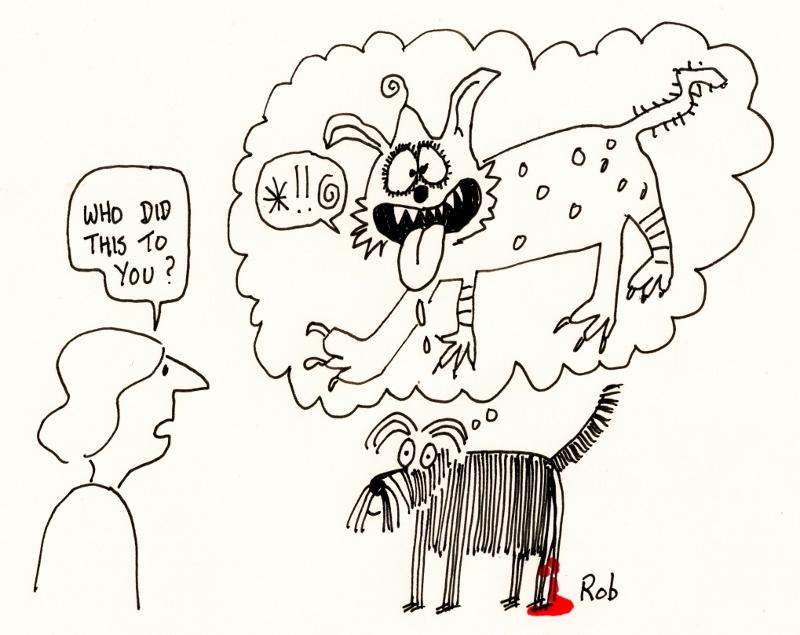
“Who did this to you?”

I didn’t catch his name.

“No. I mean what animal did this to you?”

Something massive that obviously hadn’t had dinner yet.

140615dogattack (800x635)

“Well, it’s bedtime. No more prowling about tonight—got it?”

The look I got in return was one that suggested I had an IQ equal to that of tapioca pudding. We shuffled off to bed. But sadly not to sleep.

As is wont to happen round about this time of year, the whippoorwills make their annual appearance and settle in around the woods and meadows surrounding the house. From far away, they offer a dreamy, somnolent tune, echoing through the cool spring nights.

Sitting beneath your window, they are shrill, piercing, and an aberration of nature–as anyone would attest they surely have three lungs.

For thirty minutes I did my level best to ignore the siren song which was truly much more of an honest to God siren and less so a beautiful, mythical sea creature calling me out to the crashing waves and hidden jagged rocks.

I got up, opened the porch door and encouraged it to take its evening serenade elsewhere. “For the love of all things holy, I’m begging you, PLEASE BE QUIET!

I soon gathered that the bird balladeer and I did not speak the same language, or perhaps he interpreted my hand clapping as applause. He simply relocated to the space beneath another window.

The following thirty minutes was difficult to breathe through as I had my head beneath two pillows.

It was clear this bird was hoping to make it onto the Avian Olympic team and that his training facility was any perchable place within 12-24 inches of my house walls. The incessant aria, the rigorous, methodical whooping warble was worthy of a gold medal for effort. And a twelve gauge for the likeability factor.

I got up, went to the window and gave it a couple of good solid thumps. When this achieved nothing, I opened it and began shouting into the night. “I know where you live! I will not be fooled into looking skyward! I know you’re all ground nesting birds!

Silence.

I looked at the dog who was still tending to his wounds. “You’re wel—”

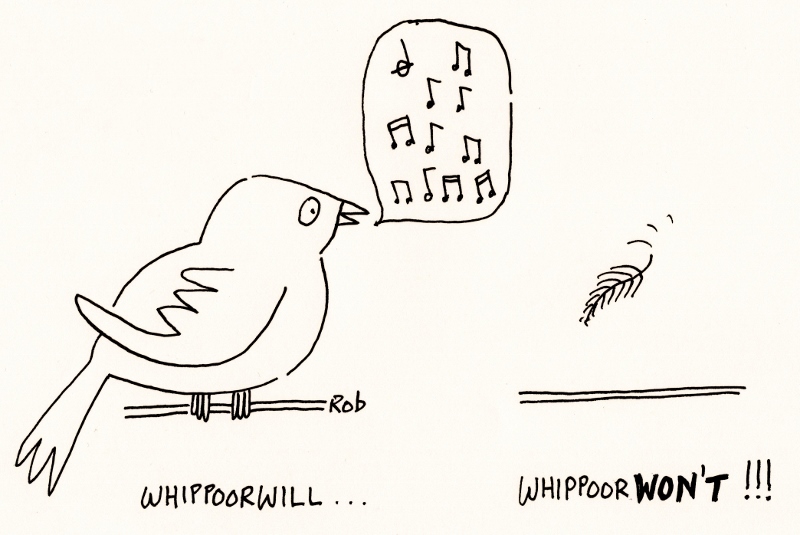
WHIPPOORWILL, WHIPPOORWILL, WHIPPOORWILL!

140615willwont (800x535)

And then there were three.

This bird had called in for backup. The flock now positioned themselves on all sides of the bedroom walls that faced nature. It was a trio of torturous, ill-timed tunes.

I groaned and found a pair of previously owned earplugs. I shoved them in so far they practically met behind my nose. I burrowed down beneath two pillows and a quilt. I hummed. I made ocean-like white noise.

After ten minutes, I got up and called for the dog. His head was firmly wedged beneath the bed.

“Okay, I’ve changed my mind. Go gettem, tiger.”

No, thank you, he said, glancing at the fang imprints he now sported.

We both spent the rest of the night being miserable and met up in the kitchen at breakfast—me fresh from a shower and him coming in from outside.

So, this might be of interest. He dropped a greeting card in my lap.

“What does it say?”

He snorted. You know I don’t read. But it was right outside my dog door.

I read it aloud for the both of us.

Hey, bud. Sorry about the bite. I thought you were a whippoorwill. Those things are driving me crazy.’

I looked up from the note. “Well, apparently some of Mother Nature’s brood has manners.”

~Shelley

*ROBIN GOTT’S BONUS CARTOON* (click)

Don’t forget to check out what we’re cookin’ in the Scullery and what we all talked about down in the pub. Plus, you can see more of Robin Gott‘s humor–all from the only pen carved from a human funny bone.