The Impossible Job of Thanking Your Barista

I’m sure you’re up to your earballs in leftover turkey right about now. That is, if you overestimated how much turkey only you and one other person plus your dog could wolf down in two days’ time. Or maybe you were like me and decided that come hell or high water, you were going to make five gallons of bone broth with that carcass, and needed all 14 pounds of the turkey you ordered last year—pre-Covid—when you found that super-duper farm that said they would raise the bird to your specifications.
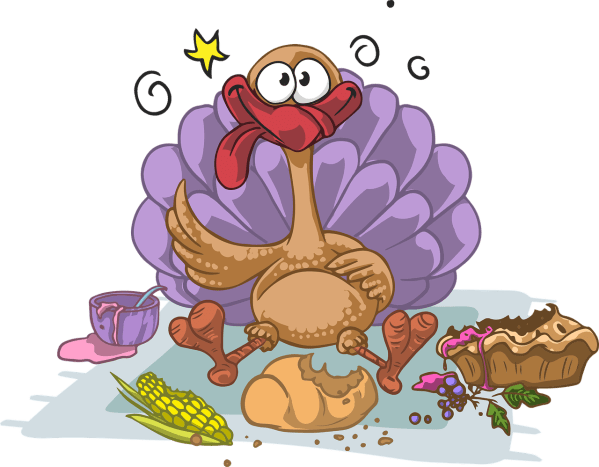
For Pete’s sake, that farmer read Harry Potter to your poultry from the the end of June onward. And he played it Vivaldi before bedtime. And he regularly fed it a posh protein diet of sautéed shredded lizard sprinkled with dried grasshopper powder, delicately placed atop a bed of tender shaved young bulbs. On special occasions, old Tom got a soup pureed with snails, slugs, and worms, swirled with a small dusting of sand and gravel for grit to aid with his proper digestion.

Yeah, you really can’t go back on someone’s efforts like that.

So, a lot may have changed from last year’s big food festival, and this year’s attendance level might have been reduced to only those you regularly sneeze on and don’t apologize to. But the one thing that has remained a steady and dependable guest at all of our tables is the necessary presence of gratitude.

We are reminded of it everywhere. We may be feeling rather down in the dumps about not scarfing down half of Aunt Marge’s Rum Chiffon Pie this year, but all we need do is read the headlines to remind ourselves about how many Aunt Marge’s are no longer around to make such a treat.

It’s an effortless endeavor to see that we are not alone in our suffering or sadness, and there are countless others who may be experiencing greater loss than we are.

It reminds me a little bit of growing up in Wisconsin. One was not allowed to indulge in the wholly justifiable complaining about how cold one was. Because it was not a personal experience. Everyone was cold. Chin up. Shut up. Get up. And get on with it.

But back to the gratitude.

Typically, I am the type of person who nearly falls on my knees in appreciation for anyone who’s kind enough to even hold open a door for me, let alone ease some significant burden. And I’m annoyingly delighted to see every sunrise or sunset, every flower bloom, or bird in flight. I get an absolute thrill even hearing my dog belch as I’m confidently assured he loved the meal I prepared for him so much that he snarfed it down too quickly and ate a bucket of indigestible air.

Yeah, uber grateful person.

So, it came as a bit of a head-scratcher when I recently heard an interview with A.J. Jacobs, an author I adore, as he spoke about his latest book, Thanks a Thousand.

Knowing how seriously he plunged into his research when writing something new—like The Year of Living Biblically: One Man’s Humble Quest to Follow the Bible as Literally as Possible, where he took it upon himself to obey the divine suggestions to “Love thy neighbor,” “Be fruitful and multiply,” and of course, “Stone adulterers,” I had no doubt his newest book would be as intricately studied.

Mr. Jacobs takes the elemental concept of exploring how gratitude can enrich our lives and produce countless experiences where we are more thoughtful and grounded by using his morning cup of coffee as the chosen object of his determined efforts to thank everyone who was a part of making it materialize before him.

Seems rather effortless really, but in truth … it is impossible.

From the clerk who rang up your bag of beans, one can move to the roaster, the trucker, the airline, the packagers, the bean harvester, the farmer, the mechanic who fixed the tractor the farmer needed to use to plant the beans. The manufacturer of the tractor, the countless companies that created the parts for that manufacturer, the construction workers who built those plants, the people who made lunch for those construction workers. I think you get my point. The list is exhaustive.

Jacobs speaks to and visits miners and biologists, goatherds and smugglers, and that travel required trucks and airplanes, boats and motorcycles. He realizes the myriad materials that went into the making of that sip—the rubber, wood, steel, and bat guano. His assessment is that it required thousands of human beings collaborating across dozens of countries.

To make one cup of coffee.

In an era when we feel so disconnected from one another, A.J. Jacobs illuminates the miracle of human cooperation. Togetherness. Relationships. Synergy. Support.

It is not unlike the super-human efforts that have gone into the research and development of one of many vaccines our planet is desperately and impatiently waiting upon. We have discovered that it takes the whole world to help the whole world.

And as the world and all its many inhabitants do what they can to heal our planet and our people, let’s take a moment to realize just how connected we really, truly are and need to be.

This year we may be apart. But it is so that next year and for countless years following we can be together, closer than we’ve ever been before, because gratitude became the cream in our coffee.

~Shelley

For the time being, the blog is closed to comments, but if you enjoyed it, maybe pass it on to someone else. Email it, Facebook it, or print it out and make new wallpaper for the bathroom. If it moves you, show it some love and share. Cheers!

Don’t forget to check out what’s cookin’ in the Scullery and what we all gossiped about down in the pub. Or check out last month’s post and catch up.
A Problem Shared is a Problem Halved (or not Felled if You’re Quick)

Currently, I’m in the middle of a fight with three people.

Well, they’re not actually people, they’re animals, but they are just as stubborn, unreasonable, and small-minded as some of my closest friends, so it’s easy to confuse the two groups.

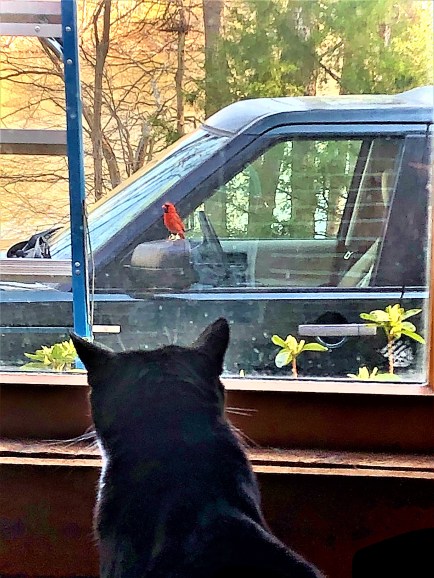
There is a cardinal, who for weeks has been fighting with fisticuffs, or whatever feathered version there is of that, with nearly every window I have on my house.

And on my car.

And with my head if I’m outside and happen to have extra shiny hair that day.


Obviously, one must protect one’s nestlings from intruders—even if you mistake them for your own reflection. And I, obviously, must protect a smaller-brained organism from leaving his nestlings fatherless.

But my efforts are thwarted by the cardinal’s span of territory to patrol. I cannot blackout every window to diminish the glare, as I have limited supplies and a biological need for vitamin D.

He will have to take his chances with the likelihood of beak repair.

There is also a squirrel. One who suffers from great impatience.

The rule in my childhood neighborhood, adhered to by anyone with one season of vegetable growing experience was thus: plant 1/3rd for the deer, 1/3rd for the birds, and 1/3rd for your family.

For years this directive was sage and followed by all participating creatures.

This year, I cannot get the seeds in the ground without a squirrel—one I now recognize because of the prison art tattoo on his back—digging them up the second I’ve stepped away.

First, I tried netting the box. He must have opposable thumbs. He easily unnetted the netting.

Then I tried heavy-duty tree trunk wiring. He must have tools. Unwired, and again I am seedless.

Then I just put out half a pound of already grown green beans and a sign that said YOU WIN.

(*insert squirrel snickering here)

Lastly, there is a beaver.

He is industrious. He is relentless. And he has expensive taste.

He has already struck down and carried off three massive bayberry bushes and is now working on a beautiful thick oak that will take him years to gnaw through. Gauging his angle of approach, it will likely land directly on my house.

It’s okay. I’ve got time.

But to deter him from this great specimen of timber—which may or may not survive his insatiable appetite for cellulose and lignum—I have begun laying piles of thick branches and small logs at the base of the tree. A gift. An impediment. A message that suggests If you carry on with this task, you will soon become a part of my winter wardrobe.

Nevertheless, he persists.

My next step would be to enmesh that tree with the heavy-duty tree trunk wiring, but it’s still currently in use with my next squirrel-thwarting endeavor which involves a small makeshift catapult.

I know these minor skirmishes sounds like small potatoes as we’re all muscling our way through day after day of the pandemic which forces us to revisit and ration our daily wants and needs.

But might there be a silver lining out there for many of us? The substantial amount of people who have yet to experience the oh-so-real terror of scarcity?

Is it such a bad idea—despite the fact that it has been forced upon us—to reevaluate what the word need truly means? Or to press each of us into a state of deliberative ingenuity?

I’m not suggesting we all slap on a coonskin hat and become some version of Daniel Boone, but would it be so awful to think like an Italian nonna when facing the dwindling supplies on one’s pantry shelves and you’ve got thirteen hungry bellies to fill?

I think most of us would benefit from a few hours of bootstrap thinking.

Certainly, when I look at the microcosm of The Hunger Games event I’m involved in with Mother Nature and her brood, I can see that there’s more than one way to skin a cat—or a beaver, if you will.

I see them effortfully striving, every day, for the same things: food, shelter, and the protection of one’s progeny.

That’s the focus. And I don’t blame them.

That said, being the individual with slightly more gray matter, I find it’s possible for me to not only endeavor to achieve those same things, but maybe help a few of them in their pursuit as well.

Now is the time for inventiveness, resourcefulness, and innovation. Along with that comes the eye-opening bonus of gratitude.

We may never view the necessities—the essentials of life in quite the same light. Whether you’re handing out bags of successfully grown green beans to neighbors, or you’re delivering face masks made from the hairy hide of a befallen beaver, you’ve seized the chance to be a section of a solution and not part of a problem.

Most important, this is a critical time for self-reflection. The point is none of us have to be bird-brained about any of it.

~Shelley

For the time being, the blog is closed to comments, but if you enjoyed it, maybe pass it on to someone else. Email it, Facebook it, or print it out and make new wallpaper for the bathroom. If it moves you, show it some love and share. Cheers!

Don’t forget to check out what’s cookin’ in the Scullery and what we all gossiped about down in the pub. Or check out last month’s post and catch up.

On the Cutting Edge of Shear Madness

There is a venerable phrase many of us have heard countless times in our lives:

Doveryai, no proveryai.

Or if your Russian is a little bit rusty, Trust, but verify.

It’s an old proverb American writer Suzanne Massie passed on to Ronald Reagan before he began traveling to Russia to discuss U.S. and Soviet relations during his presidency.

It became for him somewhat of a trademark phrase.

It became a lodestar for many of us, a crutch for a few, but sage advice for all.

A week ago, my hound, Haggis, had none of the typical skepticism that normally washes across his face unless spotting a jar of peanut butter, his leash, or the hind leg of a freshly shot deer in my hands. But this was because he could no longer spot anything.

Literally. His hair had grown to a length where it could serve as an emergency ladder should he be close to a second story window and we had a fire.

So, when he finally heard the hair-raising snippets of my hair-cutting scissors, that skepticism shifted straight into suspicion and finally parked itself at defiance.

I had never cut his locks before, and he believed it was best if we left it that way.

Today, we find a great swath of our population experiencing a crisis of trust.

And why is that? The reasons are many. Understanding them is paramount and will likely shift the way we think, plan, behave, and move forward.

Together, this globe is redefining what life upon this planet is like. We are forced to assess our work, our relationships, our lifestyles, and the unforeseen shape they will morph into down the road.

Over the next several days I employ great determination during my time of internationally urged self-isolation to convince myself and my great hairy hound that I can accomplish the Herculean task of carving through his shrubby mane in the same way most of my fellow humans try to muddle their way through the maze of subterfuge, pretext, and great gobs of misinformation clouding our sight of the truth.

Daily, I place him in an unnatural position and beg him to be still as I scissor away for the space of an hour. I listen to the news: the practitioners, pundits, the press, and the president—each one with a decreasing sense of belief.

I feel Haggis tremble beneath the sound of sharp shears, and I put the scissors down and soothe him with all the ridiculous cooing tones meant to bring forth some ease. But I echo his same tiny twitch of skin when I’ve nipped him with the tip, or when they broadcast some new tally.

Every day certain numbers shoot up, and others slide down. We are warned by some and encouraged by others. Who do we trust? Who should we trust?

With boastful reassurance, I tell Haggis that he’s going to look fine—don’t gaze in the mirror, don’t question my actions, don’t think about it too hard. Trust me.

Each afternoon I hear about people who have heeded and those who’ve just balked. About those who have saved lives and those who have risked them. I wonder if, when this is all over, and I’m face to face with strangers, will I look at them with a fresh question: can I trust you?

And each afternoon I stand from my work, look at the dog, take a deep breath, and exhale with despair.

Good lord, what a mess. I’ve never done this before. And clearly it shows.

I fill him with flattery and maudlin praise, hoping he can’t see through my bluster and swash. But he feels my inexperience. And he knows that whatever my actions, I’ll not feel them as keenly as he does. He discovers at some point—day four or day five—that I’m frustrated with this routine, I’m wishing it over, and I’m unhappy with the results.

But he also knows that there’s no turning back, and this is where his lack of trust in my skills begins to crystallize into disregard.

I am somewhat offended as each day he pulls away from me, refusing to hand me a hoof or his chin.

You’re going to slow.

You’ve made a right mess.

Look here, now I bleed.

I hear him.

I should have left this up to the professionals. Although this is not a choice. We work with what we have, and a large team of experts does not appear at my door.

Each day I scooch the hound outside, toward the mile-long stretch of road between us and the mailbox. I keep my fingers crossed, hoping no one sees as we walk along. Haggis is only mid-way through this pruning, sporting a thick Mohawk down the length of his back, a mop-head, and four legs that are shaved only three-quarters down, making it appear that he is a belligerent teen prancing about in dog-friendly Uggs.

A neighbor stops his truck and rolls his window down slowly. He eyes the two of us with suspicion.

Has he got the virus?

No, I answer. He’s in the middle of a haircut.

Looks like he’s got the virus.

It does my ego and my confidence no favors to receive yet more criticism, and I mope the rest of the way home.

But tomorrow comes, and after convincing Haggis to climb atop the coffee table/barber’s chair once more, I ask myself a critical self-esteem building question:

What would Vidal Sassoon do?

It’s true—it’s not particularly hashtag worthy, but it seemed relatively uplifting for the moment.

And when one is on one’s own, navigating uncharted waters and expecting choppy results, one will search for signs of inspiration, direction, and security wherever one may find it.

(I’m lookin’ at you Dr. Fauci …)

We muddle through and trudge along. We rise to the occasion and make a small difference.

We find places to put our faith: in facts, in evidence, in one another.

And until we emerge on the other side, knackered, shaggy, and injured, we offer kindness if not confidence.

A spoonful of peanut butter can go a long, long way.

Surely the Russians knew that.

~Shelley

This slideshow requires JavaScript.

For the time being, the blog is closed to comments, but if you enjoyed it, maybe pass it on to someone else. Email it, Facebook it, or print it out and make new wallpaper for the bathroom. If it moves you, show it some love and share. Cheers!

Don’t forget to check out what’s cookin’ in the Scullery and what we all gossiped about down in the pub. Or check out last month’s post and catch up.

Life is like a Box of Chocolates: Sealed, Stolen, & Seeing the Countryside without You

A bazillion years ago—let’s call it seven—I went on a trip to the United Kingdom, crisscrossing the country to view university after university, accompanying my then seventeen-year-old daughter as she scoped out her next big chunk of education.

The recollection of big cities and ancient villages have long been swallowed by the fuzziness of time and now reside in my head the same way one retains precise memories of a colonoscopy. And although I can appreciate the anesthetic delights of anterograde amnesia for some experiences in life, the one long-cached, souvenir stilled lodged firmly in my hippocampus is that of stumbling across a tiny shop on the high street of Oxford.

Hotel Chocolat.

It’s not a hotel, although I’d have no issues with setting up camp in a corner on the floor if I should accidentally get locked in after hours. Rather it’s a luxury chain of the ultimate chocolate shopping experience.

There is no trickery involved in drawing customers off the cobblestoned streets—just an open door, where the aromas of ground and sweetened cocoa beans snake invisibly around your wrists and appear beneath your nose, tugging you inside and fastening the lock behind you.

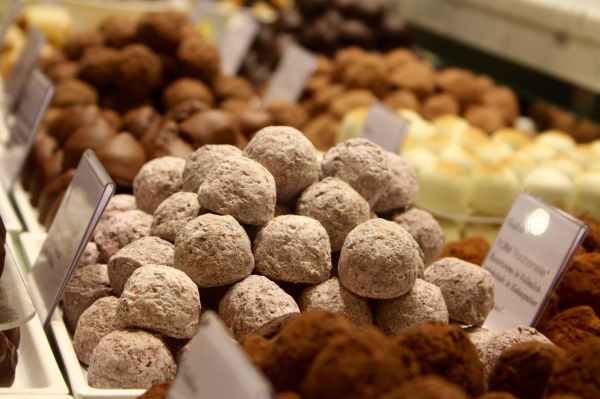
When I first saw the shelves lined invitingly with countless bars and baskets filled with creamy brown confectionery, I remember turning to my daughter and saying, This is where I’d liked to be buried, please.truffles

In keeping with the traditional facial expressions of young adults, I was immediately silenced with a practiced and perfected eyeroll.

We silently moved about the shop, but apparently with each new peak into the burgeoning baskets and careful scanning of each shelf, Chloe finally turned to me and sighed.

What? Her gaze was stern, her tone was clipped. Why do you keep clucking your tongue, Mother?

I hadn’t realized I was, but it was likely true.

I just don’t understand why they’ve chosen to mash all the extra bits into the chocolate, I’d said. The chocolate looks perfect on its own. It doesn’t need fruits and nuts or brownies and gingerbread in it. You can’t improve upon perfection.

It was then that she held out a square box with six small globes within it.

Oh yeah? Are you telling me that you will not put aside your ridiculous rule for this?

In her hand was milk and dark chocolate, swirled together in an eddying ripple, apparently each orb pillow-casing a teaspoon of whisky.

My knees weakened a tiny bit as I envisioned what two of the dreamiest comestibles would taste like as clearly betrothed companions.

I shook my head with fixed determination.

Too expensive, I said as an excuse, when what I was thinking was, Surely disappointing.

Christmas came a month later, and the gift of truffles filled with single malt scotch came from the outstretched arms of Chloe, smugly determined to win the category of Best Gift Ever.

I was elated. Excited. Curious. And worried.

I put them in the refrigerator for safe keeping.

For six- and one-half years.

I couldn’t bring myself to try them. Too expensive, surely disappointing.

I know I’d frustrated her, as I recall a few years after that holiday, I’d received a beautiful box of chocolates in the mail. Chocolates all filled with other things other than more chocolate.

box celebration chocolates decoration


I put the box aside, deflated. But Chloe simply texted the sender and said, Obviously, you do not know my mother. Your lovely gift will be mothballed in cold storage indefinitely. But thank you, nonetheless.

She then proceeded to eat them on my behalf.

Last month, I traveled by train again across the UK. To my utter delight, the port of origin held a Hotel Chocolat shop. I spent a few harried minutes and far too precious pennies on a doppelganger box of whisky-filled truffles, an identical box that not four months earlier–as I cleaned out the fridge to move houses–finally found its way out of the back of the fridge and regrettably into the waste basket.

Thrilled with the chance to redeem my unappreciative behavior, I placed my pungent package on a shelf above my bunk and dreamed of the soon-to-receive declarations from family that I had at last lost my persnickety fallibility.

The next morning, I promptly exited the train, mindlessly leaving that little package filled with chocolate and whisky, and the expensive opportunity to salvage some respect.

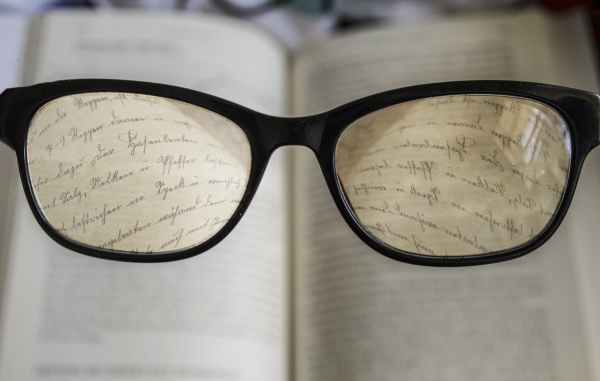
I’d also left my reading glasses. Another thing I’d rebuffed for years.

It did not occur to me that I’d left these things until I began rooting around for an aid with map reading.

My heart raced, followed quickly by my feet. Ten minutes had passed since I’d exited the train, and dashing back out onto the platform, I saw nothing but Scotch mist.

The train was gone.

With panicked flapping limbs and the alarm of a woman who left her baby in a taxi, I managed to locate and communicate my loss to a white-haired train attendant whose Scottish dialect was as thick as the slabs of solid chocolate I would have preferred to have purchased in the sweet shop.

Fifteen minutes later, the elderly man returned, a broad smile stretching the road map of wrinkles across his face. He handed me my reading glasses.

I peered at him. Did you happen to find the chocolate? The whisky-filled truffles?

Oh aye, he stated grimly, but all edibles are immediately binned if left behind. That’s the policy. But if ye want my opinion, lassie, yer far better off wi’out them, as nothing foreign but yer lips should touch a single malt scotch. Any addition is like two trains colliding into a crash.

He looked at me sternly and pointed at my glasses. Perhaps use your wee spectacles before making such a purchase next time. After all, ye canna improve upon perfection. Some things are just more sacred when separate.

blur book book pages close up

~Shelley

For the time being, the blog is closed to comments, but if you enjoyed it, maybe pass it on to someone else. Email it, Facebook it, or print it out and make new wallpaper for the bathroom. If it moves you, show it some love and share. Cheers!

Don’t forget to check out what’s cookin’ in the Scullery and what we all gossiped about down in the pub. Or check out last month’s post and catch up.
The Good, the Bad, and the Ugly; Nature’s Turducken

Photo by Mike Bird on Pexels.com

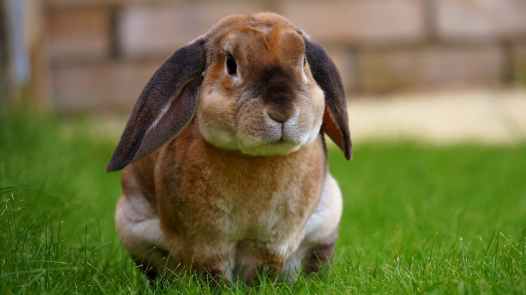
Last year, I had a gazillion bunny rabbits gather on the lawn both at sunrise and sunset every day through the three beautiful months of spring—nibbling, lounging, fattening.

This year, I have been hard-pressed to see even one dash out in front of my car as I trundle down the mountain to run a few errands in town.

Where did they go, I wondered?

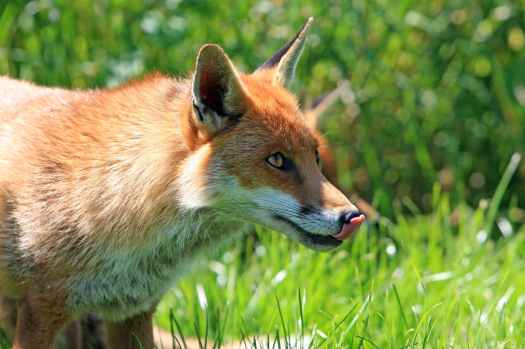
This morning, I watched a brawny and brutish red fox prance along the woodland’s edge, patrolling the perimeter, his ears and swishy full tail twitching with anticipation at any movement or sound from the grassy border.

Ah. Now I know.

There were a few brief, tense moments when the world virtually paused, my breath suspended, when with lightning quick speed, the fox sprung into the air in the direction of a fat rabbit, dashing from the safety of her brushy compound, making a run for it—out in the open.

Now, I know you’re all wondering what happened to that fat little bunny, and I could be cruel and tell you that’s not the point of this essay, but for the sake of keeping friends, I’ll relieve your suspense.

She made it.

But it won’t be for long, so let’s not grow accustomed to her furry little face.

Because bunnies are accidental survivors. Countless times, I have taken walks and come across one of them on the side of the path, and their method of life management is nothing more than freeze.

If they find they’ve fooled you into believing they’re actually a painting or statue, well … bully for them. They live another day of blissful clover grazing. If you are a predator and make your raptorial move, then their only hope is to outrun you, or “under-size” you by fitting in somewhere you cannot.

Not much to be impressed by.

A fox, on the other hand, is a planner. A plotter, a schemer, and wholly opportunistic.

Unlike a bunny, his nose is not focused solely on the floral fragrance of the tender shoots from the genus Trifolium, but also notes whether or not those herbaceous patches carry the scent of lucky rabbits’ feet.

Lucky for him, anyway.

Treading the path once or twice during the gloaming hours, he notes their playground and their warren holes, then takes a quick kip till just before the time sparrows fart and the sun’s rays creep over the dewy grass.

He positions himself in their familiar Don’t mind me, I’m just a figment of your imagination style crouch when muddle-headed bunnies womble out of bed and head to the clover cafeteria, and then waits until …

Gotcha.

Breakfast and exercise all in one fell swoop.

Nothing to do but sleep off the meal.

Photo by Pixabay on Pexels.com

And possibly be surprised by a sharp wake-up call in the middle of the night, as he is now surrounded by a ring of coyote—canines recognized for their ability to utilize deception and cheekiness to their benefit.

Obviously, our fox sees little comedy in his demise, but I can certainly appreciate the turducken style gallows humor and feel compelled to view life outside my window through these optics.

To do anything less would have me lamenting about the woodland hills, the smell of death thick in my nostrils, and an overwhelming feeling of despair and fatalism cloaked about my shoulders.

I cannot live life like this, mostly because I was raised on a diet rich with despair and fatalism, but wrapped up in a puff pastry crust of Monty Python humor.

I know some of you might be wondering where I’m going with this whole essay, and it would be crystal clear if you saw the books and articles scattered across my desk:

How to Write Better Bad Guys

Six Tips to Scandalous Scoundrels

Superheroes, Supervillains

This is a time period (in between books) I designate as “The Gathering.”

The collecting of ideas, the generating of plots, the reviewing of old writing habits that no longer serve and need to be replaced.

Like that of writing antagonists.  

We are surrounded by them in our everyday lives. They are the people who we intermingle with often and repeatedly: the guy who cut you off in traffic because he saw an opening and took it, your boss, who criticizes your work in front of a roomful of your coworkers which leads to you pull an all-nighter to prove her wrong, your ex, who tells every handyman in town that you don’t pay your bills on time and sometimes not at all.

Yeah, they’re evil, heinous, and diabolically sinister people in our minds.

But … not in theirs.

In their minds, they are doing what’s right. What’s right for the flow of traffic, the result of the project, and the protection of the local business owners who don’t deserve to get burned.

In their minds, why would they choose to do anything else?

A fox is never going to pass up the bunny buffet. The coyote would be harebrained to skip out on the freshly prepared “foxbunherb.” And the only thing missing now is what follows to bring down the sharp-toothed pooch.

I vote Monty Python’s Foot of Cupid. As there is nothing more satisfying then seeing your enemy squished by an animated sketch, followed by the juvenile sound of ripping flatulence. And truly, this is the Universe’s way of saying enough is enough.

It is an effortless exercise to read about creating great villains on paper, and then see the perfect example of them right outside my window. The thing that makes them perfect is that they are all relatable. We understand them. Their motivations. And can empathize with their actions.

They are not evil for the sake of being evil.

Photo by Wendelin Jacober on Pexels.com

Some of them, in the case of a humongous, hand-drawn heel are just evil for the sake of being hilarious.

And I can live with that.

~Shelley

For the time being, the blog is closed to comments, but if you enjoyed it, maybe pass it on to someone else. Email it, Facebook it, or print it out and make new wallpaper for the bathroom. If it moves you, show it some love and share. Cheers!

Don’t forget to check out what’s cookin’ in the Scullery and what we all gossiped about down in the pub. Or check out last month’s post and catch up.