Communicate or Consternate: the Power of your Tongue

No one will complain that you made something easy to understand.

This was a slide I read while watching a Keynote speaker address members of the American Distilling Institute—a conference I attended this week. He also mentioned that someone had stolen his antidepressant medicine that morning and that he hoped whoever did it was happy with their decision.

For weeks leading up to the summit I felt my enthusiasm grow. It started like most of my decisions to attend an event such as this; I justify it by pointing out to myself and others how much I was going to learn and extol how it is worth the expense, time, and energy to appear.

Then, as the sessions and speakers are more fully revealed in the days before arrival, I grow in fevered pitch with an eagerness that verges on eye-roll worthy, mainly because I’ve become convinced that this one meeting will be wholly instrumental and pivotal to my growth both professionally and personally.

Except the most transformative opportunity offered is typically when I come across a booth at the Expo where some cosplayer Lady of the Lake is handing out plastic swords as well as lapel stickers that say, “Do not pray for tasks equal to your powers. Pray for powers equal to your tasks.” I then cover my current lapel sticker from the previous booth that said, “Be like a postage stamp. Stick to something until you get there.”

Alas, the one thing that appears repeatedly throughout the three-day event is proof of how many of us fumble with the sagacious quote above. I become aware that some speakers were selected to lecture at the conference not for their ease of communicating complicated data, rather for accolades granted, accomplishments trumpeted, or they won an arm-wrestling tournament with the conference coordinator on some drunken night, and this was in the kitty.

Don’t misunderstand, there were countless inspiring speakers, but more often than not, the art of communication is something many of us struggle with every single day—whether it’s in the performance of our job description, or we’re chatting with an everyday Joe, newly met or longtime known. It’s a captivating experience to encounter someone or listen to them lecture and find they are silver-tongued and eloquent, but curiously, I’ve occasionally found that the more learned they are, the more unintelligible they may be.

As an example, I filed into a lecture hall, along with about 150 other attendees, all of us excited to hear the most up-to-date and innovative information on how yeast can become our newest BFF, if we truly understand its deepest desires. The professor of brewing science at a far-flung institution began with an apology: “I am about to squish eight hours of university lectures into 45 minutes. Most of it will be intelligible only to those of you with a masters in biochemistry. And onward!”

Only onward was not where most of us went with the professor. Most of us looked around the room to gauge how many of us had a masters in biochemistry and were enjoying the microscopic photos of the principal structures of aerobically grown distilling yeast cells, the table summary of the Embden-Meyerhof-Parnas metabolic pathway, and charts highlighting the biosynthesis of amino acids. I quickly realized that yeast and I were likely never going to exchange interlocking jewelry with one another.

My intention was not to sit in on a university lecture far beyond my wheelhouse and fume with frustration over wasted time, rather I had presumed—based on the title—that I might listen, take notes, and then bring home some data to our head distiller that said, if we switch to this yeast, we’ll have bigger yields, or if we utilize this enzyme, we’ll have bigger yields, or the word “yeast” is Sanskrit for, “to seethe or boil,” therefore they may benefit from a few anger management sessions if we’re hoping to see bigger yields.

I think you get my point.

Our takeaway from any exchange is one we hope to capitalize on if we’re in a business setting, or delight in, if we’re feeling out a new friend.

I am particularly good at wholly forgetting who I am when introducing myself to fellow attendees or approaching speakers I want to congratulate after a worthy session. I think my best words are often, “umm … I, uhh …” and something inaudible as I glance down to check my own name tag for identification. Rarely do I recall the pithy pitch I’d practiced in the bathroom mirror just before leaving the hotel that day. I’d be better off handing the person a QR code to scan at their convenience that will bring them to an interactive website with a pull-down menu to pick and choose from.

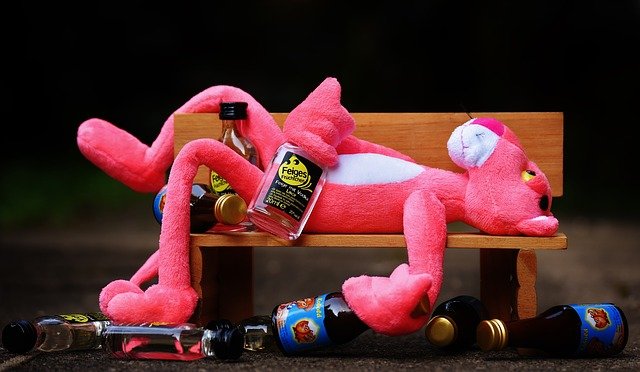
It also does not help that a “distiller’s” convention starts off every day with a boozy breakfast and a bucketful of hazmat level tastings to fully appreciate some of the latest trends, so I am going to attribute my inarticulate blundering as only the result of that full strength participation enthusiasm I bring to every conference and not general incompetence, okay?
The big picture is that maybe some of us need a little extra help “reading the room” these days. Maybe our messaging skills are rusty, our presentations inefficacious, maybe our wording falls short when trying to explain to people how effective we can be by using words like inefficacious to describe things.

Maybe it would be helpful if a room moderator would communicate to the conference attendees as soon as they discover a speaker is a no-show, rather than assume everyone will figure it out after thirty minutes of speculatively waiting. Some of us take longer to “read the room” than others.

Ultimately, most peoples’ desires are to be heard, to be comprehended, to be deemed adept at relaying vital and useful information to those who choose to listen to them. But for those who really don’t care, may I suggest an introductory slide of benefit?

I am only responsible for what I say—not for what you understand.

If I see this up front, I’ll happily head back to the boozy breakfast for a second round and spend the hour practicing my own high-proof pitch.

~ Shelley

For the time being, the blog is closed to comments, but if you enjoyed it, maybe pass it on to someone else. Email it, Facebook it, or print it out and make new wallpaper for the bathroom. If it moves you, show it some love and share. Cheers!

Don’t forget to check out what’s cookin’ in the Scullery and what we all gossiped about down in the pub. Or check out last month’s post and catch up.

Galapagods and Goddesses

“So what are you most excited about, Mom? The giant tortoises? The penguins? The Blue-footed Boobies?”

That last one always makes every one laugh—until you see a picture of the bird, in which case you’re trying to figure out how to slyly shove one of those cutey patooties into your suitcase to return home with.

“The distillery,” I answered truthfully.

I heard the distinct sound of a hand suctioning itself onto a forehead. It would be a familiar thump as well over the next couple of weeks, as we were nearing the end of Chloe’s “Countdown to the Galapagos” calendar—the trip of a lifetime my daughter had gifted me.

Weeks earlier she had surprised me on a Zoom call.

“I’ve checked with your work—all is thumbs up, and all the animals will be looked after. I’m taking you to the Galapagos Islands.”

“What?” I was stunned. “Why?”

“Firstly, you’re welcome. And secondly, as a thank you.”

I chose to ignore the firstly bit and moved on to the latter half of her explanation. “Thank you for what?”

“You know, the whole thanks for raising, clothing, caring, feeding bit, plus all the extra effort helping me get to where I am so that I could accomplish what I have.”

She was referring to her ever so awesome job and lifelong dream of sending shit up into space. “You are welcome. I knew those math flash cards were going to pay off one day.”

“I’m serious,” she said. “You were there with the support and encouragement and shoulder—”

“Don’t forget ice cream.”

“Yes, and ice cream too,” she added.

“Why the Galapagos?”

She smiled with glee through the screen. “Well, I may never be able to take you to Mars to study what we’re hoping to discover there—possibly some origin of life, so I’m taking you to where Charles Darwin first studied it on our little planet.”

Obviously, Chloe knew exactly how the poetic parallel would fill me with admiration, and it neatly explained why she had mailed me a beautiful copy of On the Origin of Species just a few days before phoning.

And so, every day for the next two weeks I received some version of the text ELEVEN MORE DAYS TILL GALAPAGOS, MOTHER!!! And I would send her back a picture of one of the animals I could not wait to lay eyes on.

This, of course, after researching whether any of the islands had some form of working distillery upon them, and after discovering one did, announcing that this was where we had to go first.

“We are leaving work behind, Madre—no computers, no spreadsheets, and no liquor apart from that which any charming South American bartender hands you in a glass, got it?”

“But this is not work, Chloe. This is learning. This is research. And as we are going to be spending hours wandering through the ample exhibition halls, gardens, library, and living labs of the Charles Darwin Research Station, we surely will wish to further our research on other aspects of the islands’ elements as well, right?”

“Discovering how some old geezer is distilling sugarcane will likely disappoint you. It’s not going to be like you’re in Scotland, and as you’re hunting through castles and stone circles you accidentally stumble upon some ancient, perfect, long silent but suddenly brought back to life prized distillery.”

I huffed. “I will not be disappointed, Chloe. Clearly, there is an artist waiting to be appreciated—and likely frustrated that Charles Darwin is constantly overshadowing his work. I aim to aid his need for recognition.”

“You aim to be poisoned, likely by a large dose of methanol, is my guess.”

But my sweet, generous, overly and uncomfortably educated child was wrong. Meeting Adriano Cabrera of El Trapiche was one of the most memorable moments ever.  Maybe because having seen some of the world’s most impressive and flush-with-cash companies, with their shiny copper pots, their massive barrel-filled warehouses, and their gleaming tasting rooms, experiencing Adriano’s barebones setup was the refreshing, reaffirming chapter I needed to slip in to my ‘book of life.’ It brought back the this process is magic feeling that can sometimes be buried beneath all the new glamour whisky making tours now provide to consumers.

Not one of the countless distilleries I’ve visited ever employed animals as part of the workforce, and yet Adriano had harnessed not just a braying donkey to run the press that squeezes the liquid out of the cane sugar, but every bit of flora and fauna he had available to utilize.

All throughout the facility—and by facility, I mean a long, open air shack—he was growing plants indigenous to his island of Santa Cruz. Whether it was the sugar cane, the coffee bushes, or cacao beans, the surrounding landscape was filled with flowering plants.

Those flowering plants brought birds, butterflies, and bees to pollinate them, and those thriving plants introduced an abundance of wild, ambient yeasts. Those indigenous yeasts then fermented that sugar cane juice, which attracted a good handful of insects looking to score a solid buzz on their buzziness and ended up dying for the cause. And still flying with the theme that Adriano was capturing flavor everywhere, surely there’s got to be a scientist who would agree with me that those insects added a bit of nuttiness to the mash, or that their natural fats and mineral-rich exoskeletons left some “flavorprint” behind.

It doesn’t matter. I have empirical evidence. My tongue was the judge.

Once that mash trickled downhill via garden hose to the antiquated, blackened oil drum that was his makeshift still, flames licking and embracing its bottom half as it heated and fractionated the fermented juice within, the magic was nearly done.

Adriano’s method of testing his alcohol’s proof was to use a scuffed-up glass hydrometer, but more to my amusement, was his flamboyant technique of simply throwing a cupful of distillate right onto the still’s flames.

If it goes boom, we bottle, could be a motto he might consider putting onto the label.

Of course, the proof is in the pudding as well, which to me—any small, albeit worrisome, overdose of methanol aside—was a nip worth sipping and a risk worth taking.

As I see it, the El Trapiche distillery succeeded in distilling the entire experience of The Galapagos Islands’ essence of origins into liquid form. The smells, the taste, the sights, the sounds. The true flavor of all its endemic species.

Charles Darwin would have been proud.

~Shelley

For the time being, the blog is closed to comments, but if you enjoyed it, maybe pass it on to someone else. Email it, Facebook it, or print it out and make new wallpaper for the bathroom. If it moves you, show it some love and share. Cheers!

Don’t forget to check out what’s cookin’ in the Scullery and what we all gossiped about down in the pub. Or check out last month’s post and catch up.

The Meticulously Precise and Non-Magical Way to make Whiskey

I’m nearly finished writing another book.

This one won’t be published for the public though. It’s a technical manual.

I’d never done a technical manual before; therefore, this genre has been entirely new to me.

I was at one point reminded, Technically speaking, technical manuals do not fall into a “genre,” Shelley.

Disappointing news.

I was also at one point informed that my other skills of fiction writing were, although appreciated, inapplicable with this work.

“What do you mean?” I’d asked, halfway through the job.

Please do not allow the machinery to have any “dialogue.”

Hugely disappointing news.

In my mind, everything is conversing with anything beside it. Refrigerators hum, clocks tic, boats roar, trees creek, tea kettles whistle, grills hiss, frying pans spit, drains gurgle—I could go on.

There is conversation with their purpose, with their function, and it is our choice to tune in to hear it if we choose to do so—or maybe it’s just a special type of non-worrisome derangement those of us who practice anthropomorphizing inanimate objects experience every day.

So, okay, the mash tuns, the fermenters, the stills, and bottling equipment will not be engaged with any discourse. Fine.

Also, no need to “set the scene.”

Wait. What? No “Once upon a time”? No “In a galaxy far, far away”?

No.

No “Imagine if you can, a farm field in Virginia filled with rows of waving grain. Corn so tall, so yellow, so sweet. Wheat so soft, so feathery, so—”

No. Also, just list the manufacturer of each piece of equipment. No need to give colorful backstory that creates a uh … biography for them.

Damn.

But the still is an old copper Armagnac pot which surely, if you’d allow me to research, has the most fascinating history, connecting it to a village in Gascony, and likely to some illicit brandy making where people’s lives were at risk for defying the king’s orders and skirting around the excise men, right?

No. Louis XVI died in 1793. The still was made in 2006. Write that down.

No excise men?

*insert cold stare here

Fine. Hard facts only. It has been an arduous road to travel. It has been serial numbers, maintenance schedules, standard operating procedures, operator responsibilities, quality controls, ingredient specification sheets, safety protocol, system malfunction detection. It has been measurements, sampling data, testing methods, recording methodology, and out of the realm of tolerance identification.

No language describing the invention of any equipment, the trials and tribulations of the inventor, the recognition, the accolades, the race between rivals to patent first, to reach the market, to make a name and reap rewards.

No timeline of history, the tales of great machinery malfunction and mishaps that caused strife, or injury, or daresay … death.

Nope. Just operator files.

It’s ‘if blank, do blank.’ Or ‘when this, then this.’ It’s ‘measure now, record here.’

There’s no beginning, middle, or end.

It is not a story, not a narrative, no plot.

None of the machinery barely scrapes by, screeches to a halt, or belches out for attention.

The manual is meant to be informative. Concise. Crystal clear. It is meant to provide a “just in case” scenario for an event like a catastrophic pandemic wiping out all previous operators’ ability to fight through throngs of apocalyptic zombies to appear at the facility, allowing any stranger to eventually walk in off the street, discover the book and easily, effectively, and effortlessly pick up where we left off.

No, Shelley. It is meant to use as a teaching guide for new employees.

Yeah, that too, but my take could be plausible (I mumble quietly).

So, I study each piece of equipment. I learn its function. I define its specifications. I describe its purpose. It is thirsty work as I crawl around, beneath, above, and inside many of them. I watch them perform. I study their mechanisms. I research their optimal modes.

And I learn … they are still magical.

I learn it from listening to the operators as they describe their years of experience working with each station.

The grain will stubbornly clump and ball if you don’t chase it with the paddle in the cooker. It likes to hide right in that corner.

If you don’t clamp down the hose securely, the impellor pump turns into a raging snake that’ll spit hot mash on every square inch of the production room floor.

You see that steam rising from the strip still’s parrot spout? We call that the dragon’s breath.

I did find a story. The story of waking up the yeast before releasing it into its comforting, warm bath, of performing the tightly timed choreography between pieces of machinery as they demanded immediate attention to avoid calamity, of discovering that the general consensus for many of the processes was that you just had to feel it, smell it, taste it, gauge it. The machinery had its tells, and a good operator was sensitive to them and could anticipate results because of the accumulated years of a bonding relationship.

Making whiskey requires procedural care, yes. It’s a recipe. It’s a step by step adventure that when timed perfectly churns out a salable product.

But to me, and to others, the machinery is responsible for the alchemy, the head-spinning potions, the conjuration that leads grains to glass, this honeyed, headying elixir.

But the manual will not reveal that magic. The manual will not even hint at it. The manual conceals the story.

Except it’s there. We just don’t capture it within the pages that keep the secret safe. It is for others to read between the lines, to unearth the buried story within it.

If they find it after the zombie apocalypse.

~Shelley

For the time being, the blog is closed to comments, but if you enjoyed it, maybe pass it on to someone else. Email it, Facebook it, or print it out and make new wallpaper for the bathroom. If it moves you, show it some love and share. Cheers!

Don’t forget to check out what’s cookin’ in the Scullery and what we all gossiped about down in the pub. Or check out last month’s post and catch up.


Life is like a Box of Chocolates: Sealed, Stolen, & Seeing the Countryside without You

A bazillion years ago—let’s call it seven—I went on a trip to the United Kingdom, crisscrossing the country to view university after university, accompanying my then seventeen-year-old daughter as she scoped out her next big chunk of education.

The recollection of big cities and ancient villages have long been swallowed by the fuzziness of time and now reside in my head the same way one retains precise memories of a colonoscopy. And although I can appreciate the anesthetic delights of anterograde amnesia for some experiences in life, the one long-cached, souvenir stilled lodged firmly in my hippocampus is that of stumbling across a tiny shop on the high street of Oxford.

Hotel Chocolat.

It’s not a hotel, although I’d have no issues with setting up camp in a corner on the floor if I should accidentally get locked in after hours. Rather it’s a luxury chain of the ultimate chocolate shopping experience.

There is no trickery involved in drawing customers off the cobblestoned streets—just an open door, where the aromas of ground and sweetened cocoa beans snake invisibly around your wrists and appear beneath your nose, tugging you inside and fastening the lock behind you.

When I first saw the shelves lined invitingly with countless bars and baskets filled with creamy brown confectionery, I remember turning to my daughter and saying, This is where I’d liked to be buried, please.truffles

In keeping with the traditional facial expressions of young adults, I was immediately silenced with a practiced and perfected eyeroll.

We silently moved about the shop, but apparently with each new peak into the burgeoning baskets and careful scanning of each shelf, Chloe finally turned to me and sighed.

What? Her gaze was stern, her tone was clipped. Why do you keep clucking your tongue, Mother?

I hadn’t realized I was, but it was likely true.

I just don’t understand why they’ve chosen to mash all the extra bits into the chocolate, I’d said. The chocolate looks perfect on its own. It doesn’t need fruits and nuts or brownies and gingerbread in it. You can’t improve upon perfection.

It was then that she held out a square box with six small globes within it.

Oh yeah? Are you telling me that you will not put aside your ridiculous rule for this?

In her hand was milk and dark chocolate, swirled together in an eddying ripple, apparently each orb pillow-casing a teaspoon of whisky.

My knees weakened a tiny bit as I envisioned what two of the dreamiest comestibles would taste like as clearly betrothed companions.

I shook my head with fixed determination.

Too expensive, I said as an excuse, when what I was thinking was, Surely disappointing.

Christmas came a month later, and the gift of truffles filled with single malt scotch came from the outstretched arms of Chloe, smugly determined to win the category of Best Gift Ever.

I was elated. Excited. Curious. And worried.

I put them in the refrigerator for safe keeping.

For six- and one-half years.

I couldn’t bring myself to try them. Too expensive, surely disappointing.

I know I’d frustrated her, as I recall a few years after that holiday, I’d received a beautiful box of chocolates in the mail. Chocolates all filled with other things other than more chocolate.

box celebration chocolates decoration


I put the box aside, deflated. But Chloe simply texted the sender and said, Obviously, you do not know my mother. Your lovely gift will be mothballed in cold storage indefinitely. But thank you, nonetheless.

She then proceeded to eat them on my behalf.

Last month, I traveled by train again across the UK. To my utter delight, the port of origin held a Hotel Chocolat shop. I spent a few harried minutes and far too precious pennies on a doppelganger box of whisky-filled truffles, an identical box that not four months earlier–as I cleaned out the fridge to move houses–finally found its way out of the back of the fridge and regrettably into the waste basket.

Thrilled with the chance to redeem my unappreciative behavior, I placed my pungent package on a shelf above my bunk and dreamed of the soon-to-receive declarations from family that I had at last lost my persnickety fallibility.

The next morning, I promptly exited the train, mindlessly leaving that little package filled with chocolate and whisky, and the expensive opportunity to salvage some respect.

I’d also left my reading glasses. Another thing I’d rebuffed for years.

It did not occur to me that I’d left these things until I began rooting around for an aid with map reading.

My heart raced, followed quickly by my feet. Ten minutes had passed since I’d exited the train, and dashing back out onto the platform, I saw nothing but Scotch mist.

The train was gone.

With panicked flapping limbs and the alarm of a woman who left her baby in a taxi, I managed to locate and communicate my loss to a white-haired train attendant whose Scottish dialect was as thick as the slabs of solid chocolate I would have preferred to have purchased in the sweet shop.

Fifteen minutes later, the elderly man returned, a broad smile stretching the road map of wrinkles across his face. He handed me my reading glasses.

I peered at him. Did you happen to find the chocolate? The whisky-filled truffles?

Oh aye, he stated grimly, but all edibles are immediately binned if left behind. That’s the policy. But if ye want my opinion, lassie, yer far better off wi’out them, as nothing foreign but yer lips should touch a single malt scotch. Any addition is like two trains colliding into a crash.

He looked at me sternly and pointed at my glasses. Perhaps use your wee spectacles before making such a purchase next time. After all, ye canna improve upon perfection. Some things are just more sacred when separate.

blur book book pages close up

~Shelley

For the time being, the blog is closed to comments, but if you enjoyed it, maybe pass it on to someone else. Email it, Facebook it, or print it out and make new wallpaper for the bathroom. If it moves you, show it some love and share. Cheers!

Don’t forget to check out what’s cookin’ in the Scullery and what we all gossiped about down in the pub. Or check out last month’s post and catch up.

Booze, Britain, & Maybe Someone’s Bride

If you’re asked any questions you can’t answer, just send those folks to me.

I looked at my boss. The one who brought me to the London Whisky Show with just barely enough information to sound like I was dangerously competent but not snarkily egotistical.

You mean like, “How many proof liters are you pulling off the still between noon and 6pm on every third Saturday of the month?”

Or how about, “Exactly what percentage of liquor are you extracting from that rare twenty-five year old rum cask you’re resting your bourbon in for two years?”

Or even this one. How bout this one? “Will you marry me?” *hic* Can I lob that one over to you as well?

He gave me a look from beneath his brow. Umm … no. You can deal with the drunken fan boy bits on your own.

Fab. Back to work.

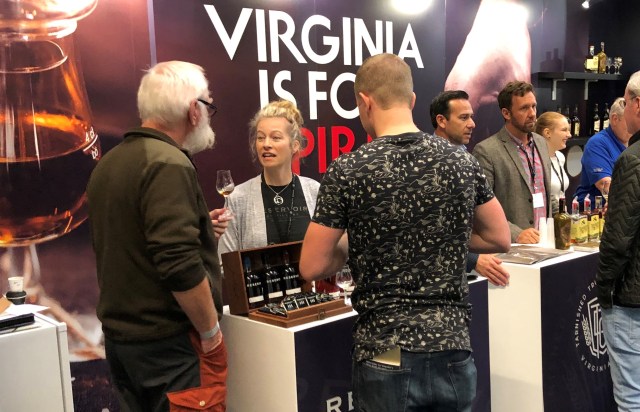
And work it was, as setting up a booth in Old Billingsgate—one of London’s myriad iconic buildings, notably a venue that used to house the world’s largest fish market—was not just as easy as plunking down a few bottles of booze and then flipping a shingle to say ‘open for business’ as thirsty customers strolled by.

Instead, it was setting up the most eye-catching, magnetically plumaged display of all your finest award winning wares right beside hundreds of other eye-catching, magnetically plumaged displays of award winning wares.

And for most of us, all on the size of a postage stamp.

The festival brought distillers and whisky lovers from all over the world together to experience some of the most coveted, laurel wreathed drams begging to be savored. Participants wandered (and eventually stumbled) about from booth to booth over the two festival days with supremely developed palates and highly developed expectations.

Now there may only officially be listed just over 100 carefully selected global distillers, but each one of them had some version of, You think that was good … (pulls bottle from beneath hidden shelf) … wrap your tongue around this one!

Altogether, a patron had somewhere between 600-800 drams of whisky to filter through in 48 hours.

As did their liver.

Of course, there was recommended show etiquette.

Spit, don’t swallow.

Drink lots of water—hell, bring your own IV pole if it’s not too unwieldy.

And if you are officially documented by the patrolling Security Stewards to have asked more than three exhibitors for their hand in marriage, the last one has the right to hold you responsible for their children’s college fund.

Gamble as you may.

One of the most challenging aspects of the festival was to reel in the participants, convince them that Reservoir’s whiskies stood head and shoulder above most others because we were not a carbon copy of the vast menu list available.

Our ingredients are of the utmost importance.

We pride ourselves on those ingredients being local.

Our process is different, our distillate is unique, our people are unprecedented, and for Pete’s sake, every day we festoon our bosses’ office doors with balloons and thank you notes because we just frickin’ love working here!

PLEASE JUST COME TASTE OUR WHISKIES!

In truth, we may not have sounded quite so desperate, but you get my point. You have to stand out. And not in a gimmicky way. You have to present them with something that’s memorable, that’s meaningful, that matters.

You have to make them want to take you home in a bag.

Okay, that did not come out right, but again you get my point.

It was an opportunity to meet people who love whisky and who make whisky from every corner of the Earth. To share what we’ve made, to learn from others, and to come home filled to the brim with the vim and vigor of pursuing our future.

We also come home smelling a little bit of fish, but that’s beside the point.

We travel the world with our wares. Sometimes we come to you. Sometimes you come to us. Most importantly, we come together, our spirits aligned.

Now, agreeing whether you want to make monthly payments to the university or just one lump sum is where we might diverge, but we can always work that out over a dram or two.

~Shelley

My favorite customer …

For the time being, the blog is closed to comments, but if you enjoyed it, maybe pass it on to someone else. Email it, Facebook it, or print it out and make new wallpaper for the bathroom. If it moves you, show it some love and share. Cheers!

Don’t forget to check out what’s cookin’ in the Scullery and what we all gossiped about down in the pub. Or check out last month’s post and catch up.